Free Shipping On Every Order



Amazon no longer offers textbook rentals. We do!
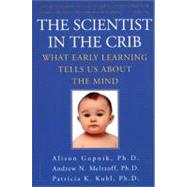
The Scientist in the Crib: What Early Learning Tells Us About the Mind
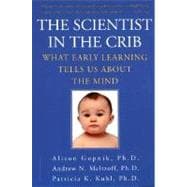
The Scientist in the Crib: What Early Learning Tells Us About the Mind
- ISBN 13:
9780688177881
- ISBN 10:
0688177883
- Edition: 1st
- Format: Paperback
- Copyright: 03/13/2010
- Publisher: HarperCollins Publications
.svg) Rent
From $10.00
Rent
From $10.00
List Price $18.40 Save
| TERM | PRICE | DUE |
|---|---|---|
 Free Shipping Both Ways
Highlight/Take Notes Like You Own It
Purchase/Extend Before Due Date
 Free Shipping On Every Order
List Price $18.40 Save $3.25
In Stock Usually Ships in 24 Hours.
 We Buy This Book Back!
.svg "Free Shipping On Every Order") Free Shipping On Every Order
Free Shipping On Every Order
List Price $18.40 Save $0.64
This is a hard-to-find title. We are making every effort to obtain this item, but do not guarantee stock.
We Buy This Book Back!
Free Shipping On Every Order
Note: Supplemental materials are not guaranteed with Rental or Used book purchases.
Extend or Purchase Your Rental at Any Time
Need to keep your rental past your due date? At any time before your due date you can extend or purchase your rental through your account.
Summary
This exciting book by three pioneers in the new field of cognitive science discusses important discoveries about how much babies and young children know and learn, and how much parents naturally teach them. It argues that evolution designed us both to teach and learn, and that the drive to learn is our most important instinct. It also reveals as fascinating insights about our adult capacities and how even young children -- as well as adults -- use some of the same methods that allow scientists to learn so much about the world.
Filled with surprise at every turn, this vivid, lucid, and often funny book gives us a new view of the inner life of children and the mysteries of the mind.
“An excellent book...it should be of interest to anyone curious about the human mind and its origins.” -The Chicago Tribune
“Meticulously researched, combining charm and erudition, humor and humanity, The Scientist in the Crib...should be placed in the hands of teachers, social workers, therapists, policymakers, expectant parents and everyone else who cares about children.” -The Washington Post
“The Scientist in the Crib is a triumph, a clear-headed account of the kinds of things that go on in the heads of young children....This book speaks in the voice of intelligent parents talking to other intelligent parents--witty, rather personal, and very well informed.” -T. Berry Brazelton, MD, Harvard Medical School
“This book is a valuable addition to parents’ libraries...After reading it, parents can be enthralled as they watch their new babies imitate and learn the ‘rules’ of communication and speech learning. What an interesting book by three eminent ‘baby watchers!’’-T. Berry Brazelton, MD, Harvard Medical School
“This book is at once a masterful synthesis of the latest findings about the minds of children and a provocative argument that young children resemble practicing scientists. Few books about human development speak so eloquently to both scholars and parents.” -Howard Gardner, Ph.D., author of Intelligence Reframed: Multiple Intelligences in the 21st Century
Table of Contents
Read moreSupplemental Materials
Read moreRelated Products