FREE SHIPPING BOTH WAYS
ON EVERY ORDER!
LIST PRICE:
$149.33

OUR PRICE:
$59.13

You may extend rentals at any time.


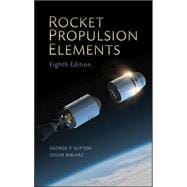
Rocket Propulsion Elements

ISBN: 9780470080245 | 0470080248
Edition: 8th
Format: Hardcover
Publisher: Wiley
Pub. Date: 2/2/2010

Why Rent from Knetbooks?

Because Knetbooks knows college students. Our rental program is designed to save you time and money. Whether you need a textbook for a semester, quarter or even a summer session, we have an option for you. Simply select a rental period, enter your information and your book will be on its way!

Top 5 reasons to order all your textbooks from Knetbooks:

  • We have the lowest prices on thousands of popular textbooks
  • Free shipping both ways on ALL orders
  • Most orders ship within 48 hours
  • Need your book longer than expected? Extending your rental is simple
  • Our customer support team is always here to help
SummaryTable of ContentsAuthor Biography
The definitive text on rocket propulsion-now revised to reflectadvancements in the fieldFor sixty years, Sutton's Rocket Propulsion Elements has been regarded as the single most authoritative sourcebook on rocket propulsion technology. As with the previous edition, coauthored with Oscar Biblarz, the Eighth Edition of Rocket Propulsion Elements offers a thorough introduction to basic principles of rocket propulsion for guided missiles, space flight, or satellite flight. It describes the physical mechanisms and designs for various types of rocket... MORE
PREFACE.

1 Classification.

1.1. Duct Jet Propulsion.

1.2. Rocket Propulsion.

1.3. Applications of Rocket Propulsion.

References.

2 Definitions and Fundamentals.

2.1. Definitions.

2.2. Thrust.

2.3. Exhaust Velocity.

2.4. Energy and Efficiencies.

2.5. Multiple Propulsion Systems.

2.6. Typical Performance Values.

Problems.

Symbols.

References.

3 Nozzle Theory and Thermodynamic Relations.

3.1. Ideal Rocket.

3.2. Summary of Thermodynamic Relations.

3.3. Isentropic Flow Through Nozzles.

3.4... MORE

3.5. Real Nozzles.

3.6. Nozzle Alignment.

Problems.

Symbols.

References.

4 Flight Performance.

4.1. Gravity-Free Drag-Free Space Flight.

4.2. Forces Acting on a Vehicle in the Atmosphere.

4.3. Basic Relations of Motion.

4.4. Space Flight.

4.5. Flight Maneuvers.

4.6. Effect of Propulsion System on Vehicle Performance.

4.7. Flight Vehicles.

4.8. Military Missiles.

4.9. Flight Stability.

Problems.

Symbols.

References.

5 Chemical Rocket Propellant Performance Analysis.

5.1. Background and Fundamentals.

5.2. Analysis of Chamber or Motor Case Conditions.

5.3. Analysis of Nozzle Expansion Processes.

5.4. Computer-Assisted Analysis.

5.5. Results of Thermochemical Calculations.

Problems.

Symbols.

References.

6 Liquid Propellant Rocket Engine Fundamentals.

6.1. Types of Propellants.

6.2. Propellant Tanks.

6.3. Propellant Feed Systems.

6.4. Gas Pressure Feed Systems.

6.5. Tank Pressurization.

6.6. Turbopump Feed Systems and Engine Cycles.

6.7. Rocket Engines for Maneuvering, Orbit Adjustments, or Attitude Control.

6.8. Engine Families.

6.9. Valves and Pipelines.

6.10. Engine Support Structure.

Problems.

Symbols.

References.

7 Liquid Propellants.

7.1. Propellant Properties.

7.2. Liquid Oxidizers.

7.3. Liquid Fuels.

7.4. Liquid Monopropellants.

7.5. Gelled Propellants.

7.6. Gaseous Propellants.

7.7. Safety and Environmental Concerns.

Problems.

Symbols.

References.

8 Thrust Chambers.

8.1. Injectors.

8.2. Combustion Chamber and Nozzle.

8.3. Low-Thrust Rocket Thrust Chambers or Thrusters.

8.4. Materials and Fabrication.

8.5. Heat Transfer Analysis.

8.6. Starting and Ignition.

8.7. Random Variable Thrust.

8.8. Sample Thrust Chamber Design Analysis.

Problems.

Symbols.

References.

9 Liquid Propellant Combustion and Its Stability.

9.1. Combustion Process.

9.2. Analysis and Simulation.

9.3. Combustion Instability.

Problems.

References.

10 Turbopumps and Their Gas Supplies.

10.1. Introduction.

10.2. Descriptions of Several Turbopumps.

10.3. Selection of Turbopump Configuration.

10.4. Flow, Shaft Speeds, Power, and Pressure Balances.

10.5. Pumps.

10.6. Turbines.

10.7. Approach to Turbopump Preliminary Design.

10.8. Gas Generators and Preburners.

Problems.

Symbols.

References.

11 Engine Systems, Controls, and Integration.

11.1. Propellant Budget.

11.2. Performance of Complete or Multiple Rocket Propulsion Systems.

11.3. Engine Design.

11.4. Engine Controls.

11.5. Engine System Calibration.

11.6. System Integration and Engine Optimization.

Problems.

Symbols.

References.

12 Solid Propellant Rocket Fundamentals.

12.1. Basic Relations and Propellant Burning Rate.

12.2. Other Performance Issues.

12.3. Propellant Grain and Grain Configuration.

12.4. Propellant Grain Stress and Strain.

12.5. Attitude Control and Side Maneuvers with Solid Propellant Rocket Motors.

Problems.

Symbols.

References.

13 Solid Propellants.

13.1. Classification.

13.2. Propellant Characteristics.

13.3. Hazards.

13.4. Propellant Ingredients.

13.5. Other Propellant Categories.

13.6. Liners, Insulators, and Inhibitors.

13.7. Propellant Processing and Manufacture.

Problems.

References.

14 Solid Propellant Combustion and Its Stability.

14.1. Physical and Chemical Processes.

14.2. Ignition Process.

14.3. Extinction or Thrust Termination.

14.4. Combustion Instability.

Problems.

References.

15 Solid Rocket Components and Motor Design.

15.1. Motor Case.

15.2. Nozzles.

15.3. Igniter Hardware.

15.4. Rocket Motor Design Approach.

Problems.

References.

16 Hybrid Propellant Rockets.

16.1. Applications and Propellants.

16.2. Interior Hybrid Motor Ballistics.

16.3. Performance Analysis and Grain Configuration.

16.4. Design Example.

16.5. Combustion Instability.

Problems.

Symbols.

References.

17 Electric Propulsion.

17.1. Ideal Flight Performance.

17.2. Electrothermal Thrusters.

17.3. Nonthermal Electrical Thrusters.

17.4. Optimum Flight Performance.

17.5. Mission Applications.

17.6. Electric Space-Power Supplies and Power-Conditioning Systems.

Problems.

Symbols.

References.

18 Thrust Vector Control.

18.1. TVC Mechanisms with a Single Nozzle.

18.2. TVC with Multiple Thrust Chambers or Nozzles.

18.3. Testing.

18.4. Integration with Vehicle.

Problems.

References.

19 Selection of Rocket Propulsion Systems.

19.1. Selection Process.

19.2. Criteria for Selection.

19.3. Interfaces.

References.

20 Rocket Exhaust Plumes.

20.1. Plume Appearance and Flow Behavior.

20.2. Plume Effects.

20.3. Analysis and Mathematical Simulation.

Problems.

References.

21 Rocket Testing.

21.1. Types of Tests.

21.2. Test Facilities and Safeguards.

21.3. Instrumentation and Data Management.

21.4. Flight Testing.

21.5. Postaccident Procedures.

References.

Appendix 1 Conversion Factors and Constants.

Appendix 2 Properties of the Earth's Standard Atmosphere.

Appendix 3 Summary of Key Equations for Ideal Chemical Rockets.

Index.

George P. Sutton is a consultant for the aerospace industry. He formerly served as executive director of engineering at Rocketdyne (Rocketdyne Division of The Boeing Company, now Pratt & Whitney Rocketdyne) and as a laboratory associate at Lawrence Livermore National Laboratory.

Oscar Biblarz is a Professor Emeritus in the Department of Mechanical and Astronautical Engineering at the Naval Postgraduate School in Monterey, California.


Please wait while this item is added to your cart...