FREE SHIPPING BOTH WAYS
ON EVERY ORDER!
LIST PRICE:
$120.00

Sorry, this item is currently unavailable.

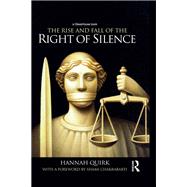
The Right to Silence: Principle, Pragmatism and Policy Making

ISBN: 9780415547710 | 0415547717
Edition: 1st
Format: Hardcover
Publisher: Routledge Caven
Pub. Date: 4/12/2014

Why Rent from Knetbooks?

Because Knetbooks knows college students. Our rental program is designed to save you time and money. Whether you need a textbook for a semester, quarter or even a summer session, we have an option for you. Simply select a rental period, enter your information and your book will be on its way!

Top 5 reasons to order all your textbooks from Knetbooks:

  • We have the lowest prices on thousands of popular textbooks
  • Free shipping both ways on ALL orders
  • Most orders ship within 48 hours
  • Need your book longer than expected? Extending your rental is simple
  • Our customer support team is always here to help
Summary
Within an international context in which the right to silence has long been regarded as sacrosanct, this book provides the first comprehensive, empirically-based analysis of the effects of curtailing the right to silence. The right to silence has served as the practical expression of the principles that an individual was to be considered innocent until proven guilty, and that it was for the prosecution to establish guilt. In 1791, the Fifth Amendment to the US Constitution proclaimed that none 'shall be compelled in any criminal case to be a witness against himself'. In more recent times, the privilege against self-incrimination has been a founding principle for the International Criminal Court, the new South African constitution and the Ad Hoc International Criminal Tribunals for Rwanda and the former Yugoslavia. Despite this pedigree, over the past thirty years when governments have felt under pressure to combat crime or terrorism, the right to silence has been reconsidered, (as in Australia) curtailed (in most of the United Kingdom), or circumvented (by the creation of the military tribunals to try the Guantánamo detainees). The analysis here focuses upon the effects of the Criminal Justice and Public Order Act 1994 in England and Wales. There, curtailing the right to silence was advocated in terms of 'common sense' policy making and was achieved by an eclectic borrowing of concepts and policies from other jurisdictions. The implications of curtailing this right are here explored in detail with reference to the UK, but within a comparative context that examines how different 'types' of legal system regard the right to silence and the effects of constitutional protection.


Please wait while this item is added to your cart...