FREE SHIPPING BOTH WAYS
ON EVERY ORDER!
LIST PRICE:
$27.95

Sorry, this item is currently unavailable.

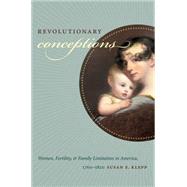
Revolutionary Conceptions : Women, Fertility, and Family Limitation in America, 1760-1820

ISBN: 9780807859926 | 0807859923
Edition: 1st
Format: Paperback
Publisher: UNIV OF NORTH CAROLINA PRESS
Pub. Date: 12/1/2009

Why Rent from Knetbooks?

Because Knetbooks knows college students. Our rental program is designed to save you time and money. Whether you need a textbook for a semester, quarter or even a summer session, we have an option for you. Simply select a rental period, enter your information and your book will be on its way!

Top 5 reasons to order all your textbooks from Knetbooks:

  • We have the lowest prices on thousands of popular textbooks
  • Free shipping both ways on ALL orders
  • Most orders ship within 48 hours
  • Need your book longer than expected? Extending your rental is simple
  • Our customer support team is always here to help
SummaryTable of ContentsAuthor Biography
In the Age of Revolution, how did American women conceive their lives and marital obligations? By examining the attitudes and behaviors surrounding the contentious issues of family, contraception, abortion, sexuality, beauty, and identity, Susan E. Klepp demonstrates that many women--rural and urban, free and enslaved--began to radically redefine motherhood. They asserted, or attempted to assert, control over their bodies, their marriages, and their daughters' opportunities. Late-eighteenth-century American women were among the first in the world to disavow the continual childbearing and large families that had long been considered ideal. Liberty, equality, and heartfelt religion led to new conceptions of virtuous, rational womanhood and responsible parenthood. These changes can be seen in falling birthrates, in advice to friends and kin, in portraits, and in a gradual, even reluctant, shift in men's opinions. Revolutionary-era women redefined femininity, fertility, family, and their futures by limiting births. Women might not have won the vote in the new Republic, they might not have gained formal rights in other spheres, but, Klepp argues, there was a women's revolution nonetheless.
Acknowledgmentsp. v
List of Illustrationsp. ix
List of Tablep. xiii
Introduction First to Fall: Fertility, American Women, and Revolutionp. 1
Starting, Spacing, and Stopping: The Statistics of Birth and Family Sizep. 21
Old Ways and Newp. 56
Women's Wordsp. 88
Beauty and the Bestial: Images of Womenp. 128
Potions, Pills, and ... MOREp. 179
Increase and Multiply: Embarrassed Men and Public Orderp. 215
Reluctant Revolutionariesp. 248
Conclusion: Fertility and the Feminine in Early Americap. 272
Appendixp. 287
Indexp. 305
Table of Contents provided by Ingram. All Rights Reserved.
Susan E. Klepp is professor of history and affiliated professor of women's studies and of African American studies at Temple University. She is author or coeditor of six books and editor of the Journal of the Early Republic.


Please wait while this item is added to your cart...