FREE SHIPPING BOTH WAYS
ON EVERY ORDER!
LIST PRICE:
$144.00

Sorry, this item is currently unavailable.

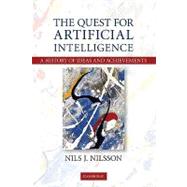
The Quest for Artificial Intelligence

ISBN: 9780521116398 | 0521116392
Edition: 1st
Format: Hardcover
Publisher: Cambridge University Press
Pub. Date: 10/30/2009

Why Rent from Knetbooks?

Because Knetbooks knows college students. Our rental program is designed to save you time and money. Whether you need a textbook for a semester, quarter or even a summer session, we have an option for you. Simply select a rental period, enter your information and your book will be on its way!

Top 5 reasons to order all your textbooks from Knetbooks:

  • We have the lowest prices on thousands of popular textbooks
  • Free shipping both ways on ALL orders
  • Most orders ship within 48 hours
  • Need your book longer than expected? Extending your rental is simple
  • Our customer support team is always here to help
SummaryTable of ContentsAuthor Biography
This book is the definitive history of the field of artificial intelligence (AI), tracing its history from the dreams of early pioneers to the more successful work of today's AI engineers. The book includes many diagrams and easy-to-understand descriptions of AI programs that will help the casual reader gain an understanding of how these and other AI systems actually work.

Artificial intelligence (AI) is a field within computer science that is attempting to build enhanced intelligence into computer systems. This bo... MORE
... MORE
Prefacep. xiii
Beginningsp. 1
Dreams and Dreamersp. 3
Cluesp. 10
From Philosophy and Logicp. 10
From Life Itselfp. 15
From Engineeringp. 25
Early Explorations: 1950s and 1960sp. 47
Gatheringsp. 49
Session on Learning Machinesp. 49
The Dartmouth Summer Projectp. 52
Mechanization of Thought Processesp. 56
Pattern Recognitionp. 62
Character Recognitionp. 62
Neural Networksp. 64
Statistical Methodsp. 73
Applications of Pattern Recognition to Aerial Reconnaissancep. 74
Early Heuristic Programsp. 81
The Logic Theorist and Heuristic Searchp. 81
Proving Theorems in Geometryp. 85
The General Problem Solverp. 87
Game-Playing Programsp. 89
Semantic Representationsp. 96
Solving Geometric Analogy Problemsp. 96
Storing Information and Answering Questionsp. 98
Semantic Networksp. 100
Natural Language Processingp. 103
Linguistic Levelsp. 103
Machine Translationp. 107
Question Answeringp. 110
1960s' Infrastructurep. 114
Programming Languagesp. 114
Early AI Laboratoriesp. 115
Research Supportp. 118
All Dressed Up and Places to Gop. 120
Efflorescence: MID-1960s to MID-1970sp. 123
Computer Visionp. 125
Hints from Biologyp. 126
Recognizing Facesp. 127
Computer Vision of Three-Dimensional Solid Objectsp. 128
“Hand–Eye” Researchp. 141
At MITp. 141
At Stanfordp. 142
In Japanp. 145
Edinburgh's “FREDDY”p. 145
Knowledge Representation and Reasoningp. 149
Deductions in Symbolic Logicp. 149
The Situation Calculusp. 152
Logic Programmingp. 153
Semantic Networksp. 154
Scripts and Framesp. 156
Mobile Robotsp. 162
Shakey, the SRI Robotp. 162
The Stanford Cartp. 176
Progress in Natural Language Processingp. 181
Machine Translationp. 181
Understandingp. 182
Game Playingp. 193
The Dendral Projectp. 197
Conferences, Books, and Fundingp. 202
Applications and Specializations: 1970s to early 1980sp. 207
Speech Recognition and Understanding Systemsp. 209
Speech Processingp. 209
The Speech Understanding Study Groupp. 211
The DARPA Speech Understanding Research Programp. 212
Subsequent Work in Speech Recognitionp. 220
Consulting Systemsp. 224
The SRI Computer-Based Consultantp. 224
Expert Systemsp. 229
Understanding Queries and Signalsp. 244
The Settingp. 244
Natural Language Access to Computer Systemsp. 247
HASP/SIAPp. 252
Progress in Computer Visionp. 258
Beyond Line-Findingp. 258
Finding Objects in Scenesp. 262
DARPA's Image Understanding Programp. 267
Boomtimesp. 271
“New-Generation” projectsp. 275
The Japanese Create a Stirp. 277
The Fifth-Generation Computer Systems Projectp. 277
Some Impacts of the Japanese Projectp. 281
DARPA's Strategic Computing Programp. 286
The Strategic Computing Planp. 286
Major Projectsp. 289
AI Technology Basep. 294
Assessmentp. 297
Entr'actep. 303
Speed Bumpsp. 305
Opinions from Various Onlookersp. 305
Problems of Scalep. 319
Acknowledged Shortcomingsp. 325
The “AI Winter”p. 327
Controversies and Alternative Paradigmsp. 331
About Logicp. 331
Uncertaintyp. 332
“Kludginess”p. 333
About Behaviorp. 334
Brain-Style Computationp. 339
Simulating Evolutionp. 341
Scaling Back AIs Goalsp. 344
The Growing Armamentarium: From the 1980s Onwardp. 347
Reasoning and Representationp. 349
Nonmonotonic or Defeasible Reasoningp. 349
Qualitative Reasoningp. 352
Semantic Networksp. 354
Other Approaches to Reasoning and Representationp. 365
Solving Constraint Satisfaction Problemsp. 365
Solving Problems Using Propositional Logicp. 368
Representing Text as Vectorsp. 373
Latent Semantic Analysisp. 376
Bayesian Networksp. 381
Representing Probabilities in Networksp. 381
Automatic Construction of Bayesian Networksp. 387
Probabilistic Relational Modelsp. 391
Temporal Bayesian Networksp. 393
Machine Learningp. 398
Memory-Based Learningp. 398
Case-Based Reasoningp. 400
Decision Treesp. 402
Neural Networksp. 408
Unsupervised Learningp. 413
Reinforcement Learningp. 415
Enhancementsp. 422
Natural Languages and Natural Scenesp. 431
Natural Language Processingp. 431
Computer Visionp. 436
Intelligent System Architecturesp. 455
Computational Architecturesp. 456
Cognitive Architecturesp. 467
Modern AI: Today And Tomorrowp. 479
Extraordinary Achievementsp. 481
Gamesp. 481
Robot Systemsp. 488
Ubiquitous Artificial Intelligencep. 501
AI at Homep. 501
Advanced Driver Assistance Systemsp. 502
Route Finding in Mapsp. 503
You Might Also Like…p. 503
Computer Gamesp. 504
Smart Toolsp. 507
In Medicinep. 507
For Schedulingp. 509
For Automated Tradingp. 509
In Business Practicesp. 510
In Translating Languagesp. 511
For Automating Inventionp. 511
For Recognizing Facesp. 512
The Quest Continuesp. 515
In the Labsp. 516
Toward Human-Level Artificial Intelligencep. 525
Summing Upp. 534
Indexp. 539
Table of Contents provided by Ingram. All Rights Reserved.
Nils J. Nilsson, Kumagai Professor of Engineering (Emeritus) in the Department of Computer Science at Stanford University, received his doctorate in electrical engineering from Stanford in 1958. He has served on the editorial boards of Artificial Intelligence and the Journal of Artificial Intelligence Research. He was also an area editor for the Journal of the Association for Computing Machinery. He is a past president and Fellow of the Association for the Advancement of Artificial Intelligence and a Fellow of the American Association for the Advancement of Science.


Please wait while this item is added to your cart...