FREE SHIPPING BOTH WAYS
ON EVERY ORDER!
LIST PRICE:
$44.95

OUR PRICE:
$9.74

You may extend rentals at any time.


Presidential Elections : Strategies and Structures of American Politics
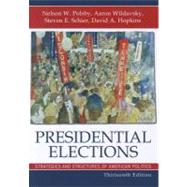
ISBN: 9780742564237 | 0742564231
Edition: 13th
Format: Paperback
Publisher: Rowman & Littlefield Pub Inc
Pub. Date: 7/1/2011

Why Rent from Knetbooks?

Because Knetbooks knows college students. Our rental program is designed to save you time and money. Whether you need a textbook for a semester, quarter or even a summer session, we have an option for you. Simply select a rental period, enter your information and your book will be on its way!

Top 5 reasons to order all your textbooks from Knetbooks:

  • We have the lowest prices on thousands of popular textbooks
  • Free shipping both ways on ALL orders
  • Most orders ship within 48 hours
  • Need your book longer than expected? Extending your rental is simple
  • Our customer support team is always here to help
SummaryTable of ContentsAuthor Biography
Brimming with data and examples from the historic 2008 election, and laced with previews of 2012, the thirteenth edition of this classic text offers a complete overview of the presidential election process from the earliest straw polls and fundraisers to final voter turnout and exit interviews. The comprehensive coverage includes campaign strategy, the sequence of electoral events, and the issues, all from the perspective of the various actors in the election process voters, interest groups, political parties, the media, and the candidates themselves.
... MORE
List of Figure, Tables, and Boxesp. xi
Prefacep. xiii
The strategic Environmentp. 1
Votersp. 3
Why People Don't Votep. 3
Why People Do Vote: A Theory of Social Connectednessp. 8
Party Identification as Social Identityp. 10
Parties as Aggregates of Loyal Votersp. 11
Ideologies, Candidates, and Issues in the Minds of Votersp. 15
Changes in Party Identification: Social Habit versus Contemporary Evaluationp. 18
A Central Strategic Problem: The Attentiveness of Votersp. 22
Groupsp. 25
The Presidential Vote as an Aggregation of Interest Groupsp. 25
Variations among Interest Groupsp. 33
"Special" Interests and Public Interest Groupsp. 37
Political Parties as Organizationsp. 42
Third Partiesp. 47
Rules and resourcesp. 51
Rules: The Electoral Collegep. 51
Thinking about Resourcesp. 52
Resources: Moneyp. 53
The Beverly Hills Primaryp. 53
Campaign Money in the Prenomination Periodp. 59
Raising and Spending Money in the General Electionp. 61
Does Money Buy Elections?p. 64
Campaign Finance Reformp. 70
Resources: Control over Informationp. 73
Newspapersp. 74
Televisionp. 79
The Internet and Other New Mediap. 82
Incumbency as a Resource: The Presidencyp. 85
Incumbency as a Liability: The Vice Presidencyp. 88
The Balance of Resourcesp. 92
Sequencesp. 93
The Nomination Processp. 95
Before the Primariesp. 97
Iowa and New Hampshire: The First Hurdlesp. 100
1972p. 101
1976p. 102
1980p. 103
1984p. 104
1988p. 104
1992p. 105
1996p. 106
2000p. 107
2004p. 108
2008p. l09
What Do These Historical Vignettes Teach?p. 111
State Primariesp. 112
State Caucusesp. 124
Superdelegatesp. 126
The National Party Conventionsp. 128
Candidate Organizations at the Conventionsp. 130
Party Delegates at the Conventionsp. 131
The Convention as Advertisingp. 135
The Vice Presidential Nomineep. 138
The Future of National Conventionsp. 143
The Campaignp. 147
The Well-Traveled Candidatesp. 148
Persuading Votersp. 152
Economic Issuesp. 153
Foreign Issuesp. 155
Social Issuesp. 156
Presentation of Selfp. 158
Negative Campaigningp. 162
Getting Good Pressp. 164
Campaign Professionalsp. 167
Policy Advisersp. 171
Pollingp. 173
Focus Groupsp. 178
Television Advertisingp. 180
New Mediap. 182
Televised Debatesp. 184
Getting Out the Votep. 190
Campaign Blundersp. 192
Forecasting the Outcomep. 197
Counting the Votep. 203
Issuesp. 209
Appraisalsp. 211
The Political Theory of Policy Governmentp. 214
Reform by Means of Participatory Democracyp. 219
Some Specific Reformsp. 223
The Nomination Processp. 224
The Decline of the National Conventionp. 228
The Electoral Collegep. 231
Party Platforms and Party Differencesp. 238
American Parties and Democracyp. 241
Elections and Public Policyp. 242
Parties of Advocacy versus Parties of Intermediationp. 247
Appendixesp. 253
Vote by Groups in Presidential Elections, 1952-2008p. 255
Voter Turnout in Presidential Elections, by Population Characteristics,1968-2008p. 263
Selections from the Democratic and Republican Party Platforms, 2008p. 275
Notesp. 281
Indexp. 329
Table of Contents provided by Ingram. All Rights Reserved.
The late Nelson W. Polsby was Heller Professor of Political Science and past director of the Institute of Governmental Studies at the University of California, Berkeley, where he taught American politics for forty years. The late Aaron Wildavsky was Class of 1940 Professor of Political Science and Public Policy at the University of California, Berkeley, and founding dean of Berkeley's Graduate (now Goldman) School of Public Policy. Steven E. Schier is Dorothy H. and Edward C. Congdon Professor of Political Science at Carleton College. He is the author or editor of eleven books and numerous scholarly and media articles. David A. Hopkins is assistant professor of political science at Boston College.


Please wait while this item is added to your cart...

