FREE SHIPPING BOTH WAYS
ON EVERY ORDER!
LIST PRICE:
$65.20

Sorry, this item is currently unavailable.

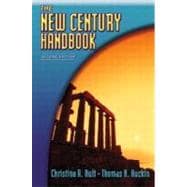
The New Century Handbook

ISBN: 9780205329700 | 0205329705
Edition: 2nd
Format: Hardcover
Publisher: Pearson College Div
Pub. Date: 7/1/2001

Why Rent from Knetbooks?

Because Knetbooks knows college students. Our rental program is designed to save you time and money. Whether you need a textbook for a semester, quarter or even a summer session, we have an option for you. Simply select a rental period, enter your information and your book will be on its way!

Top 5 reasons to order all your textbooks from Knetbooks:

  • We have the lowest prices on thousands of popular textbooks
  • Free shipping both ways on ALL orders
  • Most orders ship within 48 hours
  • Need your book longer than expected? Extending your rental is simple
  • Our customer support team is always here to help
SummaryTable of Contents
The most successful new handbook published in over a decade, The New Century Handbook is the only comprehensive college handbook to be developed with the assumption that students are writing using word processors and are using the Internet as a fundamental source for their research writing. It is the first college handbook to thoroughly integrate an awareness of and instruction on the benefits of computer technology to the writing and research processes. The handbook offers, first and foremost however, a thorough treatment of the writing proces... MORE
... MORE
Prefacexvii
Part 1 Writing1(154)
Writing and Computers
1(8)
Why write?
1(4)
Why write with a computer?
5(2)
How have computers changed communication?
7(2)
Critical Thinking and Reading
9(20)
Think critically
9(4)
Engage actively and critically in the reading process
13(16)
Preparing
29(24)
An overview of the writing process
31(2)
Experiment and explore
33(5)
Invent and prewrite
38(7)
Gather information
45(1)
Plan and organize
46(6)
Try computer prewriting software
52(1)
Composing
53(18)
Review
54(5)
Draft
59(2)
Collaborate
61(3)
Try composing with a computer
64(2)
Review a student draft
66(5)
Rewriting
71(32)
Shift from writer to reader
71(6)
Revise
77(8)
Edit
85(5)
Proofread
90(2)
Give and receive feedback
92(5)
Review a model student paper
97(6)
Structuring Paragraphs
103(23)
Write unified paragraphs
104(2)
Use clear organizational patterns
106(10)
Use sentence-linking techniques
116(3)
Be consistent with verb tense, person, and number
119(1)
Use parallelism to make paragraphs coherent
120(1)
Decide on appropriate paragraph length
120(1)
Link paragraphs with key words
121(1)
Construct effective introductory and concluding paragraphs
122(4)
Formulating Arguments
126(29)
Formulate and arguable thesis
127(6)
Consider your purpose and audience
133(1)
Generate good supporting evidence
134(3)
Take note of evidence for alternative views
137(1)
Develop and test the main points
138(4)
Build a compelling case
142(2)
Avoid logical and emotional fallacies
144(5)
Structure the argument
149(3)
Electronic argument
152(3)
Part 2 Research155(192)
The Research Project
155(32)
Become a researcher
155(5)
Schedule a time frame
160(3)
Create a research notebook
163(3)
Create a working bibliography
166(3)
Gather background information
169(6)
Conduct focused research
175(12)
Using the Internet for Research
187(24)
Use Internet sources throughout the research process
187(2)
Get to know the Internet and the Web
189(9)
Search the Internet and the Web
198(9)
Follow a student Internet search
207(4)
Evaluating Electronic and Print Sources
211(13)
Choose legitimate sources
212(6)
Follow a student's evaluation of Web links
218(6)
Using Sources
224(19)
Use sources responsibly
224(5)
Quote sources sparingly
229(5)
Paraphrase sources accurately
234(4)
Summarize sources briefly
238(5)
Writing the Research Paper
243(33)
Review your rhetorical stance and thesis
244(3)
Plan a structure
247(1)
Write a draft
248(2)
Review and revise the draft
250(1)
Follow formatting conventions
251(4)
Review and annotated student research paper
255(21)
Documentation Formats
276(71)
Document by using the MLA system
278(33)
Document by using the APA system
311(17)
Document by using the Chicago Manual of Style (CMS) system
328(7)
Document by using the CBE system
335(7)
Document by using the COS system
342(2)
Consult the style manual for the appropriate discipline
344(3)
Part 3 Writing in the Disciplines347(80)
Writing in the Humanities
347(29)
Know the different types of writing in the humanities
348(1)
Write interpretively or analytically about literature
349(5)
Review some model student papers
354(15)
Look to the Internet and traditional materials for resources
369(7)
Writing in the Natural Sciences
376(28)
Know the different types of writing in the natural sciences
377(2)
Write objectively about science
379(1)
Review a sample research report in CBE format
380(14)
Look to the Internet and Traditional materials for resources
394(10)
Writing in the Social Sciences
404(23)
Know the different types of writing in the social sciences
405(1)
Write persuasively about social science
406(2)
Review a sample research report in APA format
408(12)
Look to the Internet and traditional materials for resources
420(7)
Part 4 Document Design427(86)
Design Principles and Graphics
427(24)
Follow the three basic design principles
428(2)
Use formatting tools
430(13)
Use graphics
443(7)
Respect different norms and preferences
450(1)
Desktop Publishing
451(14)
Produce a simple brochure
452(4)
Produce a simple newsletter
456(9)
Designing for the Web
465(18)
Generate a basic design for the Web
466(2)
Plan your Web document
468(15)
Writing for the Web
483(30)
Methods used to construct Web pages
484(1)
HTML editors and HTML codes
485(24)
Refine your Web site
509(3)
Transfer your site to an Internet server
512(1)
Part 5 Special Purpose Writing513(52)
Using Email and Computer Networks
513(23)
Build community through electronic mail
514(8)
Build community through online networks
522(14)
Business Correspondence and Reports
536(20)
Write concise and professional business letters
536(3)
Write specifically tailored letters of application
539(3)
Write densely but appropriately packed resumes
542(7)
Write clearly organized reports
549(4)
Write focused memos
553(3)
Essay Exams
556(9)
Prepare for an essay exam
556(5)
Attend to the writing process
561(2)
Review sample student responses to an essay exam question
563(2)
Part 6 Sentence Grammar565(67)
Sentence Structure
565(21)
Learn to identify parts of speech
565(8)
Learn to identify basic sentence patterns
573(5)
Learn to expand sentences
578(4)
Learn how to classify sentences
582(4)
Pronoun Case
586(8)
Use the subjective case when a pronoun functions as a sentence subject, clause subject, or subject complement
587(1)
Use the objective case when a pronoun functions as an object
587(1)
Test for pronoun case in compound constructions by using the pronoun alone
588(2)
Choose the form for an interrogative or relative pronoun based on how it functions in its clause
590(1)
Distinguish between possessive adjectives and possessive pronouns
591(1)
Choose the case for a pronoun in a comparison based on how it would function in its own clause
592(2)
Verbs
594(20)
Learn the regular verb forms
594(2)
Learn common irregular verb forms
596(3)
Know how to use auxiliary verbs
599(2)
Learn the verb tenses
601(4)
Observe sequence of tenses
605(3)
Use transitive and intransitive verbs correctly
608(1)
Favor active over passive voice
609(2)
Make sure verbs are in the proper mood
611(3)
Agreement
614(10)
Make verbs agre in number and person with their grammatical subjects
614(5)
Make pronouns agree in number and gender with their antecedents
619(5)
Adjectives and Adverbs
624(8)
Use adjectives to modify nouns
624(1)
Avoid overuse of nouns as modifiers
625(1)
Use adverbs to modify verbs, adjectives, other adverbs, and clauses
626(1)
Be aware of some commonly confused adjectives and adverbs
626(1)
Use comparative and superlative forms of adjectives and adverbs correctly
627(3)
Avoid double negatives
630(2)
Part 7 Correct Sentences632(29)
Sentence Fragments
632(7)
Make sentences grammatically complete
633(2)
Connect dependent clauses
635(1)
Connect phrases
635(3)
Use sentence fragments only for special effect
638(1)
Comma Splices and Run-on Sentences
639(4)
Turn one clause into a subordinate clause
640(1)
Separate clauses with a comma and a coordinating conjunction
641(1)
Separate independent clauses with a semicolon
641(2)
Pronoun Reference
643(5)
Refer to a specific noun antecedent
643(2)
Avoid vague use of this, that, which, and it
645(1)
Avoid mixed uses of it
646(1)
Be consistent with use of that, which, and who
646(2)
Misplaced and Dangling Modifiers
648(6)
Position modifiers close to the words they modify
648(1)
Avoid ambiguity
649(1)
Try to put lengthy modifiers at the beginning or end
650(1)
Avoid disruptive modifiers
650(2)
Avoid dangling modifiers
652(2)
Faulty Shifts
654(7)
Avoid unnecessary shifts in person and number
654(1)
Avoid unnecessary shifts in verb tense, mood, subject, and voice
655(2)
Avoid shifts in tone
657(1)
Avoid mixed constructions
658(1)
Create consistency between subjects and predicates
659(1)
Avoid unmarked shifts between direct and indirect discourse
659(2)
Part 8 Effective Sentences661(47)
Clarity and Conciseness
661(10)
Avoid excessively long sentences
661(1)
Avoid unnecessary repetition and redundancy
662(1)
Use expletives only where appropriate
663(1)
Use passive voice only where appropriate
663(1)
Eliminate wordy phrases
664(1)
Avoid a noun-heavy style
665(2)
Choose words that express your meaning precisely
667(1)
Use that to clarify sentence structure
668(1)
Make comparisons complete and clear
668(1)
Avoid multiple negation
669(2)
Coordination and Subordination
671(6)
Look for a way to combine closely related sentences
671(1)
Coordinate related sentences of equal value
672(1)
Subordinate less important ideas
673(4)
Parallelism
677(9)
Put parallel content in parallel form
677(3)
Make all items in a list or series parallel
680(1)
Use parallelism with correlative conjunctions
681(1)
Use parallelism for comparisons or contrasts
682(1)
Make parallel constructions complete and clear
682(1)
Use parallelism to enhance coherence
683(3)
Emphasis
686(6)
Create emphasis through end-weight
686(1)
Create emphasis through selective repetition
687(1)
Create emphasis through contrast
688(1)
Create emphasis through careful word choice
689(1)
Create emphasis through punctuation or typography
690(2)
Variety
692(7)
Vary sentence length
692(2)
Vary sentence structure
694(1)
Avoid excessive repetition
694(4)
Respect different standards and purposes
698(1)
Word-Processing Tools for Improving Sentences
699(9)
Use a grammar checker with caution
699(4)
Use sentence revision applications
703(2)
Use other applications
705(3)
Part 9 Effective Words708(53)
Choosing the Right Words
708(14)
Choose the right denotation
708(3)
Choose the right connotation
711(1)
Find the right level of formality
712(2)
Avoid jargon, slang, or dialect
714(2)
Avoid pretentiousness
716(1)
Try to please the ear
717(1)
Use figurative language thoughtfully
718(4)
Avoiding Biased Language
722(6)
Avoid biased gender references
722(3)
Avoid biased language about race and ethnicity
725(1)
Avoid biased language about age
726(1)
Avoid biased language about other differences
726(2)
Building a Powerful Vocabulary
728(9)
Learn roots, prefixes, and suffixes
728(4)
Learn denotations and connotations
732(1)
Learn related words
733(4)
Using a Thesaurus and a Dictionary
737(10)
Use a thesaurus to find the exact word
738(4)
Use a dictionary to learn about words
742(5)
Spelling
747(14)
Use a spell checker
747(2)
Master troublesome homophones
749(4)
Guard against common spelling errors
753(2)
Learn general spelling rules and patterns
755(6)
Part 10 Punctuation761(52)
End Punctuation
761(6)
The Period
761(1)
Use a period to mark the end of a statement
761(1)
Use periods to punctuate initials and many abbreviations
762(1)
Use periods to mark basic divisions in units and computer names
762(1)
Avoid common misuses of periods
762(2)
The Question Mark
763(1)
Use a question mark after a direct request
764(1)
Do not use a question mark after an indirect question
764(1)
The Exclamation Point
765(1)
Use an exclamation point to signal a strong statement
765(2)
The Comma
767(15)
Use a comma to set off an introductory phrase or clause
767(1)
Use a comma before a coordinating conjunction to separate independent clauses
768(2)
Use commas between items in a series
770(1)
Use commas to separate coordinate adjectives
770(1)
Use commas to set off nonessential phrases or clauses
771(2)
Use commas to set off conjunctive adverbs
773(1)
Use commas with dates, place names and addresses, titles and degrees, and numbers
773(1)
Use commas with speaker tags
774(1)
Use commas with markers of direct address
775(1)
Avoid misuse of commas
776(6)
The Semicolon
782(4)
Use a semicolon to separate independent clauses not linked by a coordinating conjunction
782(1)
Use a semicolon to separate independent clauses linked by a conjunctive adverb
783(1)
Use semicolons in a series with internal punctuation
783(1)
Place semicolons outside quotation marks
783(1)
Avoid common semicolon errors
783(3)
The Colon
786(4)
Use a colon to introduce a list or an appositive
786(1)
Use a colon to set off a second independent clause that explains the first
787(1)
Use a colon to introduce a quotation
787(1)
Use colon in titles
788(1)
Use colons in business letters and memos
788(1)
Use colons in numbers and addresses
788(2)
The Apostrophe
790(5)
Use apostrophes with nouns to indicate possession
790(2)
Use apostrophes to indicate contractions and omitted letters
792(1)
Use apostrophes to mark certain plural forms
792(1)
Avoid misusing the apostrophe
793(2)
Quotation Marks
795(7)
Use quotation marks for exact direct quotations
795(1)
Use quotation marks to suggest skepticism about a term
796(1)
Use quotation marks to indicate shifts of register
797(1)
Use quotation marks when citing titles of short works
797(1)
Follow standard practice in using other punctuation with quotations
797(3)
Avoid misusing quotation marks
800(2)
Other Punctuation Marks
802(11)
Parentheses
802(1)
Use parentheses to insert parenthetical comments
802(2)
Do not overuse parentheses
804(1)
Use parentheses around letters or numbers to set off embedded lists
804(1)
Dashes
804(1)
Use dashes to highlight extra informational comments
805(1)
Use dashes to set off important or surprising points
805(1)
Confine yourself to one pair of dashes per sentence
805(2)
Brackets
807(1)
Use brackets to insert editorial comments or clarifications into quotations
807(1)
Use brackets with the word sic
808(1)
Use brackets to acknowledge editorial emphasis within a quotation
808(1)
Use brackets for parenthetical comments with parentheses
809(1)
Ellipses
809(1)
Use an ellipsis to indicate a deletion from a quotation
809(1)
Use an ellipsis to indicate a pause in a sentence
810(1)
Use brackets around ellipses in quotations when using MLA style
810(1)
Slashes
811(1)
Use slashes to separate lines of poetry quoted within a sentence
811(1)
Use a slash to show alternatives
811(1)
Use a slash to indicate a fraction
811(1)
Use slashes in Internet addresses
812(1)
Use slashes in writing dates informally
812(1)
Part 11 Mechanics813(23)
Capital Letters and Italics
813(10)
Capital Letters
813(1)
Capitalize the first word of all free-standing sentences
813(2)
Capitalize all names, associated titles, and proper adjectives
815(2)
Capitalize all significant words in titles
817(1)
Follow the owner's preferences in capitalizing email addresses and URLs
817(2)
Italics
818(1)
Italicize titles of independent creative works
819(1)
Italicize URLs and email addresses
819(1)
Italicize names of vehicles
820(1)
Italicize foreign words and phrases
820(1)
Italicize words, letters, and numbers referred to as such
821(1)
Italicize words for emphasis
821(2)
Abbreviations and Numbers
823(7)
Abbreviations
823(1)
Abbreviate titles, ranks, and degrees only before or after full names
823(1)
Use abbreviations after numerical dates and times
824(1)
Use Latin abbreviations sparingly
824(1)
Use acronyms and initialisms only if their meaning is clear
825(1)
Avoid most other abbreviations in formal writing
825(1)
Numbers
826(1)
Use figures with abbreviations and conventionally numerical references
826(1)
Write out other numbers that can be expressed in one or two words
827(1)
Write out numbers that begin sentences
828(1)
When one number modifies another, write one as a figure and the other as a word
828(1)
Write related numbers alike
828(2)
The Hyphen
830(6)
Consult your dictionary on hyphenating compounds
830(1)
Hyphenate compounds acting as adjectives before nouns
831(1)
Hyphenate spelled-out fractions and numbers from twenty-one through ninety-nine
832(1)
Hyphenate to avoid ambiguity and awkward spellings
832(1)
Use hyphens for end-of-line word division
832(4)
Part 12 ESL Issues836(33)
Tips on Nouns and Articles
836(10)
Use the plural only with count nouns
836(2)
Use the for specific references
838(3)
Use the with most proper nouns derived from common nouns
841(1)
Use a or an in nonspecific references to singular count nouns
842(1)
Use no article in nonspecific references to plural count nouns or noncount nouns
842(2)
Use other determiners correctly
844(2)
Tips on Verbs
846(10)
Phrasal Verbs
846(1)
Note phrasal verbs as you listen and read
847(2)
Verb Complements
849(1)
Learn which verbs take gerunds as complements
849(1)
Learn which verbs take to infinitives as complements
849(1)
Learn which verbs take both gerunds and to infinitives as complements
850(1)
Learn which verbs take only unmarked infinitives as complements
850(1)
Verbs of State
851(1)
Do not use the progressive tense with verbs of state
851(2)
Modal Auxiliary Verbs
852(1)
Use only a base verb form immediately after a modal auxiliary
853(1)
Do not use more than one modal at a time
853(1)
Conditional Sentences
854(1)
In factual conditionals, use the same verb tense in both parts
854(1)
In predictive conditionals, use a present-tense verb in the if clause and an appropriate modal in the result clause
854(1)
In hypothetical conditionals, use a past-tense verb in the if clause and would, could, or might in the result clause
855(1)
Tips on Word Order
856(8)
Use inverted word order in sentences
856(1)
String adjectives in the order preferred in English
857(1)
String nouns for easiest recognition
858(2)
Use meaning to place adverbs that modify verbs
860(1)
Place adverbs directly before adjectives or adverbs that they modify
861(1)
Place adverbs before sentences or clauses that they modify
861(1)
Do not put an adverb between a verb and its object
862(2)
Tips on Vocabulary
864(5)
Look for cognates, but watch out for ``false friends''
864(1)
Try to get a feel for collocations
865(2)
Learn idioms in their entirety
867(2)
Glossary of Computer Terms869(9)
Glossary of Grammatical and Rhetorical Terms878(16)
Glossary of Usage894(9)
Credits903(3)
Index906

Related Products


  • Exercise Book for The New Century Handbook
    Exercise Book for The New Cent...
  • MyCompLab NEW with Pearson eText Student Access Code Card for The New Century Handbook (standalone)
    MyCompLab NEW with Pearson eTe...
  • MyCompLab with Pearson eText -- Standalone Access Card -- for the New Century Handbook
    MyCompLab with Pearson eText -...
  • New Century Handbook : Interactive Edition User's Guide to New Century Reader
    New Century Handbook : Interac...
  • New Century Handbook, The (paperbound), (with MyCompLab NEW with E-Book Student Access Code Card)
    New Century Handbook, The (pap...
  • New Century Handbook, The (with MyCompLab NEW with Pearson eText Student Access Code Card)
    New Century Handbook, The (wit...
  • The New Century Handbook
    The New Century Handbook
  • The New Century Handbook
    The New Century Handbook
  • The New Century Handbook (paperback)
    The New Century Handbook (pape...
  • The New Century Handbook (with CD and MyCompLab)
    The New Century Handbook (with...


Please wait while this item is added to your cart...