FREE SHIPPING BOTH WAYS
ON EVERY ORDER!
LIST PRICE:
$27.00

OUR PRICE:
$9.44

You may extend rentals at any time.


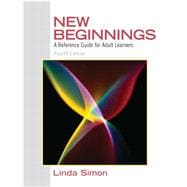
New Beginnings : A Reference Guide for Adult Learners
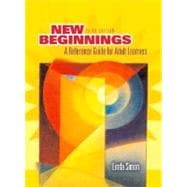
ISBN: 9780131958890 | 0131958895
Edition: 3rd
Format: Paperback
Publisher: Prentice Hall
Pub. Date: 1/1/2006

Why Rent from Knetbooks?

Because Knetbooks knows college students. Our rental program is designed to save you time and money. Whether you need a textbook for a semester, quarter or even a summer session, we have an option for you. Simply select a rental period, enter your information and your book will be on its way!

Top 5 reasons to order all your textbooks from Knetbooks:

  • We have the lowest prices on thousands of popular textbooks
  • Free shipping both ways on ALL orders
  • Most orders ship within 48 hours
  • Need your book longer than expected? Extending your rental is simple
  • Our customer support team is always here to help
SummaryTable of Contents
Specifically addressing adults by relating to and drawing upon their life experiences, this friendly, accessible, and supportive guide to achieving college success helps users assess their own strengths as a learner, better manage their time, hone good study skills, and write effective college papers. The Third edition includes several important revisions focused on making successful oral presentations, managing collaborative work projects, doing research on the internet, and financing adult education. For practicing teachers to use with their ... MORE
Prefacexi
1 BECOMING A STUDENT1(12)
Looking Back and Moving Forward: Applying Life Experiences to Being a Student
2(4)
Juggling respon... MORE
Evaluating information
Working with others
Researching a problem
How Being a Student Affects Your Relationships with Others
6(1)
Friends and family members
Instructors
Classroom Protocol
7(1)
Presenting Your Work
7(2)
Written work
Oral presentations
Collaborative projects
BOX: GUIDELINES FOR ORAL PRESENTATIONS
8(1)
BOX: GUIDELINES FOR COLLABORATIVE PROJECTS
9(1)
Learning On-Line
9(2)
BOX: CLASSROOM DO'S AND DON'TS
10(1)
Getting Your Work Done
11(1)
Setting Goals
12(1)
BOX: COMMUNICATION AND GOALS
12(1)
Additional Resources
12(1)
2 ASSESSING LEARNING NEEDS AND COURSE REQUIREMENTS13(16)
Types of Learners
14(3)
Visual learner
Kinesthetic learner
Auditory learner
WORKSHEET: EVALUATING YOUR LEARNING STYLE
15(1)
BOX: TIPS FOR CAPITALIZING ON YOUR LEARNING STYLE
16(1)
Understanding Classroom Formats
17(2)
Lecture
Seminar
Workshop
WORKSHEET: ASSESSING YOUR PREFERRED CLASS FORMAT
18(1)
Recognizing Different Areas of Study
19(2)
Choosing Your Classes
21(4)
Deciphering course descriptions
BOX: IDENTIFYING YOUR COURSE REQUIREMENTS
22(1)
Evaluating a course syllabus
BOX: QUESTIONS TO ASK ABOUT A COURSE
23(1)
WORKSHEET: YOUR COLLEGE CAREER PLAN
24(1)
On-Line Learning
25(4)
What you can expect from an on-line course
BOX: SUCCESSFUL LEARNING ON-LINE
27(2)
3 IDENTIFYING COLLEGE RESOURCES29(8)
Educational Advisors
30(1)
Study Skills Classes
30(1)
Instructors
30(1)
Classmates
31(1)
Testing Services
31(1)
Counselors for Students with Disabilities
32(1)
Career Counseling
32(1)
Personal Counseling
33(1)
Mentoring Programs
33(1)
Tutoring Networks
33(1)
BOX: MAKING THE BEST USE OF SUPPORT RESOURCES
34(1)
Writing Center
34(1)
Computer Center
35(1)
Librarians
35(2)
BOX: PLANNING A MEETING WITH AN ADVISOR
35(2)
4 STRATEGIES FOR MANAGING TIME AND STRESS37(10)
Time Commitments of Being a Student
38(1)
Ten Hints for Time Management
38(3)
1. Be realistic
2. Build in "safe time"
3. Keep a planner
4. Find a space
5. Look at the big picture
6. Speak up about your concerns and commitments
7. Work a little every day
8. Make a checklist each week
9. Just say no
10. Get a study buddy
Procrastination
41(1)
Perfectionism
42(1)
Six Tips for Managing Stress
43(4)
1. Identify a source of comfort
2. Try relaxation techniques
3. Use exercise
4. Try imagery
5. Find an anchor
6. Connect with your support system
BOX: RELAXATION EXERCISE
44(3)
5 DEVELOPING NOTE-TAKING, STUDYING, AND TEST-TAKING SKILLS47(14)
Taking Notes from Different Kinds of Instructors
47(7)
The organized lecturers
The storyteller
21(32)
The discusser
BOX: GENERAL POINTERS FOR TAKING CLASS NOTES
53(1)
How to Prepare for Tests
54(2)
Assessment
Study time
Preparing for a multiple-choice or short-answer test
Preparing for an essay test
Test-Taking
56(2)
BOX: TYPES OF ESSAY QUESTIONS
57(1)
Understanding Your Grade
58(1)
Additional Resources
59(2)
6 STRATEGIES FOR READING61(10)
Taking an Active Approach to Reading
62(1)
Reading a Textbook
62(2)
Reading a Theoretical or Critical Book or Article
64(3)
Reading Fiction
67(1)
Reading Poetry
68(3)
BOX: ANALYZING YOUR READING ASSIGNMENTS
69(2)
7 STRATEGIES FOR RESEARCH71(24)
Choosing a Research Topic
72(1)
Formulating a Research Question
72(1)
Distinguishing Primary and Secondary Sources
73(1)
Library Resources
74(4)
Dictionaries
Encyclopedias
Popular magazines
Professional and scholarly journals
Dissertations
Book Review Digest
Biographical indexes
Newspaper indexes
On-line catalogues
Other on-line databases
CD-ROM
Using the Internet for Research
78(3)
Evaluating Internet sites
BOX: INTERNET LINGO
80(1)
Taking Notes Based on Your Research
81(4)
Using quotations
Paraphrasing
Summarizing
Documenting Sources
85(3)
Styles of documentation
Organizing Your Notes
88(2)
Index cards
Notebooks
Tape recorders
Computer files
Plagiarism and Overdocumentation
90(4)
What is plagiarism?
When does plagiarism occur?
How can you avoid plagiarism?
Are you overdocumenting?
BOX: USEFUL GUIDES TO RESEARCH
92(2)
Additional Resources
94(1)
8 STRATEGIES FOR WRITING95(14)
Writer's Block: What Is It and What Causes It?
95(2)
BOX: WRITING ASSIGNMENT CHECKLIST
96(1)
Generating Ideas
97(4)
Journal writing
Freewriting, brainstorming, and mind-mapping
BOX: AN EXAMPLE OF FREEWRITING
99(1)
Starting with passages from source material
Outlining
BOX: SAMPLE PARAGRAPH OUTLINE
100(1)
Visualizing a reader
Planning
101(1)
Drafting
101(4)
Writing an introduction
Developing paragraphs
Writing a conclusion Revising
103(2)
BOX: REVISION CHECKLIST
104(1)
Three Qualities to Aim for in Your Writing
105(4)
Conciseness
Clarity
BOX: ELIMINATING UNNECESSARY WORDS
106(3)
Coherence
APPENDIX A GRAMMAR BRUSHUP109(16)
The Parts of Speech
109(2)
What Is a Sentence?
111(2)
Pronoun Protocol
113(1)
Handling Verbs
114(1)
Placing Phrases and Clauses Logically
115(1)
Punctuation
116(3)
Using the Active Voice
119(1)
Possessives
119(1)
Common Usage Errors
119(5)
Additional Resources
124(1)
APPENDIX B MATH BRUSHUP125(26)
Math Anxiety Is a Learned Behavior
126(1)
Overcoming Mathematics Anxiety
127(1)
The Language of Mathematics
127(2)
Arithmetic
129(1)
Multiplication
129(2)
Fractions
131(1)
Decimals and Percentages
132(1)
Scientific Notation
133(1)
Algebra
134(3)
The Number Line
137(1)
The Real Number System
138(3)
Expressions and Equations
141(2)
Prime Numbers and Factoring
143(1)
Working with Exponents
144(3)
Ratios
147(2)
A Method for Dealing with Word Problems
149(2)
APPENDIX C FINANCING YOUR EDUCATION151(4)
WORKSHEET: ASSESSING YOUR COLLEGE EXPENSES
152(1)
How to Find Financial Aid
153(1)
Scholarships and Grants
153(1)
Loans
153(1)
Assistantships, Internships, and Work-Study Plans
154(1)
On-Line Resources
154(1)
Index155

Related Products


  • New Beginnings : A Guide for Adult Learners and Returning Students
    New Beginnings : A Guide for A...
  • New Beginnings : A Reference Guide for Adult Learners
    New Beginnings : A Reference G...
  • New Beginnings : A Reference Guide for Adult Learners
    New Beginnings : A Reference G...


Please wait while this item is added to your cart...