FREE SHIPPING BOTH WAYS
ON EVERY ORDER!
LIST PRICE:
$114.95

OUR PRICE:
$45.52

You may extend rentals at any time.


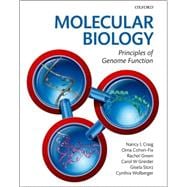
Molecular Biology : Principles of Genome Function

ISBN: 9780199562053 | 0199562059
Edition: 1st
Format: Hardcover
Publisher: Oxford University Press, USA
Pub. Date: 9/28/2010

Why Rent from Knetbooks?

Because Knetbooks knows college students. Our rental program is designed to save you time and money. Whether you need a textbook for a semester, quarter or even a summer session, we have an option for you. Simply select a rental period, enter your information and your book will be on its way!

Top 5 reasons to order all your textbooks from Knetbooks:

  • We have the lowest prices on thousands of popular textbooks
  • Free shipping both ways on ALL orders
  • Most orders ship within 48 hours
  • Need your book longer than expected? Extending your rental is simple
  • Our customer support team is always here to help
SummaryTable of ContentsAuthor Biography
The biological world operates on a multitude of scales - from molecules to cells to tissues to organisms to ecosystems. Throughout all these levels runs a common thread: the communication and onward passage of information - from cell to cell, from organism to organism and, ultimately, from generation to generation. This information is stored, at the most fundamental level, in each living cell in our body. But how does this information - no more than a static repository of data -come alive to govern the processes that constitute life? The answer... MORE
... MORE
Genomes and the flow of biological information
Biological Molecules
The Chemical Basis of Life
Chromosome Structure and Function
The Cell Cycle
Chromosome Replication
Chromosome Segregation
Transcription
RNA Processing
Translation
Protein Modification and Targeting
Cellular Responses to DNA Damage
DNA Double-Strand Break Repair and Homologous Recombination
Mobile DNA
Genomics and Genetic Variation
Methods in Molecular Biology
Table of Contents provided by Publisher. All Rights Reserved.

Nancy L Craig received an AB in Biology and Chemistry in 1973 from Bryn Mawr College, Pennsylvania. She received her PhD in Biochemistry in 1980 at Cornell University, where she worked on the role of RecA function in the lysogenic induction of bacteriophage lambda. During postdoctoral work at the National Institutes of Health in Bethesda, Maryland, from 1980-1984, she studied the mechanism of bacteriophage lambda site-specific recombination. In 1984, she joined the faculty at the University of California San Francisco and began her studies of the transposition of the bacterial transposon Tn7. She spent a sabbatical in 1989-1990 with Allan Spradling at the Carnegie Institution of Embryology studying P element transposition in Drosophila. In 1991, she moved to The Johns Hopkins University School of Medicine in Baltimore, where she is a Howard Hughes Medical Institute Investigator and a Professor in the Department of Molecular Biology & Genetics, and continues her studies on Tn7 transposition. Orna Cohen-Fix graduated from the Tel Aviv University, Israel in 1987 and received a PhD in biochemistry with Zvi Livneh at the Weizmann Institute of Science, Israel, in 1994. After a post-doctoral fellowship at the Carnegie Institution of Washington with Doug Koshland she moved to the National Institute of Diabetes & Digestive & Kidney Diseases where she is now a Senior Investigator. Her research focuses on two main topics: cell cycle regulation and nuclear architecture, using budding yeast as a model organism. Rachel Green graduated in chemistry from the University of Michigan in 1986 and then completed her doctoral work in biological chemistry in 1992 with Jack W Szostak at Harvard University studying catalytic RNA. She then did postdoctoral work in the laboratory of Harry F Noller at the University of California, Santa Cruz, studying the role played by the ribosomal RNAs in the function of the ribosome. She is currently a Professor in the Department of Molecular Biology and Genetics at The Johns Hopkins University School of Medicine. Her work continues to focus on the mechanism of translation. Carol W Greider received a BA from the University of California at Santa Barbara in 1983. In 1987, she received her PhD from the University of California at Berkeley where she and her advisor, Elizabeth Blackburn, discovered telomerase, the enzyme that maintains telomere length. In 1988, she went to Cold Spring Harbor Laboratory as an independent Fellow and remained as a Staff Scientist until 1997, when she moved to The Johns Hopkins University School of Medicine. She is currently a Professor and Director of the Department of Molecular Biology and Genetics and her work focuses on telomerase and the role of telomeres in chromosome stability and cancer. She is a member of the US National Academy of Sciences and is the winner of the 2006 Lasker Award for Basic Medical Research with Elizabeth Blackburn and Jack Szostak for the discovery of telomerase. Gisela Storz graduated in biochemistry from the University of Colorado at Boulder in 1984 and received a PhD in biochemistry with Bruce Ames at the University of California at Berkeley in 1988. After postdoctoral fellowships with Sankar Adhya and Fred Ausubel, she moved to the National Institute of Child Health and Human Development where she is now a Senior Investigator. Her research is focused on understanding gene regulation in response to environmental stress as well as elucidating the functions of small regulatory RNAs.
Cynthia Wolberger received her undergraduate degree in Physics from Cornell University in 1979 and a doctorate in Biophysics from Harvard University in 1987, where she worked with Stephen C Harrison and Mark Ptashne on the structure of a phage repressor bound to DNA. She went on to study the structures of eukaryotic protein-DNA complexes as a postdoctoral fellow in the laboratory of Carl O Pabo at The Johns Hopkins University School of Medicine in Baltimore, Maryland, where she is now Professor of Biophysics & Biophysical Chemistry and Investigator in the Howard Hughes Medical Institute. Her research focus is on the structural and biochemical mechanisms underlying combinatorial regulation of transcription.


Please wait while this item is added to your cart...