FREE SHIPPING BOTH WAYS
ON EVERY ORDER!
LIST PRICE:
$26.95

OUR PRICE:
$10.67

You may extend rentals at any time.


Maya 8E Pa

ISBN: 9780500289020 | 0500289026
Edition: 8th
Format: Trade Paper
Publisher: THAMES&HUD
Pub. Date: 1/17/2011

Why Rent from Knetbooks?

Because Knetbooks knows college students. Our rental program is designed to save you time and money. Whether you need a textbook for a semester, quarter or even a summer session, we have an option for you. Simply select a rental period, enter your information and your book will be on its way!

Top 5 reasons to order all your textbooks from Knetbooks:

  • We have the lowest prices on thousands of popular textbooks
  • Free shipping both ways on ALL orders
  • Most orders ship within 48 hours
  • Need your book longer than expected? Extending your rental is simple
  • Our customer support team is always here to help
SummaryTable of ContentsAuthor Biography

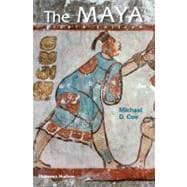
The Maya has long been established as the best, most readable introduction to the New World’s greatest ancient civilization. In these pages Michael D. Coe distills a lifetime’s scholarship for the general reader and student.

The eighth edition incorporates the latest archaeological and epigraphic research. Among the finest new discoveries are the spectacular polychrome murals of Calakmul, which provide archaeological evidence for the importance of marketplaces in the Classic Maya cities as well as giving a unique glimpse into ... MORE

It is clear that the birth of Maya civilization lies not in the Classic but in the Preclassic period, above all in the Mirador Basin of northern Guatemala, where the builders of gigantic ancient cities erected the world’s largest pyramid as early as 200 BC. In addition, the persistent influence of the precocious Olmec civilization of southeast Mexico on the development of complex society in the Maya area has become more apparent. These and other discoveries continue to suggest that we must rethink what we mean by the term “Classic.”

This edition concludes with new historical evidence for the crucial role played by collaborationist native leaders, both Maya and non- Maya, in the Spanish conquest of the region. 20 color and 170 black-and-white photographs and illustrations

"The gold standard of introductory books on the ancient Maya." -Expedition


"The gold standard of introductory books on the ancient Maya."'” Expedition
Prefacep. 7
Chronological Tablep. 10
Introductionp. 11
The settingp. 14
Natural resourcesp. 22
Areasp. 23
Periodsp. 24
Peoples and languagesp. 26
Climate change and its cultural impactp. 31
The Earliest Mayap. 41
Early huntersp. 41
Archaic collector... MOREp. 44
Early Preclassic villagesp. 48
The Middle Preclassic expansionp. 51
Preclassic Kaminaljuyup. 54
The Maya lowlandsp. 56
The Rise of Maya Civilizationp. 60
The birth of the calendarp. 62
The Hero Twins and the Creation of the World (box)p. 67
Izapa and the Pacific Coastp. 69
Kaminaljuyu and the Maya highlandsp. 72
The Peten and the Maya lowlandsp. 79
The Mirador Basinp. 83
San Bartolop. 85
From Preclassic to Classic in the Maya lowlandsp. 88
Classic Splendor: the Early Periodp. 90
Teotihuacan: military giantp. 92
The Esperanza culturep. 94
Cerén: a New World Pompeii?p. 99
Tzakol culture in the Central Areap. 99
Copan in the Early Classicp. 109
The Northern Areap. 113
Classic Splendor: the Late Periodp. 117
Classic sites in the Central Areap. 118
Copan and Quiriguap. 121
Tikalp. 128
Calakmulp. 131
Yaxchilan, Piedras Negras, and Bonampakp. 132
The Petexbatunp. 136
Palenquep. 137
Comalcalco and Toninap. 146
Classic sites in the Northern Area: Río Bec, Chenes, and Cobap. 147
Art of the Late Classicp. 149
The Terminal Classicp. 169
The Great Collapsep. 169
Ceibal and the Putun Mayap. 172
Puuk sites in the Northern Areap. 173
The Terminal Classic at Chichen Itzap. 178
Ek' Bahlamp. 180
The Cotzumalhuapa problemp. 182
The end of an erap. 184
The Post-Classicp. 185
The Toltec invasion and Chichen Itzap. 187
The Itza and the city of Mayapanp. 201
The independent states of Yucatanp. 204
The Central Area in the Post-Classicp. 207
Maya-Mexican dynasties in the Southern Areap. 207
The Spanish Conquestp. 210
Maya Life on the Eve of the Conquestp. 212
The farm and the chasep. 212
Industry and commercep. 214
The life cyclep. 215
Society and politicsp. 216
Maya Thought and Culturep. 218
The universe and the godsp. 221
The earth and the godsp. 223
The Classic Maya Underworldp. 226
Rites and ritual practitionersp. 229
Numbers and the calendarp. 231
The sun and the moonp. 233
The celestial wanderers and the starsp. 235
The nature of Maya writingp. 237
History graven in stonep. 242
Maya superstatesp. 246
History and the supernaturalp. 247
Name-taggingp. 248
Spiritual alter-egosp. 249
The Enduring Mayap. 250
The new Spanish orderp. 251
The highland Maya, yesterday and todayp. 253
The Tzotzil Maya of Zinacantanp. 254
The Yucatec Mayap. 257
The War of the Castesp. 257
The Maya of Chan K'omp. 258
The Lakandonp. 260
Uprising in Chiapasp. 260
The great terrorp. 261
The Maya futurep. 262
Visiting the Maya Areap. 263
Dynastic Rulers of Classic Maya Citiesp. 267
Further Readingp. 269
Sources of Illustrationsp. 274
Indexp. 275
Table of Contents provided by Ingram. All Rights Reserved.
Michael D. Coe is Professor Emeritus of Anthropology at Yale University. His many other books include Mexico (with Rex Koontz), The True History of Chocolate (with Sophie D. Coe), Breaking the Maya Code, Reading the Maya Glyphs (with Mark Van Stone) and Angkor and the Khmer Civilization, all published by Thames Hudson.


Please wait while this item is added to your cart...