Free Shipping On Every Order



Amazon no longer offers textbook rentals. We do!
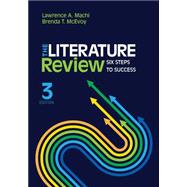
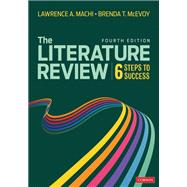
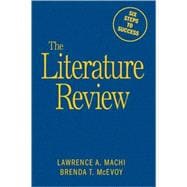
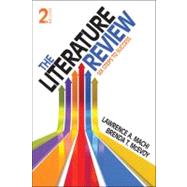
The Literature Review; Six Steps to Success
The Literature Review; Six Steps to Success
- ISBN 13:
9781412961356
- ISBN 10:
1412961351
- Format: Paperback
- Copyright: 07/10/2008
- Publisher: Corwin Pr
- Newer Edition
Rent
Sorry, this item is currently unavailable.
 Free Shipping On Every Order
Note: Supplemental materials are not guaranteed with Rental or Used book purchases.
Extend or Purchase Your Rental at Any Time
Need to keep your rental past your due date? At any time before your due date you can extend or purchase your rental through your account.
Summary
"Machi and McEvoy have crafted a guide that is absolutely elegant in its simplicity. The writers take the reader from the simple to the complex in an extremely well-written, logical sequence of bite-sized steps. This is the most useful guide to writing a literature review available anywhere." -Leonard O. Pellicer, Distinguished Professor Emeritus University of South Carolina A clear, understandable six-step method for a straightforward literature review process! Written in user-friendly language, this compact reference offers master's and doctoral-level students in education and the social sciences a roadmap to developing and writing an effective literature review for a research project, thesis, or dissertation. Organized around a comprehensive and detailed six-step developmental model, the book provides guided exercises, graphics, charts, and examples from the everyday experiences of researchers. Both novice and experienced graduate students will find invaluable assistance for: Selecting a topic Searching the literature Developing arguments Surveying the literature Critiquing the literature Writing the literature reviewWith additional tips, checklists, and summaries tucked into each chapter, this guide provides clear, focused direction for composing a first-rate literature review.