FREE SHIPPING BOTH WAYS
ON EVERY ORDER!
LIST PRICE:
$16.95

OUR PRICE:
$10.00

You may extend rentals at any time.


Learning from Strangers : The Art and Method of Qualitative Interview Studies
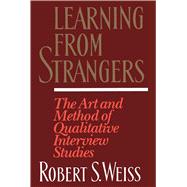
ISBN: 9780684823126 | 0684823128
Format: Paperback
Publisher: Free Press
Pub. Date: 11/10/1995

Why Rent from Knetbooks?

Because Knetbooks knows college students. Our rental program is designed to save you time and money. Whether you need a textbook for a semester, quarter or even a summer session, we have an option for you. Simply select a rental period, enter your information and your book will be on its way!

Top 5 reasons to order all your textbooks from Knetbooks:

  • We have the lowest prices on thousands of popular textbooks
  • Free shipping both ways on ALL orders
  • Most orders ship within 48 hours
  • Need your book longer than expected? Extending your rental is simple
  • Our customer support team is always here to help
SummaryTable of ContentsAuthor Biography
Learning From Strangersis the definitive work on qualitative research interviewing. It draws on Robert Weiss's thirty years of experience in interviewing and teaching others how to do it. The most effective interviews, says Weiss, rely on creating cooperation -- an open and trusting alliance between interviewer and respondent, dedicated to specific and honest accounts of both internal and external events. Against the eclectic background of his work in national sample surveys, studies based on semi-structured interviewing, and participant observ... MORE
Prefacevii
Introduction
1(14)
Why We Interview
1(1)
... MORE
2(7)
Some Considerations in Undertaking a Qualitative Interview Study
9(5)
The Phases of Qualitative Interviewing Research
14(1)
Respondents: Choosing Them and Recruiting Them
15(24)
Aims and Substantive Frame of the Study
15(2)
Panels and Samples
17(16)
Recruiting Respondents
33(6)
Preparation for Interviewing
39(22)
What Do You Interview About?
39(3)
A Good Report
42(3)
From Substantive Frame to Interview Guide
45(6)
Early Interviews as Learning Experiences
51(2)
To Tape or Not to Tape
53(3)
How Long Should an Interview Last?
56(1)
How Many Interviews with the Same Respondent?
57(1)
Do You Pay Respondents?
58(1)
Where Do You Hold the Interview?
58(1)
Telephone Interviews
59(2)
Interviewing
61(60)
Getting Started
61(4)
The Interviewing Relationship
65(1)
Some Interviewing Guidelines
66(17)
Examples of Interviewing
83(38)
Issues in Interviewing
121(30)
The Effects of Interviewing on Respondent and Interviewer
121(6)
Interviewer Responsibilities
127(4)
Confidentiality Dilemmas
131(3)
Research Interviewing and Therapeutic Intervention
134(1)
If a Respondent Has Need of Clinical Services
135(1)
Matching Interviewers to Respondents
136(5)
Interviewing Difficulties
141(6)
Issues of Validity: Do Respondents Tell the Truth, the Whole Truth, and Nothing But the Truth?
147(4)
Analysis of Data
151(32)
Approaches to Analysis and Reporting
151(2)
Issue-Focused Analysis
153(14)
Case-Focused Analysis
167(12)
The Demonstration of Causation
179(2)
Summary
181(2)
Writing the Report
183(40)
Getting Started
183(3)
To What Audience Is the Report Directed?
186(3)
To What Extent Do You Enter as a Figure in the Report?
189(2)
Using Excerpts as Illustration and as Evidence
191(8)
Justifications for Using Quasi-Quantitative Terms Rather Than Counts and Proportions
199(1)
How You Write About Your Informants and Respondents
200(4)
Getting It Out the Door
204(3)
APPENDICES
A. Other Names for Qualitative Interviewing
207(2)
B. Fields That Use Qualitative Interviewing
209(2)
C. Sources of Bias and Their Control
211(3)
D. Consent Forms
214(5)
E. Quantitative Coding of Qualitative Interview Material
219(4)
Notes223(12)
References235(6)
Index241
Dr. Robert S. Weiss is Director of the Work and Family Research Unit and Research Professor at the University of Massachusetts, Boston. He is the author of several books including Staying the Course (The Free Press, 1990).


Please wait while this item is added to your cart...

