FREE SHIPPING BOTH WAYS
ON EVERY ORDER!
LIST PRICE:
$81.80

Sorry, this item is currently unavailable.

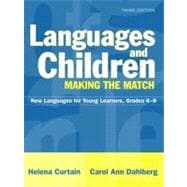
Languages and Children--Making the Match : New Languages for Young Learners, Grades K-8, MyLabS...

ISBN: 9780205463718 | 0205463711
Edition: 3rd
Format: Paperback
Publisher: Allyn & Bacon
Pub. Date: 1/1/2004

Why Rent from Knetbooks?

Because Knetbooks knows college students. Our rental program is designed to save you time and money. Whether you need a textbook for a semester, quarter or even a summer session, we have an option for you. Simply select a rental period, enter your information and your book will be on its way!

Top 5 reasons to order all your textbooks from Knetbooks:

  • We have the lowest prices on thousands of popular textbooks
  • Free shipping both ways on ALL orders
  • Most orders ship within 48 hours
  • Need your book longer than expected? Extending your rental is simple
  • Our customer support team is always here to help
SummaryTable of Contents
With a focus on communicative language teaching as it reflects cognitive and second language acquisition theory, this classic in the field provides a wealth of strategies and activities ready to use in the K-8 classroom. Languages and Children: Making the Match, Third Edition, has been thoroughly revised and updated. Standards-based planning and instruction are the guiding principles throughout the book. This long-awaited third edition provides extensive new information that is not easily accessible to the field. Publishing this information in one source is a tremendous service to methods instructors and teachers, as well as to students.
... MORE
Acknowledgements
Preface
Introduction
Key Concepts for Success: Elementary and Middle School Foreign Languages
Standards for Foreign Language Learning in the 21st Century: Overview
Focus on the Learner
Characteristics of Young Learners
Second Language Acquisition
Cognitive Characteristics of the Learner
Developmental Characteristics of the Learner
Creating an Environment for Communication
Meaningfulness as a Priority for Classroom Activity
When Is ldquo;Communicativerdquo; Not Communicative?
Developing Contexts for Tasks and Activities
Teaching in the Target Language: Context for Communication
Person-to-Person Communication: The Interpersonal Standard (1.1)
Vocabulary
Total Physical Response: TPR
The Natural Approach
TPR Storytelling: TPRS
Functional Chunks
Direct Teaching of Speaking
Writing and the Interpersonal Mode
One-Way Communication: Interpretive and Presentational Modes (1.2, 1.3)
Communication in the Interpretive Mode
Listening
Reading
Communication in the Presentational Mode
Speaking
Writing
Literacy Issues
Connection Between Oral and Written Language
Building Blocks of Second Language Literacy
Building Literacy in the Second Language Classroom
Interpersonal Communication: Partners and Small Groups
Cooperative Structures, Cooperative Learning, and Interactive Language Tasks
Managing Small Group and Partner Activities
Sample Cooperative Group Activities for Beginning Language Learners
Sample Partner Activities for Beginning Language Learners
Planning for Success in the Early Language Classroom
Integrated Thematic Planning for Curriculum, Unit, and Lesson Design
Why Thematic Instruction for the Early Language Curriculum
Thematic Planning for K-8 Classrooms
Planning the Daily Lesson
Planning for Immersion, Bilingual, and Content-Based Instruction
Sample Partner Activities for Beginning Language Learners
Using Assessment to Help Students and Programs Grow. ds
The Theory and Research Base for Phonics and Spelling Instruction
Prior Knowledge and Meaning Vocabulary
Activate Prior Knowledge When Presenting New Ideas
Introduce Vocabulary in Meaningful Settings
Select Vocabulary for Special Attention
Represent Word Meanings Multiple Ways
Accomodations and Adaptations for Vocabulary
Develop Independence in Vocabulary Learning
Accomodations and Adaptations for Morphemic Analysis
Promote Vocabulary in All Subjects
The Theory and Research Base For Prior Knowledge Activation and Vocabulary Instruction
Reading and Responding to Literature for Children
Welcome the Diverse World of Literature
Use Literature to Promote Thinking and Feeling
Accommodations and Adaptations-Just the Right Book
Link Reading and Writing Instruction with Children''s Books
Schedule Daily Self-Selected Reading
Celebrate Book Response Projects
Enrich All Subjects with Literature
The Theory and Research Base
For Reading and Responding to Literature for Children
Comprehension
Reading Comprehension Requires Word Identification, Prior Knowledge, Strategies, and Engagement
Comprehension Can Be Developed with All Kinds of Materials in all Subjects
Comprehension Strategy Lessons Engage Students Before, During, and After Reading
Use a Variety of Before and After Reading Activities to Teach Comprehension Strategies
Accommodations and Adaptations That Develop Comprehension
Use a Variety of Reading Formats to Make Guided Reading Multilevel
The Theory and Research Base for Comprehension
Writing
Self-Selected Writing Promotes Engagement
Accommodations and Adaptations That Develop Writing
Table of Contents provided by Publisher. All Rights Reserved.

Related Products


  • Languages and Children Making the Match, New Languages for Young Learners, Grades K-8
    Languages and Children Making ...
  • Languages and Children--Making the Match:  New Languages for Young Learners, Grades K-8
    Languages and Children--Making...


Please wait while this item is added to your cart...