FREE SHIPPING BOTH WAYS
ON EVERY ORDER!
LIST PRICE:
$88.40

Sorry, this item is currently unavailable.

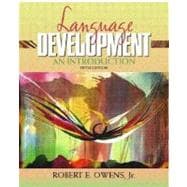
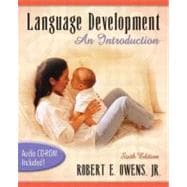
Language Development : An Introduction

ISBN: 9780205319268 | 0205319262
Edition: 5th
Format: Paperback w/CD
Publisher: Allyn & Bacon
Pub. Date: 1/1/2001

Why Rent from Knetbooks?

Because Knetbooks knows college students. Our rental program is designed to save you time and money. Whether you need a textbook for a semester, quarter or even a summer session, we have an option for you. Simply select a rental period, enter your information and your book will be on its way!

Top 5 reasons to order all your textbooks from Knetbooks:

  • We have the lowest prices on thousands of popular textbooks
  • Free shipping both ways on ALL orders
  • Most orders ship within 48 hours
  • Need your book longer than expected? Extending your rental is simple
  • Our customer support team is always here to help
SummaryTable of Contents
Clearly written, well-organized, and comprehensive, Language Development is the most widely used text in its area.In recognition of the tremendous variation across children and language, the fifth edition of this highly readable text devotes much more space to individual developmental differences and cultural differences. Discussion of other cultures has been included in the text wherever possible. In addition, the sections on bidialectalism and bilingualism have been expanded to reflect more accurately the realities of everyday life in the Uni... MORE
Prefacexiii
The Territory
2(28)
Chapter Objectives
3(2)
... MORE
This Text and You
5(1)
Speech, Language, and Communication
6(8)
Speech
7(1)
Language
7(4)
Communication
11(3)
Properties of Language
14(4)
Language as a Social Tool
15(1)
A Rule-Governed System
15(2)
A Generative System
17(1)
Components of Language
18(10)
Syntax
19(2)
Morphology
21(1)
Phonology
22(1)
Semantics
23(3)
Pragmatics
26(1)
Relationship of Language Components
27(1)
Conclusion
28(1)
Discussion
29(1)
Reflections
29(1)
Language-Development Models
30(36)
Chapter Objectives
31(1)
Behavioral Theory
32(5)
Operant Conditioning
33(2)
Limitations
35(1)
Contributions
36(1)
Psycholinguistic Theory: A Syntactic Model
37(11)
Biological Basis
37(1)
Primate Studies: Do Other Species Have Language?
37(1)
Linguistic Processing
38(6)
Language Acquisition
44(1)
Government-Binding Theory
45(2)
Limitations
47(1)
Contributions
48(1)
Psycholinguistic Theory: A Semantic/Cognitive Model
48(8)
Case Grammar: A Beginning
49(2)
The Semantic Revolution
51(2)
Language Development
53(2)
Limitations
55(1)
Contributions
56(1)
Sociolinguistic Theory
56(7)
Speech-Act Theory
57(2)
Language Acquisition
59(2)
Limitations
61(1)
Contributions
62(1)
Conclusion
63(1)
Discussion
64(1)
Reflections
65(1)
Child Development
66(42)
Chapter Objectives
67(1)
Developmental Patterns
68(2)
Developmental Predictability
68(1)
Developmental Milestones
68(1)
Developmental Opportunity
68(1)
Developmental Phases or Periods
68(1)
Individual Differences
69(1)
The Developing Child
70(36)
The New Kid in Town: Age Birth to One Month
72(6)
The Examiner: Age One to Six Months
78(5)
The Experimenter: Age Seven to Twelve Months
83(7)
The Explorer: Age Twelve to Twenty-Four Months
90(5)
The Exhibitor: Age Three to Five Years
95(7)
The Expert: School-Age Years
102(4)
Conclusion
106(1)
Discussion
107(1)
Reflections
107(1)
Neurolinguistics
108(20)
Chapter Objectives
109(1)
Central Nervous System
109(8)
Hemispheric Asymmetry
113(1)
Brain Maturation
114(3)
Language Processing
117(8)
Models of Linguistic Processing
121(4)
Conclusion
125(1)
Discussion
126(1)
Reflections
126(2)
Cognitive and Perceptual Bases of Early Language
128(28)
Chapter Objectives
129(1)
Which Came First, Cognition or Language?
130(3)
Neurological Development
133(1)
Eary Cognitive Development
133(18)
Information Processing Change During Infancy
134(2)
Stages of Development
136(7)
Relation of Sensorimotor Development to Language
143(4)
Infant Learning
147(1)
Role of Caregiver
148(3)
Early Perceptual Development
151(3)
Distancing
153(1)
Summary
153(1)
Conclusion
154(1)
Discussion
155(1)
Reflections
155(1)
The Social and Communicative Bases of Early Language
156(40)
Chapter Objectives
157(3)
Development of Communication: A Chronology
160(15)
The Newborn
160(3)
Socialization and Early Communication: Age Birth to Six Months
163(4)
Development of Intentionality: Age Seven to Twelve Months
167(8)
Maternal Communication Behaviors
175(9)
Infant-Elicited Social Behavior
175(7)
Cultural, Socioeconomic, and Sexual Differences
182(2)
Interactions Between Infant and Caregiver
184(9)
Joint Reference
184(3)
Joint Action
187(5)
Turn-Taking
192(1)
Situational Variations
192(1)
Conclusion
193(1)
Discussion
194(1)
Reflections
194(2)
Language-Learning Processes in Young Children
196(40)
Chapter Objectives
197(1)
Comprehension, Production, and Cognitive Growth
198(5)
Cognition and Language
198(5)
Child Learning Strategies
203(12)
Toddler Language-Learning Strategies
203(5)
Preschool Language-Learning Strategies
208(7)
Individual Differences
215(1)
Adult Conversational Teaching Techniques
215(13)
Adult Speech to Toddlers
215(9)
Adult Conversations with Preschoolers
224(4)
Importance of Play
228(2)
Cultural and Social Differences
230(3)
Conclusion
233(1)
Discussion
234(1)
Reflections
234(2)
A First Language
236(38)
Chapter Objectives
237(1)
Single-Word Utterances
238(22)
Pragmatic Aspects of a First Language
239(7)
Initial Lexicons
246(4)
Meaning of Single-Word Utterances
250(10)
Early Multiword Combinations
260(7)
Transition: Early Word Combinations
260(2)
Two-Word Combinations
262(4)
Longer Utterances
266(1)
Phonological Patterns
267(4)
Single-Word Utterances
267(3)
Multiword Utterances
270(1)
Learning Units and Extension
270(1)
Conclusion
271(1)
Discussion
272(1)
Reflections
272(2)
Preschool Pragmatic and Semantic Development
274(30)
Chapter Objectives
275(1)
Pragmatic Development
275(17)
The Conversational Context
276(11)
Narratives
287(4)
Summary
291(1)
Semantic Development
292(7)
Relational Terms
294(5)
Interdependence of Form, Content, and Use: Pronouns
299(3)
Conclusion
302(1)
Discussion
302(1)
Reflections
303(1)
Preschool Development of Language Form
304(44)
Chapter Objectives
305(1)
Stages of Syntactic and Morphologic Development
306(2)
Computing MLU
306(2)
MLU and Stage of Development
308(1)
Morphologic Development
308(10)
Stage II: Brown's Fourteen Morphemes
309(6)
Determinants of Acquisition Order
315(1)
Other Early Morphemes
316(2)
Morphological Rule Learning and Other Aspects of Language
318(1)
Sentence-Form Development
318(15)
Sentence Elements
319(6)
Sentence Types
325(8)
Embedding and Conjoining
333(7)
Phrasal Embedding
334(1)
Subordinate Clause Embedding
335(2)
Clausal Conjoining
337(3)
Summary
340(1)
Phonological Development
340(6)
Phonological Processes
342(4)
Conclusion
346(1)
Discussion
346(1)
Reflections
347(1)
School-Age and Adult Pragmatic and Semantic Development
348(32)
Chapter Objectives
349(3)
Pragmatic Development
352(18)
Narratives
352(9)
Conversational Abilities
361(5)
Gender Differences
366(4)
Summary
370(1)
Semantic Development
370(8)
Vocabulary Growth
370(2)
Syntagmatic-Paradigmatic Shift
372(1)
Related Cognitive Processing
373(2)
Figurative Language
375(3)
Conclusion
378(1)
Discussion
378(1)
Reflections
379(1)
School-Age and Adult Language Form and Mode Development
380(28)
Chapter Objectives
381(1)
Syntactic and Morphologic Development
382(9)
Morphologic Development
383(1)
Noun- and Verb-Phrase Development
384(2)
Sentence Types
386(5)
Summary
391(1)
Phonological Development
391(2)
Morphophonemic Development
391(1)
Summary
392(1)
Metalinguistic Abilities
393(2)
Reading and Writing: A New Mode
395(11)
The Process of Reading
395(3)
Reading Development
398(3)
The Process of Writing
401(1)
Writing Development
402(4)
Summary
406(1)
Conclusion
406(1)
Discussion
406(1)
Reflections
407(1)
Language Differences: Bidialectism and Bilingualism
408(30)
Chapter Objectives
409(2)
Dialects
411(15)
Related Factors
413(2)
American English Dialects
415(11)
Bilingualism
426(10)
Effects of Bilingualism on Language Learning
430(3)
Code Switching and Development
433(2)
Bilingualism and Cognition
435(1)
Cultural Diversity
435(1)
Conclusion
436(1)
Discussion
437(1)
Reflections
437(1)
Language Research and Analysis
438(18)
Chapter Objectives
439(1)
Issues in the Study of Child Language
440(7)
Method of Data Collection
440(2)
Sample Size and Variability
442(2)
Naturalness and Representativeness of the Data
444(1)
Collection Procedures
445(1)
Analysis Procedures
446(1)
Cross-Language Studies
447(1)
Examples of Child Language Data
448(6)
Conclusion
454(1)
Discussion
454(1)
Reflections
454(2)
Disorders and Development
456(5)
Chapter Objectives
457(1)
The Developmental Approach
458(3)
Appendix: American English Speech Sounds461(8)
Glossary469(10)
References479(38)
Author Index517(16)
Subject Index533

Related Products


  • LANGUAGE DEVELOPMENT
    LANGUAGE DEVELOPMENT
  • Language Development : An Introduction
    Language Development : An Intr...
  • Language Development : An Introduction
    Language Development : An Intr...
  • Language Development : An Introduction
    Language Development : An Intr...
  • Language Development : An Introduction
    Language Development : An Intr...
  • Outlines and Highlights for Language Development by Robert E Owens, Isbn : 9780205525560
    Outlines and Highlights for La...


Please wait while this item is added to your cart...