FREE SHIPPING BOTH WAYS
ON EVERY ORDER!
LIST PRICE:
$166.00

OUR PRICE:
$9.74

You may extend rentals at any time.


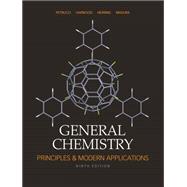
General Chemistry: Principles and Modern Application & Basic Media Pack
ISBN: 9780130143297 | 0130143294
Edition: 9th
Format: Package
Publisher: Pearson College Div
Pub. Date: 1/1/2007

Why Rent from Knetbooks?

Because Knetbooks knows college students. Our rental program is designed to save you time and money. Whether you need a textbook for a semester, quarter or even a summer session, we have an option for you. Simply select a rental period, enter your information and your book will be on its way!

Top 5 reasons to order all your textbooks from Knetbooks:

  • We have the lowest prices on thousands of popular textbooks
  • Free shipping both ways on ALL orders
  • Most orders ship within 48 hours
  • Need your book longer than expected? Extending your rental is simple
  • Our customer support team is always here to help
SummaryTable of Contents
General Chemistry: Principles and Modern Applicationsis recognized for its superior problems, lucid writing, and precision of argument. This updated and expanded edition retains the popular and innovative features of previous editionsincludingFeature Problems,follow-upIntegrative and Practice Exercisesto accompany every in-chapterExample,andFocus Onapplication boxes, as well as newKeep in Mindmarginal notes.Topics covered include atoms and the atomic theory, chemical compounds and reactions, gases, Thermochemistry, electrons in atoms, chemical ... MORE

Most chapters end with a Summary, Integrative Example, Key Terms, Review Questions, Exercises, Integrative and Advanced Exercises, Feature Problems, and eMedia Exercises.
About the Authors.
Preface.
Student's Guide to Using this Text.
1. Matter—Its Properties and Measurement.

The Scope of Chemistry. The Scientific Method. Properties of Matter. Classification of Matter. Measurement o... MORE

2. Atoms and the Atomic Theory.
Early Chemical Discoveries and the Atomic Theory. Electrons and Other Discoveries in Atomic Physics. The Nuclear Atom. Chemical Elements. Atomic Masses. Introduction to the Periodic Table. The Concept of the Mole and the Avogadro Constant. Using the Mole Concept in Calculations. Focus on Occurrence and Abundances of the Elements.

3. Chemical Compounds.
Types of Chemical Compounds and Their Formulas. The Mole Concept and Chemical Compounds. Composition of Chemical Compounds. Oxidation States: A Useful Tool in Describing Chemical Compounds. Naming Compounds: Organic and Inorganic Compounds. Names and Formulas of Inorganic Compounds. Names and Formulas of Organic Compounds. Focus on Mass Spectrometry-Determining Molecular Formulas.

4. Chemical Reactions.
Chemical Reactions and Chemical Equations. Chemical Equations and Stoichiometry. Chemical Reactions in Solution. Determining the Limiting Reactant. Other Practical Matters in Reaction Stoichiometry. Focus on Industrial Chemistry.

5. Introduction to Reactions in Aqueous Solutions.
The Nature of Aqueous Solutions. Precipitation Reactions. Acid-Base Reactions. Oxidation-Reduction: Some General Principles. Balancing Oxidation-Reduction Equations. Oxidizing and Reducing Agents. Stoichiometry of Reactions in Aqueous Solutions: Titrations. Focus on Water Treatment.

6. Gases.
Properties of Gases: Gas Pressure. The Simple Gas Laws. Combining the Gas Laws: The Ideal Gas Equation and the General Gas Equation. Applications of the Ideal Gas Equation. Gases in Chemical Reactions. Mixtures of Gases. Kinetic-Molecular Theory of Gases. Gas Properties Relating to the Kinetic-Molecular Theory. Nonideal (Real) Gases. Focus on The Chemistry of Air-Bag Systems.

7. Thermochemistry.
Getting Started: Some Terminology. Heat. Heats of Reaction and Calorimetry. Work. The First Law of Thermodynamics. Heats of Reaction. Hess's Law. Standard Enthalpies of Formation. Fuels as Sources of Energy. Focus on Fats, Carbohydrates, and Energy Storage.

8. The Atmospheric Gases and Hydrogen.
The Atmosphere. Nitrogen. Oxygen. The Noble Gases. Oxides of Carbon. Hydrogen. Focus on The Carbon Cycle.

9. Electrons in Atoms.
Electromagnetic Radiation. Atomic Spectra. Quantum Theory. The Bohr Atom. Two Ideas Leading to a New Quantum Mechanics. Wave Mechanics. Quantum Numbers and Electron Orbitals. Interpreting and Representing the Orbitals of the Hydrogen Atom. Electron Spin: A Fourth Quantum Number. Multielectron Atoms. Electron Configurations. Electron Configurations and the Periodic Table. Focus on Helium-Neon Lasers.

10. The Periodic Table and Some Atomic Properties.
Classifying the Elements: The Periodic Law and the Periodic Table. Metals and Nonmetals and Their Ions. The Sizes of Atoms and Ions. Ionization Energy. Electron Affinity. Magnetic Properties. Periodic Properties of the Elements. Focus on The Periodic Law and Mercury.

11. Chemical Bonding I: Basic Concepts.
Lewis Theory: An Overview. Covalent Bonding: An Introduction. Polar Covalent Bonds. Writing Lewis Structures. Resonance. Exceptions to the Octet Rule. The Shapes of Molecules. Bond Order and Bond Lengths. Bond Energies. Focus on Polymers-Macromolecular Substances.

12. Chemical Bonding II: Additional Aspects.
What a Bonding Theory Should Do. Introduction to the Valence-Bond Method. Hybridization of Atomic Orbitals. Multiple Covalent Bonds. Molecular Orbital Theory. Delocalized Electrons: Bonding in the Benzene Molecule. Bonding in Metals. Focus on Photoelectron Spectroscopy.

13. Liquids, Solids, and Intermolecular Forces.
Intermolecular Forces and Some Properties of Liquids. Vaporization of Liquids: Vapor Pressure. Some Properties of Solids. Phase Diagrams. Van der Waals Forces. Hydrogen Bonding. Chemical Bonds as Intermolecular Forces. Crystal Structures. Energy Changes in the Formation of Ionic Crystals. Focus on Liquid Crystals.

14. Solutions and Their Physical Properties.
Types of Solutions: Some Terminology. Solution Concentration. Intermolecular Forces and the Solution Process. Solution Formation and Equilibrium. Solubilities of Gases. Vapor Pressures of Solutions. Osmotic Pressure. Freezing-Point Depression and Boiling-Point Elevation of Nonelectrolyte Solutions. Solutions of Electrolytes. Colloidal Mixtures. Focus on Chromatography.

15. Chemical Kinetics.
The Rate of a Chemical Reaction. Measuring Reaction Rates. Effect of Concentration on Reaction Rates: The Rate Law. Zero-Order Reactions. First-Order Reactions. Second-Order Reactions. Reaction Kinetics: A Summary. Theoretical Models for Chemical Kinetics. The Effect of Temperature on Reaction Rates. Reaction Mechanisms. Catalysis. Focus on Combustion and Explosions.

16. Principles of Chemical Equilibrium.
Dynamic Equilibrium. The Equilibrium Constant Expression. Relationships Involving Equilibrium Constants. The Significance of the Magnitude of an Equilibrium Constant. The Reaction Quotient, Q: Predicting the Direction of Net Change. Altering Equilibrium Conditions: Le Chatelier's Principle. Equilibrium Calculations: Some Illustrative Examples. Focus on The Nitrogen Cycle and the Synthesis of Nitrogen Compounds.

17. Acids and Bases.
The Arrhenius Theory: A Brief Review. Bronsted-Lowry Theory of Acids and Bases. The Self-Ionization of Water and the pH Scale. Strong Acids and Strong Bases. Weak Acids and Weak Bases. Polyprotic Acids. Ions as Acids and Bases. Molecular Structure and Acid-Base Behavior. Lewis Acids and Bases. Focus on Acid Rain.

18. Additional Aspects of Acid-Base Equilibria.
The Common-Ion Effect in Acid-Base Equilibria. Buffer Solutions. Acid-Base Indicators. Neutralization Reactions and Titration Curves. Solutions of Salts of Polyprotic Acids. Acid-Base Equilibrium Calculations: A Summary. Focus on Buffers in Blood.

19. Solubility and Complex-Ion Equilibria.
The Solubility Product Constant, Ksp. The Relationship between Solubility and Ksp. The Common-Ion Effect in Solubility Equilibria. Limitations of the Ksp Concept. Criteria for Precipitation and Its Completeness. Fractional Precipitation. Solubility and pH. Equilibria Involving Complex Ions. Qualitative Cation Analysis. Focus on Shells, Teeth, and Fossils.

20. Spontaneous Change: Entropy and Free Energy.
Spontaneity: The Meaning of Spontaneous Change. The Concept of Entropy. Evaluating Entropy and Entropy Changes. Criteria for Spontaneous Change: The Second Law of Thermodynamics. Standard Free Energy Change. Free Energy Change and Equilibrium. Functions of Temperature. Coupled Reactions. Focus on Coupled Reactions in Biological Systems.

21. Electrochemistry.
Electrode Potentials and Their Measurement. Standard Electrode Potentials. Ecell, G,D>, and Keq. Ecell as a Function of Concentrations. Batteries: Producing Electricity Through Chemical Reactions. Corrosion: Unwanted Voltaic Cells. Electrolysis: Causing Nonspontaneous Reactions to Occur. Industrial Electrolysis Processes. Focus on Membrane Potentials.

22. Main-Group Elements I: Metals.
Group 1: The Alkali Metals. Group 2: The Alkaline Earth Metals. Ions in Natural Waters: Hard Water. Group 13 Metals: Aluminum, Gallium, Indium, and Thallium. Group 14 Metals: Tin and Lead. Focus on Gallium Arsenide.

23. Main-Group Elements II: Nonmetals.
Group 18: The Noble Gases. Group 17: The Halogens. Group 16: The Oxygen Family. Group 15: The Nitrogen Family. Group 14 Nonmetals: Carbon and Silicon. The Group 13 Nonmetal: Boron. Focus on Glassmaking.

24. The Transition Elements.
General Properties. Principles of Extractive Metallurgy. Metallurgy of Iron and Steel. First-Row Transition Metal Elements: Scandium to Manganese. The Iron Triad: Iron, Cobalt, and Nickel. Group 11: Copper, Silver, and Gold. Group 12: Zinc, Cadmium, and Mercury. Lanthanides. Focus on High-Temperature Superconductors.

25. Complex Ions and Coordination Compounds.
Werner's Theory of Coordination Compounds: An Overview. Ligands. Nomenclature. Isomerism. Bonding in Complex Ions: Crystal Field Theory. Magnetic Properties of Coordination Compounds and Crystal Field Theory. Color and the Colors of Complexes. Aspects of Complex-Ion Equilibria. Acid-Base Reactions of Complex Ions. Some Kinetic Considerations. Applications of Coordination Chemistry. Focus on Colors in Gemstones.

26. Nuclear Chemistry.
The Phenomenon of Radioactivity. Naturally Occurring Radioactive Isotopes. Nuclear Reactions and Artificially Induced Radioactivity. Transuranium Elements. Rate of Radioactive Decay. Energetics of Nuclear Reactions. Nuclear Stability. Nuclear Fission. Nuclear Fusion. Effect of Radiation on Matter. Applications of Radioisotopes. Focus on Radioactive Waste Disposal.

27. Organic Chemistry.
Organic Compounds and Structures: An Overview. Alkanes. Alkenesand Alkynes. Aromatic Hydrocarbons. Alcohols, Phenols, and Ethers. Aldehydes and Ketones. Carboxylic Acids and Their Derivatives. Amines. Heterocyclic Compounds. Nomenclature of Stereoisomers in Organic Compounds. An Introduction to Substitution Reactions at spa Hybridized Carbon Atoms. Synthesis of Organic Compounds. Polymerization Reactions. Focus on Natural and Synthetic Dyes.

28. Chemistry of the Living State.
Chemical Structure of Living Matter: An Overview. Lipids. Carbohydrates. Proteins. Aspects of Metabolism. Nucleic Acids. Focus on Protein Synthesis and the Genetic Code.

Appendix A. Mathematical Operations.
Exponential Arithmetic. Logarithms. Algebraic Operations. Graphs. Using Conversion Factors (Dimensional Analysis).

Appendix B. Some Basic Physical Concepts.
Velocity and Acceleration. Force and Work. Energy. Magnetism. Static Electricity. Current Electricity. Electromagnetism.

Appendix C. SI Units.
SI Base Units. SI Prefixes. Derived SI Units. Units to Be Discouraged or Abandoned. Data Tables.

Appendix D. Data Tables.
Ground-State Electron Configurations. Thermodynamic Properties of Substances at 298.15 K. Equilibrium Constants. Standard Electrode (Reduction) Potentials at 25 0C.

Appendix E. Glossary.
Appendix F. Answers to Practice Examples and Selected Exercises.
Photo Credits.
Index.

Related Products


  • General Chemistry: Principles and Modern Application & Basic Media Pack
    General Chemistry: Principles ...
  • General Chemistry Principles and Modern Applications with MasteringChemistry -- Access Card Package
    General Chemistry Principles a...
  • General Chemistry : Principles and Modern Applications
    General Chemistry : Principles...
  • General Chemistry : Principles and Modern Applications
    General Chemistry : Principles...
  • General Chemistry: Principles and Modern Applications with MasteringChemistry®
    General Chemistry: Principles ...
  • General Chemistry : Principles and Modern Applications
    General Chemistry : Principles...
  • Outlines and Highlights for General Chemistry : Principles and Modern Applications by Petrucci ISBN
    Outlines and Highlights for Ge...


Please wait while this item is added to your cart...