FREE SHIPPING BOTH WAYS
ON EVERY ORDER!
LIST PRICE:
$22.33

Sorry, this item is currently unavailable.

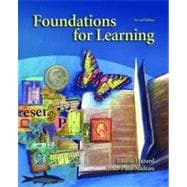
Foundations For Learning

ISBN: 9780131199538 | 0131199536
Edition: 1st
Format: Paperback
Publisher: Prentice Hall
Pub. Date: 1/1/2006

Why Rent from Knetbooks?

Because Knetbooks knows college students. Our rental program is designed to save you time and money. Whether you need a textbook for a semester, quarter or even a summer session, we have an option for you. Simply select a rental period, enter your information and your book will be on its way!

Top 5 reasons to order all your textbooks from Knetbooks:

  • We have the lowest prices on thousands of popular textbooks
  • Free shipping both ways on ALL orders
  • Most orders ship within 48 hours
  • Need your book longer than expected? Extending your rental is simple
  • Our customer support team is always here to help
SummaryTable of Contents
The focus of this book is on academic adjustment for any first-year student; its theme is claiming an education and taking responsibility for one's own experience. It addresses both how attitude and personality traits affect achievement. Readers are pushed to consider how each skill set, perception, and attitude connects with and influences the other. Both challenging and accessible, "Foundations for Learning" doesn't talk down to readers by using simplified vocabulary, yet it is to the point and practical. Topics include the development of aca... MORE
... MORE
Forewordxi
Prefacexiii
Acknowledgmentsxv
Introductionxvii
Claiming Your Education
1(14)
Becoming Part of a Scholarly Community
1(1)
The Professor and Student Contract
2(1)
Intellectual Curiosity
3(2)
Active vs. Passive Learning
5(3)
Collaboration
8(1)
Doing Research
9(1)
Plagiarism and Intellectual Property
9(1)
Claiming an Education
10(5)
Developing Academic Self-Concept
15(14)
Relating to Your Family and Culture: How Your Academic Self-Concept Has Been Developing Up to Now
16(3)
Relating to Your New Peers
19(3)
Relating to Your New Environment
22(7)
Planning and Prioritizing
29(22)
Time Management and Academic Goal Setting
29(1)
Time Management and College Success
30(1)
Self-Regulating Your Own Learning
30(2)
Consider the 8--8--8 Formula
31(1)
How to Manage Your Time
32(7)
Be Sure to Plan and Organize
32(6)
Plan for a Suitable Place to Study
38(1)
Learn to Avoid Procrastination
38(1)
Motivation and Procrastination
39(12)
Procrastinators Believe Their System Works
40(1)
Procrastination Has Consequences
40(1)
Gaining Control Over Procrastination
41(10)
Developing Metacognitive Skills
51(28)
Why Should I Change?
55(2)
Student Attitudes Toward Learning
57(6)
What Is Your Locus of Control?
57(3)
Consider Your Attitude Toward Intelligence
60(1)
There Are Multiple Theories of Intelligence
61(2)
Approaches to Learning
63(16)
Identify Your Learning Style(s)
63(2)
Writing Can Help You Better Understand How You Learn
65(1)
Portfolio Development as a Metacognitive Activity
66(1)
Read Actively to Employ Multiple Learning Modalities
67(4)
Text Annotation Encourages Active Reading
71(8)
Developing Communication Skills
79(26)
Written Products vs. the Writing Process
79(7)
Prewrite to Generate Ideas
80(2)
Organize Your Ideas
82(1)
Draft Your Ideas
83(1)
Revise Each Draft
84(2)
Using Feedback to Your Best Advantage
86(4)
Your Faculty Provides Feedback via Graded Papers
86(1)
Faculty Can Also Provide Feedback During Office Hours
87(1)
Your Classmates May Provide Feedback During Peer Review
87(1)
The Writing Center Is Another Great Place to Get Feedback
88(2)
Participating in Class Discussion
90(2)
Writing the Research Paper
92(8)
Formulate a Research Question
93(1)
Find Appropriate and Useful Sources
93(1)
Eyaluate Your Sources
94(1)
Select and Organize Potential Material from Your Sources
95(2)
Utilize the Evidence You Have Collected to Your Best Advantage
97(1)
Conduct Your Research Ethically
98(1)
Use Style Guides Effectively
99(1)
Making In-Class Presentations
100(5)
Combining Readings and Notes for Optimal Performance in Lectures and in Exams
105(22)
The Components of Test Preparation
106(6)
Be Aware of Course Objectives
107(1)
Take Comprehensive Notes
107(1)
Connect Important Ideas
107(1)
Gather Internal Feedback
108(1)
Ask Questions
108(1)
To Read Actively, Preread and Record Pertinent Information
109(1)
Study with a Group
110(2)
Approaches to Note Taking
112(3)
Have an Organized System of Taking Notes
112(1)
Use Shorthand When Taking Notes
113(1)
Coordinate Your Class/Lecture Notes with Your Reading Notes
114(1)
The Benefits of Employing the Various Approaches to Studying
115(2)
Approaches to Test Taking
117(6)
Advice for Taking Multiple-Choice Exams
117(4)
Advice for Responding to True/False Items
121(1)
In-Class Essay Exams Don't Have to Be Daunting
122(1)
Self-Evaluation of Preparedness for Quizzes, Tests, and Exams
123(4)
Glossary127(6)
Index133

Related Products


  • Foundations for Learning
    Foundations for Learning
  • Foundations for Learning : Claiming Your Education
    Foundations for Learning : Cla...


Please wait while this item is added to your cart...