FREE SHIPPING BOTH WAYS
ON EVERY ORDER!
LIST PRICE:
$29.95

Sorry, this item is currently unavailable.

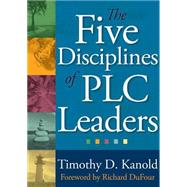
The Five Disciplines of PLC Leaders

ISBN: 9781935543428 | 1935543423
Format: Paperback
Publisher: Solution Tree
Pub. Date: 6/30/2011

Why Rent from Knetbooks?

Because Knetbooks knows college students. Our rental program is designed to save you time and money. Whether you need a textbook for a semester, quarter or even a summer session, we have an option for you. Simply select a rental period, enter your information and your book will be on its way!

Top 5 reasons to order all your textbooks from Knetbooks:

  • We have the lowest prices on thousands of popular textbooks
  • Free shipping both ways on ALL orders
  • Most orders ship within 48 hours
  • Need your book longer than expected? Extending your rental is simple
  • Our customer support team is always here to help
SummaryTable of Contents
Just as it takes discipline to successfully run a marathon or to master a musical instrument, effective leadership in a professional learning community (PLC) requires practice, patience, and skill. PLC leaders at all levels face multiple paradoxes: they must lead by serving, engage stakeholders through strategic disengagement, allow autonomy within defined boundaries, and inspire others through their own humility. In The Five Disciplines of PLC Leaders, Timothy D. Kanold offers a focused framework that will help educators maintain balance and consistent vision as they strengthen the paradoxical skills of PLC leadership. This framework provides the following five key practices, or disciplines: 1. The discipline of vision and values strengthens understanding of personal vision and the ability to forge a coherent, compelling vision with other stakeholders. It ensures that a PLC¿s mission, vision, values, and goals are in alignment. 2. The discipline of accountability and celebration forms the bridge between the development of a vision and the implementation of a plan. Through practice in this discipline, a PLC leader is able to stay focused on goals and accountability while acknowledging and celebrating achievements along the way. 3. The discipline of service and sharing addresses one of the core components of an effective PLC: leadership requires personal accountability to the shared vision and the integrity of other community members. This discipline strengthens communication, social connections, and relationships between all stakeholders. 4. The discipline of reflection and balance helps a PLC leader manage time and energy. It develops a leader¿s ability to discern when to take charge in high-energy activities and when to withdraw, fostering engagement and ownership in others. 5. The discipline of inspiration and influence builds a deep awareness of the future impact of today¿s actions. This discipline is a vital part of the process of turning a group into a team that has a lasting influence on a PLC and its students.
About The Authorp. xi
Forewordp. xiii
Introduction: Professional Learning Community Leadership: Disciplined Leaders Requiredp. 1
The Paradoxes of Leadershipp. 2
Training to Run the PLC Racep. 3
The Disciplined PLC Leaderp. 5
The Five Disciplines of School Leadershipp. 5
The Benefits of Leadership Discipline Trainingp. 8
The D... MOREp. 11
Connecting Your Personal Vision and Values to Daily Decision Makingp. 13
Refining Your Personal Visionp. 15
Connecting Your Personal Passion to the Vision of Professional Learning Communitiesp. 17
Creating Vision Ownership for Sustainabilityp. 19
Teaching the Visionp. 21
Creating Vision Clarityp. 22
Creating Vision Alignment and Focusp. 24
Improving Vision Through Double-Loop Learningp. 28
Study Guidep. 32
The Discipline of Accountability and Celebrationp. 35
The Courage to Do More Than Monitorp. 39
Monitoring the ôRight Thingsöp. 40
Getting to ôLoose-Tightö Leadershipp. 41
Rejecting the Laissez-Faire Stancep. 43
Knowing What Is and Is Not a ôChoiceöp. 44
Defining Autonomy and Defending Boundariesp. 46
Turning Vision Into Actionp. 50
Rejecting Victim Speakp. 53
Understanding Tiers of Accountabilityp. 55
Leading a Well-Designed System for Monitoring Continuous Improvementp. 59
Implementing the Continuous Improvement Modelp. 62
Spending the Human Capital of Encouragementp. 71
The Tall Poppy Syndromep. 73
Study Guidep. 76
The Discipline of Service and Sharingp. 79
Growing Emotional intelligencep. 82
Cultivating an N-S-E-W Sphere of Influencep. 85
Pursuing Level 5 Leadershipp. 88
Showing Humilityp. 90
Building an Expanded Leadership Basep. 91
Creating a Relational Culturep. 94
Study Guidep. 117
The Discipline of Reflection and Balancep. 119
Refusing to Multitaskp. 121
Using Technology Strategicallyp. 124
Avoiding Excusesp. 127
Paying Attention to Students and Adultsp. 130
Providing Motivation 3.0p. 134
Pursuing Optimal Learning Experiencesp. 137
Becoming Engaged and Reflectivep. 142
Creating Balancep. 147
Pursuing Internal Balancep. 150
Study Guidep. 154
The Discipline of Inspiration and Influencep. 157
The PLC Leader's Legacyp. 159
Responding to Failurep. 163
Preventing Deep Regretp. 168
Choosing the Path of Enduring Inspirationp. 173
PLC Leadership Inspiration Mattersp. 179
PLC Leaders Are Remembered for What They Do for Othersp. 180
Study Guidep. 182
Epilogue: The Professional Learning Community as a School Movementp. 185
References And Resourcesp. 189
Indexp. 195
Table of Contents provided by Ingram. All Rights Reserved.


Please wait while this item is added to your cart...