FREE SHIPPING BOTH WAYS
ON EVERY ORDER!
LIST PRICE:
$67.95

Sorry, this item is currently unavailable.

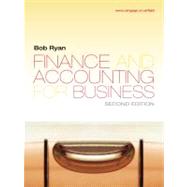
Finance and Accounting for Business

ISBN: 9781844808977 | 1844808971
Edition: 2nd
Format: Paperback
Publisher: CENGAGE Lrng Business Press
Pub. Date: 8/10/2009

Why Rent from Knetbooks?

Because Knetbooks knows college students. Our rental program is designed to save you time and money. Whether you need a textbook for a semester, quarter or even a summer session, we have an option for you. Simply select a rental period, enter your information and your book will be on its way!

Top 5 reasons to order all your textbooks from Knetbooks:

  • We have the lowest prices on thousands of popular textbooks
  • Free shipping both ways on ALL orders
  • Most orders ship within 48 hours
  • Need your book longer than expected? Extending your rental is simple
  • Our customer support team is always here to help
SummaryTable of ContentsAuthor Biography
Finance and Accounting for Business gives managers on executive or general MBA courses an overview of the role of accounting and finance in business, and it also suitable for undergraduate courses where students need an appreciation of accounting and finance. The book is illustrated with vivid cases, real-world examples and worked-through exercises, placing the theory of the subject in a practical context. It incorporates a wealth of question and exercise material using real company cases. Solutions are also provided in the text and on an extensive website full of further resources to support the text. Additional questions are also provided for tutors to use with their students, taking them through complex issues step by step.
Prefacep. xi
Walk-through tourp. xvi
Supplementary resourcesp. xviii
Acknowledgementsp. xix
Introductionp. 1
The role of accounting and finance in businessp. 3
Introductionp. 3
The context and history of accounting and financep. 4
Different types of business organizationp. 9
Business objectives and t... MOREp. 17
The purpose and characteristics of accounting informationp. 19
The concept of income and the measurement of profitp. 24
The difference between financial and management accountingp. 25
Financial accountingp. 31
Introduction to financial accountingp. 33
The first principles of financial accountingp. 34
Creating the balance sheet and income statement û a case exercisep. 43
The extended trial balance (ETB)p. 47
Two further principlesp. 48
How to produce a set of simple accountsp. 49
Building the accountsp. 54
A case study in business start-upp. 55
Accounting for the second and subsequent yearsp. 61
Double-entry bookkeepingp. 66
Cash flow statementsp. 81
Introductionp. 81
The measurement of cash flowp. 82
Preparing the cash flow statementp. 84
Laundering the accountsp. 92
Principles of financial accountingp. 101
Introductionp. 101
The principles of value creation and the matching principlep. 102
Accounting for real assets: depreciation and inventoriesp. 108
Extending your understanding of the principles of accountingp. 126
Accounting for companiesp. 139
Introductionp. 139
The characteristics of limited companiesp. 140
How limited companies are createdp. 147
Group companies û acquisition and mergersp. 154
Becoming a public limited companyp. 167
The analysis of accounting informationp. 174
Introductionp. 174
The analysis of financial informationp. 175
Financial analysisp. 184
Completing the narrativep. 210
Appendix to Chapter7p. 218
Management accounting and controlp. 223
The principles of cost and revenue measurementp. 253
Introductionp. 235
Basic principles of costingp. 236
Costing for decisions: relevant costingp. 242
Cost behaviour and cost/volume/profit analysisp. 254
Marginal anaysisp. 270
Cash forecasting, business planning and management controlp. 280
Introductionp. 280
The business planning processp. 281
Business planning in practicep. 286
Budgeting methodologies and variance analysisp. 311
Cost management and pricingp. 323
Introductionp. 323
Cost managementp. 324
Pricingp. 348
The management of working capitalp. 359
Introductionp. 359
The role of working capitalp. 360
Inventory managementp. 364
Managing credit policyp. 373
Managing cashp. 381
Finance and financial marketsp. 391
Investment appraisalp. 393
Introductionp. 393
Matching cash flows over timep. 394
The net present value modelp. 400
Other methods of investment appraisalp. 418
The nature of the financial marketsp. 434
Introductionp. 434
Securities and the financial marketsp. 435
The financial marketsp. 435
The capital marketsp. 442
The cost of capitalp. 461
Market measures of performance and valuep. 471
Introductionp. 471
Investor ratiosp. 472
Valuing the firmp. 476
Measuring the performance of firmsp. 483
Appendix Financial tablesp. 490
Answers to selected review activities and end-of-chapter questionsp. 493
Glossaryp. 530
Bibliographyp. 537
Indexp. 539
Table of Contents provided by Ingram. All Rights Reserved.
Bob Ryan started his teaching career at the University of Manchester. He then established the Division of Business at the Hatfield Polytechnic (now the University of Hertfordshire), was the founding director of the Southampton University Management School and then Director of the School of Management, Royal Holloway, University of London. He has extensive consultancy experience both in the UK and internationally and currently holds the chair of financial management at the University of Gloucestershire and a visiting fellowship at the Manchester Business School. He is also examiner in Advanced Financial Management for the Association of Chartered Certified Accountants. Apart from all that, Bob Ryan has an international reputation as one of the worlds most outstanding educators of business managers, students and executives. It is this quality as a teacher that informs every page of Finance and Accounting for Business.


Please wait while this item is added to your cart...