FREE SHIPPING BOTH WAYS
ON EVERY ORDER!
LIST PRICE:
$60.00

Sorry, this item is currently unavailable.

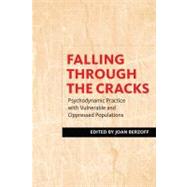
Falling Through the Cracks : Psychodynamic Practice with Vulnerable and Oppressed Populations

ISBN: 9780231151085 | 023115108X
Format: Hardcover
Publisher: Columbia Univ Pr
Pub. Date: 11/4/2011

Why Rent from Knetbooks?

Because Knetbooks knows college students. Our rental program is designed to save you time and money. Whether you need a textbook for a semester, quarter or even a summer session, we have an option for you. Simply select a rental period, enter your information and your book will be on its way!

Top 5 reasons to order all your textbooks from Knetbooks:

  • We have the lowest prices on thousands of popular textbooks
  • Free shipping both ways on ALL orders
  • Most orders ship within 48 hours
  • Need your book longer than expected? Extending your rental is simple
  • Our customer support team is always here to help
SummaryTable of ContentsAuthor Biography
Psychodynamic theory and practice are often misunderstood as appropriate only for the worried well or those whose problems are minimal or routine. Nothing could be further from the truth. This book shows how psychodynamically informed, clinically based social care is essential to working with those whose problems are both psychological and social. Essays address populations struggling with structural inequities, such as racism, classism, immigrant status, language differences, disability, and sexual orientation. They explain how to provide psychodynamically informed assessment and practice when working with those suffering from mental illness, addiction, homelessness, and cognitive, visual, or auditory impairments, as well as people in prisons, orphanages, and child welfare. The volume supports the idea that becoming aware of ourselves helps to understand ourselves: a key approach for helping clients contain and name their feelings, deal with desire and conflict, achieve self-regulation and self-esteem, alter attachment styles, and free themselves toward greater agency and empowerment. Yet autonomy and empowerment are not birthrights; they are capacities that must be fostered. This collection uses concepts derived from drive theory, ego psychology, object relations, trauma theory, attachment theory, self psychology, and intersubjectivity in clinical work with vulnerable and oppressed populations. Contributors are experienced practitioners whose work has enabled them to elicit and find common humanity with their clients. The authors consistently convey respect for the considerable strength and resourcefulness of their clients. Emphasizing the importance of the inner life of client and clinician and their interacting social identities, this anthology uniquely realizes the ethnically and contextually diverse realities of clinical social work practice.
Why We Need a Biopsychosocial Perspective with Vulnerable, Oppressed, and At-Risk Clientsp. 1
Making It Thinkable: A Psychodynamic Approach to the Psychosocial Problems of Prisons and Prisonersp. 40
"We're Cool, You and Me": A Relational Approach to Clinical Social Work in the City: Psychodynamic Psychotherapy Within a Homeless Shelter for Formerly Incarcerated Women and Their Childrenp. 75
If I Feel Judged By You, I Will Not Trust You: Relational Pract... MOREp. 107
Making a Difference: Psychodynamic Views on Race and Racismp. 141
Navigating the Perils of the Child Welfare System: Applying Attachment Theory in Child Protective Practicep. 157
Holding a MotherùHolding a Baby: Psychosocial Casework in a Clinic for Women with High-Risk Pregnanciesp. 180
'Finding Common Ground: The Perils of Sameness and Difference in the Treatment of Lesbian, Gay, and Bisexual Clientsp. 206
Full of Feelings, Disabled, and Treatable: Working Psychodynamically with Special-Needs Adultsp. 241
Seeing Through the Eyes of the Blind: Psychodynamically Informed Work with Persons with Low Visionp. 261
What Did You Say? Clinical Practice with Deaf and Hard-of-Hearing Populationsp. 298
Social Care with the Severely Mentally Ill: Psychodynamic Perspectivesp. 319
The Return from War: Templates for Trauma and Resiliencep. 347
Alien to This Country: Treatment Considerations with Immigrant Bilingual Patientsp. 372
When a State Becomes a Parent: Orphanages in a Post-totalitarian Culture: Attachment Theory Perspectivep. 397
Conclusionp. 419
Contributorsp. 423
Indexp. 427
Table of Contents provided by Ingram. All Rights Reserved.
Joan Berzoff is a professor at the Smith College School for Social Work, where she has twice served as chair of the Human Behavior in the Social Environment Sequence. She has also been codirector of the doctoral program and directs the End of Life Certificate Program. She is the coauthor of three books: Inside Out and Outside In: Psychodynamic Theories and Practice in Multicultural Settings, Third Edition; Living with Dying: A Handbook for End-of-Life Care Practitioners; and Dissociative Identity Disorders: The Controversy and Treatment.


Please wait while this item is added to your cart...