FREE SHIPPING BOTH WAYS
ON EVERY ORDER!
LIST PRICE:
$37.95

OUR PRICE:
$30.06

You may extend rentals at any time.


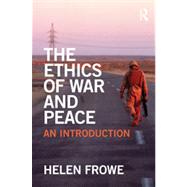
The Ethics of War and Peace: An Introduction
ISBN: 9780415492409 | 0415492408
Edition: 1st
Format: Nonspecific Binding
Publisher: Routledge
Pub. Date: 7/25/2011

Why Rent from Knetbooks?

Because Knetbooks knows college students. Our rental program is designed to save you time and money. Whether you need a textbook for a semester, quarter or even a summer session, we have an option for you. Simply select a rental period, enter your information and your book will be on its way!

Top 5 reasons to order all your textbooks from Knetbooks:

  • We have the lowest prices on thousands of popular textbooks
  • Free shipping both ways on ALL orders
  • Most orders ship within 48 hours
  • Need your book longer than expected? Extending your rental is simple
  • Our customer support team is always here to help
SummaryTable of ContentsAuthor Biography
When is it right to go to war? When is a war illegal? What are the rules of engagement? What should happen when a war is over? How should we view terrorism? The Ethics of War and Peaceis a fresh and contemporary introduction to one of the oldest but still most relevant ethical debates. It introduces students to contemporary Just War Theory in a stimulating and engaging way, perfect for those approaching the topic for the first time. Helen Frowe explains the core issues in Just War Theory, and chapter by chapter examines the recent and ongoing philosophical? debates on: Theories of self defence and national defence Jus ad Bellum, Jus in Bello, and Jus post Bellum The moral status of combatants The principle of non-combatant immunity The nature of terrorism and the moral status of terrorists. Each chapter concludes with a useful summary, discussion questions and suggestions for further reading, to aid student learning and revision. The Ethics of War and Peaceis the ideal textbook for students studying philosophy, politics and international relations.
Acknowledgmentsp. xi
Introductionp. 1
Self-defencep. 9
Proportionality and necessityp. 9
The culpability accountp. 12
The rights-based accountp. 13
The responsibility accountp. 18
The doctrine of double effectp. 19
Other-defencep. 24
Chapter summaryp. 26
War and self-defence... MOREp. 29
States and Citizens
The domestic analogyp. 29
The collectivist accountp. 30
The individualist accountp. 34
RodinÆs critique of individualismp. 35
The Laws of War
Morality and lawp. 39
The deep morality of warp. 40
The morally best laws of warp. 42
Conflicting obligationsp. 43
Regulating wrongdoingp. 45
Chapter summaryp. 47
The conditions of jus ad bellump. 50
Jus Ad Bellum
The rules of jus ad bellump. 50
Just causep. 51
Proportionalityp. 54
A reasonable chance of successp. 56
Legitimate authorityp. 59
Right intentionp. 60
Last resortp. 62
Public declaration of warp. 63
Just Cause and Proportionality
Violations of sovereigntyp. 63
Liability and proportionalityp. 66
Chapter summaryp. 69
Just wars?p. 72
Pre-Emption and Prevention
Definitionsp. 72
Rethinking pre-emptionp. 74
The role of imminencep. 75
Pre-emptioin and just causep. 77
Punitive Wars
Punishment as just causep. 80
The requirement of discriminationp. 82
Humanitarian Intervention
Intervention and sovereigntyp. 84
Kosovop. 84
Conditional sovereigntyp. 87
Intervention as other-defencep. 89
Chapter summaryp. 92
The conditions of jus in bellop. 95
The IDEA of Jus in Bello
Realismp. 95
The independence of jus in bellop. 99
The Rules of Jus in Bello
Qualifying as a combatantp. 101
Legitimate targetsp. 103
Legitimate tacticsp. 106
Prisoners of warp. 114
Chapter summaryp. 116
The moral status of combatantsp. 118
The Orthodox View
The moral innocence of combatantsp. 118
WalzerÆs models of combatp. 119
Undermining the orthodox accountp. 122
The Moral Inequality of Combatants
McMahanÆs accountp. 124
Institutional stabilityp. 127
The argument from ignorancep. 130
Just and æjustifiedÆ combatantsp. 132
Chapter summaryp. 137
Non-combatants in warp. 140
Collateral Damage
The doctrine of double effectp. 140
Double effect and double intentp. 142
Alternatives to double effectp. 144
The precautionary principle148
Combatants and Non-Combatants: Drawing the Line
Guilt and non-combatant immunityp. 152
Posing a threatp. 153
Guns and foodp. 154
Proximate threatsp. 156
Beyond the Principle of Non-Combatant Immunity
A useful conventionp. 159
Moral responsibilityp. 161
Chapter summaryp. 164
The moral status of terrorismp. 168
What is Terrorism?
Political motivationp. 169
Attacking non-combatantsp. 171
Non-state violencep. 172
More violencep. 175
Fearp. 177
WhatÆs Wrong with Terrorism?
Killing non-combatantsp. 180
Legitimate authority and representative authorityp. 181
Using as a mere meansp. 183
Permissible terrorism?p. 185
Chapter summaryp. 188
Terrorists, torture and just war theoryp. 190
The Legal Status of Terrorists
Combatants, or criminals?p. 190
Terrorists as illegitimate combatantsp. 192
Terrorists as combatantsp. 194
Torturing Terrorists
Ticking time bombsp. 197
Utilitarian arguments for torturep. 198
Torture as defencep. 201
Chapter summaryp. 205
Jus post bellump. 208
Ending War
Minimalism and maximalismp. 208
Post bellum regime changep. 211
Reconstruction after humanitarian interventionp. 213
War Crimes
The superior orders defencep. 216
Moral perceptionp. 219
Duressp. 221
Command responsibilityp. 223
Amnestiesp. 224
Chapter summaryp. 227
Glossaryp. 230
Bibliographyp. 232
Indexp. 237
Table of Contents provided by Ingram. All Rights Reserved.
Helen Frowe is a lecturer in Philosophy at the University of Kent, UK, and was previously a lecturer and Leverhulme Early Career Fellow in Philosophy at the University of Sheffield, UK.


Please wait while this item is added to your cart...

