FREE SHIPPING BOTH WAYS
ON EVERY ORDER!
LIST PRICE:
$77.85

OUR PRICE:
$30.83

You may extend rentals at any time.


Equine Behaviour : Principles and Practice
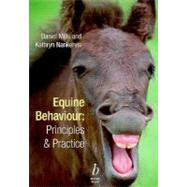
ISBN: 9780632048786 | 0632048786
Edition: 1st
Format: Paperback
Publisher: Wiley-Blackwell
Pub. Date: 9/16/1998

Why Rent from Knetbooks?

Because Knetbooks knows college students. Our rental program is designed to save you time and money. Whether you need a textbook for a semester, quarter or even a summer session, we have an option for you. Simply select a rental period, enter your information and your book will be on its way!

Top 5 reasons to order all your textbooks from Knetbooks:

  • We have the lowest prices on thousands of popular textbooks
  • Free shipping both ways on ALL orders
  • Most orders ship within 48 hours
  • Need your book longer than expected? Extending your rental is simple
  • Our customer support team is always here to help
SummaryTable of ContentsAuthor Biography
Understanding the flexibility and limits of behaviour is essential to improving both the horse's welfare and its performance. This book tackles the fundamental principles which will enable owners, riders, trainers and students to understand scientific principles and apply them in practice. Subjects covered include the analysis of influences on equine behaviour, the perceptual world of the horse, learning and training techniques including the latest developments in "join-up" and "imprint training".

Almost every pers... MORE
Prefacevii
Acknowledgementsviii
Part One: Understanding behaviour Concepts1(66)
Approaches to the Study of Behaviour
3(15)
... MORE
What is behaviour
3(3)
Ethology versus psychology
6(3)
A brief guide to conducting a behaviour study
9(6)
Conclusion
15(1)
Topics for discussion
16(1)
References and further reading
16(2)
Origins of Behaviour
18(15)
An evolutionary approach to understanding behaviour
18(1)
Lemarck versus Darwin
19(3)
Genes not individuals
22(4)
Evolutionary throwbacks and genetic jumps
26(1)
Adaptation and apparent stupidity in domestic horses
27(2)
Evolution and the variety of behaviour
29(2)
Conclusion
31(1)
Topics for discussion
31(1)
References and further reading
32(1)
The Evolutionary History of the Horse
33(20)
Introduction
33(5)
Early evolution of the horse
38(5)
The arrival of Equus
43(2)
The origins of the modern breeds
45(2)
Domestication and its consequences
47(5)
Topics for discussion
52(1)
References and further reading
52(1)
The Lifetime Development of Behaviour
53(14)
Instinctive and learned behaviour, what is the difference?
53(3)
Sensitive phases for special times and specific associations
56(2)
Using play for better management
58(2)
Using natural biases in development to improve management
60(5)
Conclusion
65(1)
Topics for discussion
65(1)
References and further reading
66(1)
Part Two: Mechanisms of Behaviour67(96)
The Processing of Information
69(22)
Introduction
69(1)
The nervous system
69(3)
Neural transmission
72(8)
Central processing
80(4)
Behavioural motivation
84(4)
Autonomic and somatic nervous systems
88(1)
Topics for discussion
89(1)
References and further reading
90(1)
The Special Senses
91(19)
Sight
91(8)
Hearing
99(3)
Chemoreception
102(5)
Cutaneous sensation
107(1)
Topics for discussion
108(1)
References and further reading
108(2)
Communication and Social Organisation
110(29)
Communication
110(15)
Social organisation
125(4)
The composition of the group
129(1)
The social structure of the group
129(4)
The dynamics of the group
133(3)
Conclusion
136(1)
Topics for discussion
137(1)
References and further reading
137(2)
Sexual and Reproductive Behaviour of Horses
139(24)
Basics genetic foundation of the individual's sexuality
139(1)
Normal mare specific behaviour
140(9)
Normal sexual behaviour of the stallion
149(4)
Modifiers of the genetic blueprint
153(7)
Conclusion
160(1)
Topics for discussion
160(1)
References and further reading
160(3)
Part Three: The Flexibility of Behaviour and its Management163(63)
Learning and Training
165(31)
Psychological processes
165(2)
A few basic procedures
167(9)
Applying reinforcement to train new behaviours
176(4)
Punishment and its problems
180(2)
General guidelines to training new behaviours
182(1)
Learning beyond a change in behaviour
183(3)
Training techniques for problem behaviours
186(7)
Conclusion
193(1)
Topics for discussion
194(1)
References and further reading
194(2)
Welfare
196(30)
Understanding welfare
196(1)
What is right is not always the same as what is good
196(1)
Measuring welfare
197(8)
Is the domestic horse a fish out of water?
205(5)
Stereotypies
210(10)
Principles of treatment for stereotypies and other behaviour problems
220(4)
Conclusion
224(1)
Topics for discussion
224(1)
References and further reading
225(1)
Appendix226(1)
Index227
Daniel Mills BVSc, MRCVS is a Veterinary Surgeon and Senior Lecturer in Behavioural Studies at De Montfort University, Lincoln, from where he also runs a referral behaviour clinic, and Kathryn Nankervis BSC (Hons), MSc is a Lecturer in Equine Physiology at De Montfort University, Lincoln. She is also the founder of the Equi-Tutor Learning Programme.

Related Products


  • Equine Behaviour
    Equine Behaviour


Please wait while this item is added to your cart...