FREE SHIPPING BOTH WAYS
ON EVERY ORDER!
LIST PRICE:
$207.99

OUR PRICE:
$72.07

You may extend rentals at any time.


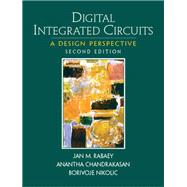
Digital Integrated Circuits

ISBN: 9780130909961 | 0130909963
Edition: 2nd
Format: Paperback
Publisher: Prentice Hall
Pub. Date: 12/24/2002

Why Rent from Knetbooks?

Because Knetbooks knows college students. Our rental program is designed to save you time and money. Whether you need a textbook for a semester, quarter or even a summer session, we have an option for you. Simply select a rental period, enter your information and your book will be on its way!

Top 5 reasons to order all your textbooks from Knetbooks:

  • We have the lowest prices on thousands of popular textbooks
  • Free shipping both ways on ALL orders
  • Most orders ship within 48 hours
  • Need your book longer than expected? Extending your rental is simple
  • Our customer support team is always here to help
SummaryTable of Contents
Intended for use in undergraduate senior-level digital circuit design courses with advanced material sufficient for graduate-level courses.Progressive in content and form, this text successfully bridges the gap between the circuit perspective and system perspective of digital integrated circuit design. Beginning with solid discussions on the operation of electronic devices and in-depth analysis of the nucleus of digital design, the text maintains a consistent, logical flow of subject matter throughout. The revision addresses today's most signif... MORE
Prefacevii
Part 1 The Fabrics1(66)
Introduction
3(32)
A Historical Perspective
... MORE(2)
Issues in Digital Integrated Circuit Design
6(9)
Quality Metrics of a Digital Design
15(16)
Cost of an Integrated Circuit
16(2)
Functionality and Robustness
18(9)
Performance
27(3)
Power and Energy Consumption
30(1)
Summary
31(1)
To Probe Further
31(4)
Reference Books
32(1)
References
33(2)
The Manufacturing Process
35(32)
Introduction
36(1)
Manufacturing CMOS Integrated Circuits
36(11)
The Silicon Wafer
37(1)
Photolithography
37(4)
Some Recurring Process Steps
41(1)
Simplified CMOS Process Flow
42(5)
Design Rules---The Contract between Designer and Process Engineer
47(4)
Packaging Integrated Circuits
51(10)
Package Materials
52(1)
Interconnect Levels
53(6)
Thermal Considerations in Packaging
59(2)
Perspective---Trends in Process Technology
61(3)
Short-Term Developments
61(2)
In the Longer Term
63(1)
Summary
64(1)
To Probe Further
64(3)
References
64(3)
Design Methodology Insert A IC LAYOUT67(64)
To Probe Further
71(2)
References
71(2)
The Devices
73(58)
Introduction
74(1)
The Diode
74(13)
A First Glance at the Diode---The Depletion Region
75(2)
Static Behavior
77(3)
Dynamic, or Transient, Behavior
80(4)
The Actual Diode---Secondary Effects
84(1)
The SPICE Diode Model
85(2)
The MOS(FET) Transistor
87(33)
A First Glance at the Device
87(1)
The MOS Transistor under Static Conditions
88(26)
The Actual MOS Transistor---Some Secondary Effects
114(3)
SPICE Models for the MOS Transistor
117(3)
A Word on Process Variations
120(2)
Perspective---Technology Scaling
122(6)
Summary
128(1)
To Probe Further
129(2)
References
130(1)
Design Methodology Insert B Circuit Simulation131(46)
References
134(1)
The Wire
135(42)
Introduction
136(1)
A First Glance
136(2)
Interconnect Parameters---Capacitance, Resistance, and Inductance
138(12)
Capacitance
138(6)
Resistance
144(4)
Inductance
148(2)
Electrical Wire Models
150(20)
The Ideal Wire
151(1)
The Lumped Model
151(1)
The Lumped RC Model
152(4)
The Distributed rc Line
156(3)
The Transmission Line
159(11)
SPICE Wire Models
170(4)
Distributed rc Lines in SPICE
170(1)
Transmission Line Models in SPICE
170(1)
Perspective: A Look into the Future
171(3)
Summary
174(1)
To Probe Further
174(3)
References
174(3)
Part 2 A Circuit Perspective177(132)
The CMOS Inverter
179(56)
Introduction
180(1)
The Static CMOS Inverter---An Intuitive Perspective
180(4)
Evaluating the Robustness of the CMOS Inverter: The Static Behavior
184(9)
Switching Threshold
185(3)
Noise Margins
188(3)
Robustness Revisited
191(2)
Performance of CMOS Inverter: The Dynamic Behavior
193(20)
Computing the Capacitances
194(5)
Propagation Delay: First-Order Analysis
199(4)
Propagation Delay from a Design Perspective
203(10)
Power, Energy, and Energy Delay
213(16)
Dynamic Power Consumption
214(9)
Static Consumption
223(2)
Putting It All Together
225(2)
Analyzing Power Consumption Using SPICE
227(2)
Perspective: Technology Scaling and its Impact on the Inverter Metrics
229(3)
Summary
232(1)
To Probe Further
233(2)
References
233(2)
Designing Combinational Logic Gates in CMOS
235(74)
Introduction
236(1)
Static CMOS Design
236(48)
Complementary CMOS
237(26)
Ratioed Logic
263(6)
Pass-Transistor Logic
269(15)
Dynamic CMOS Design
284(19)
Dynamic Logic: Basic Principles
284(3)
Speed and Power Dissipation of Dynamic Logic
287(3)
Signal Integrity Issues in Dynamic Design
290(5)
Cascading Dynamic Gates
295(8)
Perspectives
303(3)
How to Choose a Logic Style?
303(1)
Designing Logic for Reduced Supply Voltages
303(3)
Summary
306(1)
To Probe Further
307(2)
References
308(1)
Design Methodology Insert C How to Simulate Complex Logic Circuits309(10)
Representing Digital Data as a Continuous Entity
310(1)
Representing Data as a Discrete Entity
310(5)
Using Higher-Level Data Models
315(4)
References
317(2)
Design Methodology Insert D Layout Techniques for Complex Gates319(56)
Designing Sequential Logic Circuits
325(50)
Introduction
326(4)
Timing Metrics for Sequential Circuits
327(1)
Classification of Memory Elements
328(2)
Static Latches and Registers
330(14)
The Bistability Principle
330(2)
Multiplexer-Based Latches
332(1)
Master-Slave Edge-Triggered Register
333(6)
Low-Voltage Static Latches
339(2)
Static SR Flip-Flops---Writing Data by Pure Force
341(3)
Dynamic Latches and Registers
344(10)
Dynamic Transmission-Gate Edge-triggered Registers
344(2)
C2MOS---A Clock-Skew Insensitive Approach
346(4)
True Single-Phase Clocked Register (TSPCR)
350(4)
Alternative Register Styles*
354(4)
Pulse Registers
354(2)
Sense-Amplifier-Based Registers
356(2)
Pipelining: An Approach to Optimize Sequential Circuits
358(6)
Latch- versus Register-Based Pipelines
360(1)
NORA-CMOS---A Logic Style for Pipelined Structures
361(3)
Nonbistable Sequential Circuits
364(6)
The Schmitt Trigger
364(3)
Monostable Sequential Circuits
367(1)
Astable Circuits
368(2)
Perspective: Choosing a Clocking Strategy
370(1)
Summary
371(1)
To Probe Further
372(3)
References
372(3)
Part 3 A System Perspective375(52)
Implementation Strategies for Digital ICS
377(50)
Introduction
378(4)
From Custom to Semicustom and Structured-Array Design Approaches
382(1)
Custom Circuit Design
383(1)
Cell-Based Design Methodology
384(15)
Standard Cell
385(5)
Compiled Cells
390(2)
Macrocells, Megacells and Intellectual Property
392(4)
Semicustom Design Flow
396(3)
Array-Based Implementation Approaches
399(21)
Prediffused (or Mask-Programmable) Arrays
399(5)
Prewired Arrays
404(16)
Perspective---The Implementation Platform of the Future
420(3)
Summary
423(1)
To Probe Further
423(4)
References
424(3)
Design Methodology Insert E Characterizing Logic and Sequential Cells427(8)
References
434(1)
Design Methodology Insert F Design Synthesis435(118)
References
443(2)
Coping with Interconnect
445(46)
Introduction
446(1)
Capacitive Parasitics
446(14)
Capacitance and Reliability---Cross Talk
446(3)
Capacitance and Performance in CMOS
449(11)
Resistive Parasitics
460(9)
Resistance and Reliability---Ohmic Voltage Drop
460(2)
Electromigration
462(2)
Resistance and Performance---RC Delay
464(5)
Inductive Parasitics*
469(11)
Inductance and Reliability---Voltage Drop
469(6)
Inductance and Performance---Transmission-line Effects
475(5)
Advanced Interconnect Techniques
480(7)
Reduced-Swing Circuits
480(6)
Current-Mode Transmission Techniques
486(1)
Perspective: Networks-on-a-Chip
487(1)
Summary
488(1)
To Probe Further
489(2)
References
489(2)
Timing Issues in Digital Circuits
491(62)
Introduction
492(1)
Timing Classification of Digital Systems
492(3)
Synchronous Interconnect
492(1)
Mesochronous interconnect
493(1)
Plesiochronous Interconnect
493(1)
Asynchronous Interconnect
494(1)
Synchronous Design---An In-depth Perspective
495(24)
Synchronous Timing Basics
495(7)
Sources of Skew and Jitter
502(6)
Clock-Distribution Techniques
508(8)
Latch-Based Clocking*
516(3)
Self-Timed Circuit Design*
519(15)
Self-Timed Logic---An Asynchronous Technique
519(3)
Completion-Signal Generation
522(4)
Self-Timed Signaling
526(5)
Practical Examples of Self-Timed Logic
531(3)
Synchronizers and Arbiters*
534(5)
Synchronizers---Concept and Implementation
534(4)
Arbiters
538(1)
Clock Synthesis and Synchronization Using a Phase-Locked Loop*
539(7)
Basic Concept
540(2)
Building Blocks of a PLL
542(4)
Future Directions and Perspectives
546(4)
Distributed Clocking Using DLLs
546(2)
Optical Clock Distribution
548(1)
Synchronous versus Asynchronous Design
549(1)
Summary
550(1)
To Probe Further
551(2)
References
551(2)
Design Methodology Insert G Design Verification553(168)
References
557(2)
Designing Arithmetic Building Blocks
559(64)
Introduction
560(1)
Datapaths in Digital Processor Architectures
560(1)
The Adder
561(25)
The Binary Adder: Definitions
561(3)
The Full Adder: Circuit Design Considerations
564(7)
The Binary Adder: Logic Design Considerations
571(15)
The Multiplier
586(8)
The Multiplier: Definitions
586(1)
Partial-Product Generation
587(2)
Partial-Product Accumulation
589(4)
Final Addition
593(1)
Multiplier Summary
594(1)
The Shifter
594(2)
Barrel Shifter
595(1)
Logarithmic Shifter
596(1)
Other Arithmetic Operators
596(4)
Power and Speed Trade-offs in Datapath Structures*
600(18)
Design Time Power-Reduction Techniques
601(10)
Run-Time Power Management
611(6)
Reducing the Power in Standby (or Sleep) Mode
617(1)
Perspective: Design as a Trade-off
618(1)
Summary
619(1)
To Probe Further
620(3)
References
621(2)
Designing Memory and Array Structures
623(98)
Introduction
624(10)
Memory Classification
625(2)
Memory Architectures and Building Blocks
627(7)
The Memory Core
634(38)
Read-Only Memories
634(13)
Nonvolatile Read-Write Memories
647(10)
Read-Write Memories (RAM)
657(13)
Contents-Addressable or Associative Memory (CAM)
670(2)
Memory Peripheral Circuitry*
672(21)
The Address Decoders
672(7)
Sense Amplifiers
679(7)
Voltage References
686(3)
Drivers/Buffers
689(1)
Timing and Control
689(4)
Memory Reliability and Yield*
693(8)
Signal-to-Noise Ratio
693(5)
Memory Yield
698(3)
Power Dissipation in Memories*
701(6)
Sources of Power Dissipation in Memories
701(1)
Partitioning of the Memory
702(1)
Addressing the Active Power Dissipation
702(2)
Data-Retention Dissipation
704(3)
Summary
707(1)
Case Studies in Memory Design
707(7)
The Programmable Logic Array (PLA)
707(3)
A 4-Mbit SRAM
710(2)
A 1-Gbit NAND Flash Memory
712(2)
Perspective: Semiconductor Memory Trends and Evolutions
714(2)
Summary
716(1)
To Probe Further
717(4)
References
718(3)
Design Methodology Insert H Validation and Test of Manufactured Circuits721(18)
Introduction
721(1)
Test Procedure
722(1)
Design for Testability
723(11)
Issues in Design for Testability
723(2)
Ad Hoc Testing
725(1)
Scan-Based Test
726(3)
Boundary-Scan Design
729(1)
Built-in Self-Test (BIST)
730(4)
Test-Pattern Generation
734(3)
Fault Models
734(2)
Automatic Test-Pattern Generation (ATPG)
736(1)
Fault Simulation
737(1)
To Probe Further
737(2)
References
737(2)
Problem Solutions739(6)
Index745

Related Products


  • Digital Integrated Circuits
    Digital Integrated Circuits
  • Digital Integrated Circuits : A Design Perspective
    Digital Integrated Circuits : ...
  • Outlines and Highlights for Digital Integrated Circuits : A Design Perspective by Rabaey and Chandrakasan and Nikolic, ISBN
    Outlines and Highlights for Di...


Please wait while this item is added to your cart...