 Free Shipping On Every Order



Amazon no longer offers textbook rentals. We do!
Cultural Anthropology A Global Perspective
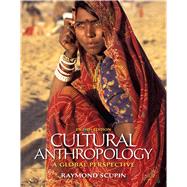
Cultural Anthropology A Global Perspective
- ISBN 13:
9780205158805
- ISBN 10:
0205158803
- Edition: 8th
- Format: Paperback
- Copyright: 07/11/2011
- Publisher: Pearson
- Newer Edition
Rent
Sorry, this item is currently unavailable.
 Free Shipping On Every Order
Note: Supplemental materials are not guaranteed with Rental or Used book purchases.
Extend or Purchase Your Rental at Any Time
Need to keep your rental past your due date? At any time before your due date you can extend or purchase your rental through your account.
Summary
Societal Organization and Globalization in Cultural Anthropology Cultural Anthropology: A Global Perspectiveprovides students with an introduction to cultural anthropology through a traditional holistic and integrative approach. Organized by societal type, this book's primary emphasis is on applied anthropology, with a strong coverage of globalization. Additionally, it emphasizes three unifying themes: 1) the diversity of human societies and cultural patterns the world over, 2) the similarities that make all humans fundamentally alike, and 3) the interconnections between the sciences and humanities within anthropology. This Books á la Carte Edition is an unbound, three-hole punched, loose-leaf version of the textbook and provides students the opportunity to personalize their book by incorporating their own notes and taking online the portion of the book they need to class ; all at a fraction of the bound book price. Teaching and Learning Experience Personalize Learning- MyAnthroLab delivers proven results in helping students succeed, provides engaging experiences that personalize learning, and comes from a trusted partner with educational expertise and a deep commitment to helping students and instructors achieve their goals. Improve Critical Thinking- Critical Perspective boxes ask students to step into an anthropologist's shoes and use their own reasoning and judgment to approach and analyze problems that often arise in research situations. Engage Students- Applying Anthropology boxes show students that anthropological research helps solve problems that are currently faced by today's societies. Anthropologists at Work boxes profile prominent anthropologists, providing real life examples of many issues covered in the chapters. Support Instructors- Teaching your course just got easier! You can Create a Customized Text or use our Instructor's Manual, Electronic ;MyTest ; Test Bank or PowerPoint Presentation Slides. Plus, this text organizes its material based on levels of societal organization and regional topics, instead of structuring the book according to specific topics in anthropology, and devotes five chapters to globalization and culture change! Note: MyAnthroLab does not come automatically packaged with this text. To purchase MyAnthroLab, please visitwww.MyAnthroLab.comor you can purchase a valuepack of the text + MyAnthroLab (VP ISBN-10: 0205025048, VP ISBN-13: 9780205025046)
Author Biography
Read moreTable of Contents
Read moreSupplemental Materials
Read moreExcerpts
Read moreRelated Products


Stay Connected with Knetbooks


Copyright © 2011 - 2024