FREE SHIPPING BOTH WAYS
ON EVERY ORDER!
LIST PRICE:
$69.20

Sorry, this item is currently unavailable.

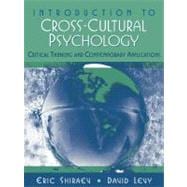
Cross-Cultural Psychology : Critical Thinking and Contemporary Applications
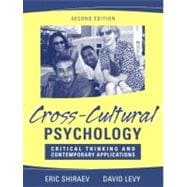
ISBN: 9780205386123 | 0205386121
Format: Paperback
Publisher: Allyn & Bacon
Pub. Date: 1/1/2004

Why Rent from Knetbooks?

Because Knetbooks knows college students. Our rental program is designed to save you time and money. Whether you need a textbook for a semester, quarter or even a summer session, we have an option for you. Simply select a rental period, enter your information and your book will be on its way!

Top 5 reasons to order all your textbooks from Knetbooks:

  • We have the lowest prices on thousands of popular textbooks
  • Free shipping both ways on ALL orders
  • Most orders ship within 48 hours
  • Need your book longer than expected? Extending your rental is simple
  • Our customer support team is always here to help
SummaryTable of Contents
Shiraev and Levy provide a comprehensive review of theories and research in cross-cultural psychology within a critical thinking framework for examining, analyzing, and evaluating cross-cultural data. This book introduces the field of cross-cultural psychology, discusses basic methodology for cross-cultural research, and explores the fields of sensation and perception, intelligence, human development, emotion, motivation, social perception and interaction, and mental disorders from a cross-cultural perspective.

All chapters conclude with “Chapter Summary,” “Glossary of Key Terms,” and “Suggested Readings.”

1. Understanding Cross-Cultural Psychology.
What Is Cross-Cultural Psychology?
Basic Definitions.
Empirical Examination of Culture.
Collectivism and Individualism: Further Research.
Cultural Syndromes.
Sociobiological Approach.
Sociological Approach.
Ecocultural Approach.
The Cultural Mixtures Approach: A New Cross-Cultural Psycholo... MORE

2. Methodology of Cross-Cultural Research.
Goals of Cross-Cultural Research.
Quantitative Research in Cross-Cultural Psychology.
Quantitative Approach: Measurement Scales.
Quantitative Approach: Looking for Linkages and Differences.
Qualitative Approach in Cross-Cultural Psychology.
Major Steps for Preparation of a Cross-Cultural Study.
Sample Selection.
Observation in Cross-Cultural Psychology.
Survey Methods.
Experimental Studies.
Meta-Analysis: Research of Research.
A Hidden Obstacle of Cross-Cultural Studies: Test Translation.
Comparing Two Phenomena: Some Important Principles.
On Similarities and Differences: Some Critical Thinking Applications.
Cultural Dichotomies: There Are Fewer Differences Than One Might Think.
Cultural Dichotomies: There Are More Differences Than One Might Expect.
Avoiding Bias of Generalizations.
Know More about Cultures You Examine!

3. Critical Thinking in Cross-Cultural Psychology.
The Evaluative Bias of Language:
To Describe Is to Prescribe.
Differentiating Dichotomous Variables and Continuous Variables: Black and White, or Shades of Grey?
The Similarity-Uniqueness Paradox: All Phenomena Are Both Similar and Different.
The Barnum Effect: "One Size-Fits-All" Descriptions.
The Assimilation Bias: Viewing the World through Schema-Colored Glasses.
The Representativeness Bias: Fits and Misfits of Categorization.
The Availability Bias: The Persuasive Power of Vivid Events.
The Fundamental Attribution Error: Underestimating the Impact of External Influences.
The Self-Fulfilling Prophecy: When Expectations Create Reality.
Correlation Does Not Prove Causation: Confusing "What" with "Why."
Bi-Directional Causation and Multiple Causation: Causal Loops and Compound Pathways.
The Naturalistic Fallacy: Blurring the Line between "Is" and "Should."
The Belief Perseverance Effect: "Don't Confuse Me with the Facts! "
Conclusions: "To Metathink or Not to Metathink?"

4. Cognition, Sensation and Perception, and States of Consciousness.
Sensation and Perception: Basic Principles.
Sensation and the Brain: Basic Universal Pathways.
How Culture Influences What We Perceive.
How People Perceive Depictions.
Perception of Depth.
Some Cultural Patterns of Drawing Pictures.
Perception of Color.
Other Senses.
Perception of Time.
Perception of the Beautiful.
Perception of Music.
Consciousness and Culture.
Sleep and Cultural Significance of Dreams.
Beyond Altered States of Consciousness.

5. Intelligence.
Defining Intelligence.
Ethnic Differences in IQ Scores.
Explaining Group Differences in Test Scores: Intelligence and Intelligent Behavior.
Do Biological Factors Contribute to Intelligence?
Incompatibility of Tests: Cultural Biases.
Environment and Intelligence.
Socioeconomic Factors.
The Family Factor.
`Natural Selection' and IQ Scores?
Cultural Values of Cognition.
General Cognition: What Is `Underneath' Intelligence?
Cognitive Skills, School Grades, and Educational Systems.
Culture, Tests, and Motivation.
IQ, Culture, and Social Justice.

6. Emotion.
When We Laugh We Are Happy: Similarities of Emotional Experience.
You Cannot Explain Pain if You Have Never Been Hurt: Differences in Emotional Experience.
Emotions: Different or Universal?
Physiological Arousal.
The Meaning of Preceding Events.
Emotion as an Evaluation.
How People Assess Emotional Experience.
When Emotions Signal a Challenge: Cross-Cultural Research on Stress.
Expression of Emotion.
When Emotion Hurts: Cross-Cultural Studies of Anger.
Emotion and Inclination to Act.
Emotion and Judgment.

7. Motivation.
Sociobiology: A Glance into Evolution.
Social Science: See the Society First.
Drive and Arousal: Two Universal Mechanisms of Motivation.
The Power of the Unconscious: Psychoanalysis.
Learning and Motivation: Cognitive Theories.
A Carrot and a Beef Tongue: Hunger and Food Preference.
When Hunger Causes Distress: Eating Disorders.
Victory and Harmony: Achievement Motivation.
Aggressive Motivation and Violence. @AHEADS = Culture and Sexuality.
Sexual and Gender Identity Disorders.
Sex and Sexuality: Some Cross-Cultural Similarities.

8. Human Development and Socialization.
Development and Socialization.
Quality of Life and the Child's Development.
Norms, Customs, and Child-Care.
Parental Values and Expectations.
Erik H. Erikson's Stages of Psychosocial Development.
Jean Piaget: Stages of Cognitive Development.
Stages of Moral Development According to Kohlberg.
Developmental Stages.
Life before Birth: Prenatal Period.
First Steps: Infancy.
Discovering the World: Childhood.
Major Rehearsals: Adolescence.
Adulthood.
Late Adulthood.

9. Mental Disorders.
American Background: DSM-IV.
Two Views on Culture and Psychopathology.
Central and Peripheral Symptoms.
Environment, Culture, and Mental Health.
Schizophrenia.
Depressive Disorders.
Culture and Suicide.
Anxiety Disorders.
Dementia.
Attention Deficit Hyperactivity Disorder (AHDH).
Personality Disorders.
Is Substance Abuse Culturally Bound?
Psychodiagnostic Biases.
Psychotherapy.
Culture Match?

10. Social Perception and Social Cognition.
The Nature of Attitude.
Values.
Western and Non-Western Values.
Striving for Consistency: The Cognitive Balance Theory.
Avoiding Inconsistency: Cognitive Dissonance.
Psychological Dogmatism. Social Attribution.
Attribution as Locus of Control.
Explaining the Behavior of Others.
Attribution of Success and Failure.
Self-Perception.
Do Social Norms Affect the Way We See Our Own Body Weight?
Duty and Fairness in Individualist and Collectivist Cultures.
Stereotypes and the Power of Generalizations.

11. Social Interaction: Basic Definitions and Concepts.
Universal Interaction: Roles, Norms, and Territorial Behavior.
Direct Contacts and Communication.
Conformity.
Is Conformity Universal across Cultures?
Following Orders.
Social Influence.
Feeling Good about Some Views.
Is Social Loafing Universal?
Cooperation and Competition.
Leaders: Born or Bred?

12. Applied Cross-Cultural Psychology: Some Highlights.
Cross-Cultural Psychology and Medical Decisions.
Prejudice: Is It Inevitable?
Cross-Cultural Psychology and Negotiations.
Stereotypes in Daily Life.
Acculturative Stress.
Culture and Cognitive Tests.
Race and Perception of Political Candidates.
Immigration and Immigrants.
Cross-Cultural Psychology and Human Rights.
Culture, Ethnicity, and Views on Equality.
Discrimination and Minority Status.
Multiculturalism and Religion: A Campus Context.

Conclusion.

Appendixes.

References.

Authors of Quotations.

Related Products


  • Cross-Cultural Psychology : Critical Thinking and Contemporary Applications
    Cross-Cultural Psychology : Cr...
  • Cross-Cultural Psychology : Critical Thinking and Contemporary Applications
    Cross-Cultural Psychology : Cr...
  • Cross-Cultural Psychology : Critical Thinking and Contemporary Applications
    Cross-Cultural Psychology : Cr...
  • Cross-Cultural Psychology Critical Thinking and Contemporary Applications Plus MySearchLab with eText -- Access Card Package
    Cross-Cultural Psychology Crit...
  • Introduction to Cross-Cultural Psychology : Critical Thinking and Contemporary Application
    Introduction to Cross-Cultural...
  • Outlines and Highlights for American Journey, Concise Edition, Volume I by Goldfield, David, Isbn : 9780135150870
    Outlines and Highlights for Am...
  • Outlines and Highlights for Cross-Cultural Psychology : Critical Thinking and Contemporary Applications by Shiraev, ISBN
    Outlines and Highlights for Cr...


Please wait while this item is added to your cart...