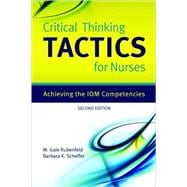
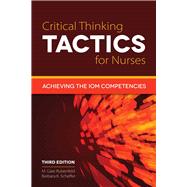
Because Knetbooks knows college students. Our rental program is designed to save you time and money. Whether you need a textbook for a semester, quarter or even a summer session, we have an option for you. Simply select a rental period, enter your information and your book will be on its way!
| Foreword to First Edition | p. vii |
| Foreword to Second Edition | p. ix |
| Preface | p. xii |
| Acknowledgments | p. xvi |
| Contributors | p. xviii |
| Why Critical Thinking? | p. 1 |
| Why Questions and Thinking | p. 2 |
| Exploring Your Use of Why | p. 3 |
| Why the Interest in CT in Health Care and Healthcare Education over the Last Two Decades? | p. 4 |
| ... MORE | p. 7 |
| The Context of Thinking | p. 7 |
| The Big Picture of Why Thinking Is Important | p. 8 |
| Major Stakeholders and Critical Thinking | p. 9 |
| Exploring Safe, Effective, and Efficient Care for Mr. Stone | p. 9 |
| Enhancing Decision-Making Skills and Job Satisfaction Through Professional Integrity | p. 11 |
| What Else Is Needed to Emphasize Why CT Is Important? | p. 18 |
| Verbalizing CT So Others Will See the Value | p. 20 |
| Pause and Ponder: Why Do You Think CT Is Important | p. 21 |
| Reflection Cues | p. 21 |
| References | p. 22 |
| What Is Critical Thinking? | p. 25 |
| The Critical Thinking "Bridge" | p. 26 |
| Pebbles on the Metaphorical Bridge | p. 27 |
| CT Self-Checklist | p. 37 |
| What Do Great Thinkers Look Like? | p. 42 |
| Talking and Thinking-A Patient Scenario | p. 43 |
| Pause and Ponder: Conclusions About What CT Is | p. 44 |
| Reflection Cues | p. 45 |
| References | p. 45 |
| Who Are the Critical Thinkers? | p. 47 |
| Clinicians | p. 48 |
| Educators | p. 48 |
| Other Thinkers Who Interact with Clinicians and Educators | p. 49 |
| Selected Factors That Affect Critical Thinkers | p. 49 |
| Cultural Influences on Thinkers | p. 58 |
| Environmental Factors Influencing Thinkers | p. 61 |
| Pause and Ponder: Defining Ourselves as Critical Thinkers | p. 62 |
| Reflection Cues | p. 63 |
| References | p. 64 |
| Institute of Medicine Competencies as a Context for Thinking: The How, When, and Where of Critical Thinking | p. 67 |
| Current Challenges and Solutions for Healthcare Delivery | p. 67 |
| Critical Thinking and Competencies | p. 72 |
| A Picture of Changes in Healthcare Delivery and Education | p. 72 |
| Promoting CT or Knowledge-Seeking Behavior | p. 78 |
| Techniques to Promote Thinking and Knowledge Processing | p. 82 |
| Reflection in Action | p. 86 |
| Pause and Ponder: Think Ahead to Change | p. 87 |
| Reflection Cues | p. 87 |
| References | p. 88 |
| Critical Thinking, Quality Improvement, and Safety | p. 91 |
| Defining Quality and Safety in Health Care and Stakeholder Involvement | p. 92 |
| Deficiency-Free Excellence: What Is the Scope of the Quality-Safety Problem? | p. 94 |
| The Relationships Among Quality, Safety, and Critical Thinking Within a Systems Framework of Structure, Process, and Outcomes | p. 99 |
| Five IOM Criteria Guiding Education and Practice Toward Quality Improvement and Safe Patient Care | p. 106 |
| Thinking for Criterion #1 | p. 107 |
| Thinking and Effectiveness | p. 110 |
| Thinking and Efficiency for Mr. Cashin | p. 112 |
| CT for Assessing Safety | p. 113 |
| Thinking Through an Adverse Event | p. 119 |
| Quality Care Through CT | p. 123 |
| Nurses Are "Safety Champions" for Enhancing Quality and Safety Through Thinking | p. 127 |
| Pause and Ponder: Safety Champions of Quality Improvement | p. 127 |
| Reflection Cues | p. 128 |
| References | p. 128 |
| Critical Thinking and Patient-Centered Care | p. 133 |
| Changing Patient-Provider Relationships | p. 134 |
| Patient-Centered Care and CT | p. 136 |
| Assessing Patient Readiness, Willingness, and Ability to Participate in CT and Patient-Centered Care | p. 137 |
| Reflect on Your Patients' Habits of the Mind | p. 139 |
| Facilitating Patients' Critical Thinking Skills | p. 139 |
| How to Merge Our Thinking with Patient Thinking | p. 144 |
| Reflect on Your Validation Remarks | p. 146 |
| Are There Negatives to Patient-Centered Care? | p. 148 |
| A Patient-Centered Care Story | p. 150 |
| Pause and Ponder: Where Is the Balance? | p. 152 |
| Reflection Cues | p. 152 |
| References | p. 153 |
| Critical Thinking and Interdisciplinary Teams | p. 157 |
| What Is Interdisciplinary Team Work? | p. 158 |
| Practice-Setting Team Meeting and Thinking | p. 162 |
| Educator Team Meeting and Thinking | p. 164 |
| What Is Interdisciplinary Team Thinking? | p. 166 |
| Team Thinking Assessment | p. 169 |
| Finding The IDT Thinking | p. 171 |
| Matching Some CT Dimensions with IDT Thinking | p. 175 |
| What Interferes with IDT Thinking? | p. 177 |
| What Cultivates IDT Thinking? | p. 180 |
| Pause and Ponder: Future Implications of IDT Thinking | p. 185 |
| Reflection Cues | p. 185 |
| References | p. 186 |
| Critical Thinking and Evidence-Based Practice | p. 191 |
| Historical Overview of EBP | p. 194 |
| Why Is EBP So Important? | p. 195 |
| Clinicians, On What Evidence Do You Base Your Practice? | p. 197 |
| Educators, On What Evidence Do You Based the Information You Teach? | p. 198 |
| Links Between Critical Thinking and EBP | p. 199 |
| How Have You Reacted to Past Practice Changes? | p. 209 |
| Big, Small, Individual, and Group Moves Toward EBP | p. 211 |
| Clinical Practice "Question of the Month" | p. 212 |
| One Nurse's Story of Successful EBP | p. 214 |
| Find the Thinking and EBP Components in Judy's Story | p. 214 |
| Pause and Ponder: Where Should Our EBP Thinking Go? | p. 216 |
| Reflection Cues | p. 216 |
| References | p. 217 |
| Critical Thinking and Informatics | p. 221 |
| The Context of Old Nurses and Young Informatics | p. 222 |
| Healthcare Information Evolution | p. 224 |
| The Changing Nature of Informatics | p. 226 |
| Critical Thinking and Health Informatics | p. 228 |
| Use Your Creativity and Logical Reasoning | p. 229 |
| Think How Informations Could East Your Life | p. 232 |
| Take Your Librarian to Lunch | p. 237 |
| Using Informatics to Improve Teaching Creativity | p. 246 |
| Challenges of Informatics | p. 248 |
| Finding Kate's Critical Thinking | p. 250 |
| Pause and Ponder: Health Informatics and the Future | p. 252 |
| Reflection Cues | p. 252 |
| References | p. 253 |
| Assessing Critical Thinking | p. 259 |
| Terminology of Measuring/Assessing Critical Thinking | p. 259 |
| Rationale for Discussing Assessing Last | p. 260 |
| The Challenges of Assessing CT | p. 261 |
| Linking Teaching, Learning, and Assessing of CT | p. 266 |
| An Evidence-Based Quantitative Method To Assess CT in Nursing Without Losing CT's Complexity | p. 270 |
| Examples of Practical Teaching/Learning/Assessing "Tools" of CT from List A in Box 10-2 | p. 271 |
| Examples of Practical Teaching/Learning/Assessing "Tools" of CT from List B in Box 10-2 | p. 280 |
| Pause and Ponder: Assessment Is Not an End Unto Itself | p. 284 |
| Reflection Cues | p. 285 |
| References | p. 285 |
| Thinking Realities of Yesterday, Today, and Tomorrow | p. 289 |
| Why Is Change So Necessary? | p. 290 |
| What Kinds of Change Are We Talking About? | p. 291 |
| Implications of Living with Constant, Complex Change | p. 293 |
| Thinking for Effective Change | p. 294 |
| Emergent, Necessary Patterns of Change in Thinking and Learning | p. 295 |
| How One Nurse's Thinking Helped Her Meet the 5 IOM Competencies | p. 305 |
| Pause and Ponder: The Hard Work of Thinking | p. 307 |
| Reflection Cues | p. 308 |
| References | p. 308 |
| Critical Thinking Inventory | p. 311 |
| Index | p. 315 |
| Table of Contents provided by Ingram. All Rights Reserved. |