FREE SHIPPING BOTH WAYS
ON EVERY ORDER!
LIST PRICE:
$61.35

Sorry, this item is currently unavailable.

Creative Arts, The: A Process Approach for Teachers and Children
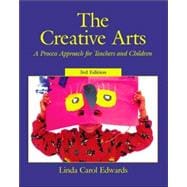
ISBN: 9780130908964 | 0130908967
Edition: 3rd
Format: Paperback
Publisher: Prentice Hall
Pub. Date: 1/1/2002

Why Rent from Knetbooks?

Because Knetbooks knows college students. Our rental program is designed to save you time and money. Whether you need a textbook for a semester, quarter or even a summer session, we have an option for you. Simply select a rental period, enter your information and your book will be on its way!

Top 5 reasons to order all your textbooks from Knetbooks:

  • We have the lowest prices on thousands of popular textbooks
  • Free shipping both ways on ALL orders
  • Most orders ship within 48 hours
  • Need your book longer than expected? Extending your rental is simple
  • Our customer support team is always here to help
SummaryTable of Contents
For courses in Creative Arts in Early Childhood and Elementary Art Methods. This novel text engages future teachers in the processes of creativity to encourage creative growth and participation in their classrooms. It emphasizes process, rather than product, so teachers learn that once they tap into their own creativity they are better equipped to help children participate in the creative process. The author's goal is to shift readers from depending on prescribed activities and products to a more secure awareness of everyone's ability to partic... MORE
Beginning the Journey
1(52)
Setting the Stage
3(4)
The Toddler Room with the Yellow Door
... MORE3(1)
The Toddler Room with the Blue Door
3(1)
The Kindergarten
4(1)
The Block Room
4(1)
Appropriate or Inappropriate Practice
4(2)
Sarah: Extending the Stage
6(1)
Nature of the Book
7(5)
Adult Development in the Arts
8(3)
Themes of the Book
11(1)
What Are the Arts?
12(6)
National Standards for Arts Education
13(2)
Art Education and the Young Child
15(2)
The Goals of a Process Approach
17(1)
Diversity and Multicultural Art in Your Classroom
18(4)
Art from Around the World
19(1)
Multicultural Art in Context
20(1)
Designing a Lesson Plan
21(1)
Theoretical Perspectives
22(10)
Intellectual Development
22(4)
Emotional and Social Development
26(3)
Gardner's Theory of Multiple Intelligences
29(3)
The Creative Process
32(5)
Process and Product
35(1)
Experiential or Experimental?
36(1)
Models of Creativity
37(2)
The Wallas Model of the Creative Process
37(1)
Torrance's Characteristics of Creativity
38(1)
Characteristics of Creative People
39(1)
A Case Study of Self
39(2)
Affective Development
41(5)
The Continuum of Affective Development
45(1)
The Teaching/Learning Atmosphere
46(1)
Developmentally Appropriate Practice
47(1)
Personal and Professional Growth
48(5)
Developing a Personal and Professional Support System
49(4)
Exploring Feelings and Images
53(46)
The Affective Domain
55(7)
Teacher Education and the Affective Domain
56(1)
What Does the Research Tell Us?
57(2)
Affective Characteristics of Teachers
59(2)
The Continuum of Development in the Affective Domain: Receiving/Attending
61(1)
Two Hemispheres of the Brain
62(11)
Guided Imagery and Right-Brain Activity
63(4)
Why Study Guided Imagery?
67(1)
Imagery in Other Professions
68(1)
Imagery in the Arts
69(2)
Imagery and Children's Art
71(2)
Guided Imagery for Teachers
73(8)
Centering
74(3)
Relaxing with Awareness
77(3)
Imagining
80(1)
Processing
81(1)
Guided Imagery and Children
81(6)
Using Guided Imagery with Children
82(5)
Exploring Guided Imagery Through a Multicultural Context
87(1)
Chinese and American Indian Folktales
87(1)
Guided Imagery Scripts for Children
88(2)
Walking in the Snow
88(1)
A Rainy Day
89(1)
A Very Special Basket
89(1)
Developmentally Appropriate Practice
90(2)
The Special Children in Your Classroom
90(2)
Personal and Professional Growth
92(7)
You Are Creative
93(2)
Searching for That Special Teacher
95(4)
Introducing Music and Movement
99(52)
The Continuum of Development in the Affective Domain: Responding
101(2)
Music and Movement: Enjoyment and Value for Children
103(3)
Four Important Reasons for Including Music in the Classroom
104(2)
Theories of Musical Development
106(5)
Gardner's Theory of Multiple Intelligences: Musical, Bodily-Kinesthetic, and Logical-Mathematical
107(1)
Supporting Musical, Bodily-Kinesthetic, and Logical Mathematical Intelligence
108(2)
Bruner's Three Modes of Learning
110(1)
Basic Stages of Early Musical Development
111(3)
Developmentally Appropriate Practice
114(3)
The Special Children in Your Classroom
114(3)
The Stage Awaits: Music and Movement for Young Children
117(16)
Children and Dance in the Classroom
117(4)
Selecting Songs, Fingerplays, and Instruments
121(9)
Classical Music and Children
130(3)
Processes for Music and Movement
133(3)
Introducing Movement and Dance
133(1)
Exploring Space, Time, and Force
134(2)
Exploring Movement and Dance Through a Multicultural Context
136(5)
The Hawaiian Hula and Caribbean Rings Dances
137(4)
Creative Movement
141(5)
Materials for Creative Movement
142(4)
Personal and Professional Growth
146(5)
The ``Mirror Dance'' Activity
146(2)
The ``Instrument Improvisation'' Activity
148(3)
Celebrating the Visual Arts
151(38)
Children and the Artistic Process
153(6)
Why Children Draw
154(3)
The Link between Drawing and Learning
157(2)
How Important Is Your Role, Teacher?
159(3)
Throw Out Your Old Notions: It's the Process That's Important
160(1)
Providing Authentic Experiences
161(1)
Talking with Children About Their Art
161(1)
Gardner's Theory of Multiple Intelligences: Spatial Intelligence
162(2)
Supporting Spatial Intelligence
164(1)
Materials and Processes for the Visual Arts
164(10)
Art Materials
165(1)
Processes and Activities
166(8)
Exploring the Visual Arts Through a Multicultural Context
174(4)
African and Eskimo Masks and Sculptures
174(4)
Developmentally Appropriate Practice
178(2)
The Special Children in Your Classroom
178(2)
Image Awareness Art Ideas for Children
180(3)
Pattern Peep
180(1)
An Imaginary Trip with Frederick
181(1)
The Shape of You
182(1)
The Continuum of Development in the Affective Domain: Valuing
183(1)
Personal and Professional Growth
184(5)
An Awareness of Self
184(1)
Drawing Dialogue
185(1)
Perception Checking
186(3)
Encouraging Play and Creative Drama in the Classroom
189(39)
The Play's the Thing
191(13)
Social Play
191(3)
Sociodramatic Play
194(4)
Creative Drama
198(6)
Gardner's Theory of Multiple Intelligences: Intrapersonal and Interpersonal
204(4)
Intrapersonal Intelligence
204(1)
Interpersonal Intelligence
205(1)
Supporting the Personal Intelligences
206(2)
Developmentally Appropriate Practice
208(2)
The Special Children in Your Classroom
209(1)
Processes and Materials for Encouraging Creative Drama
210(7)
Ideas for Pantomime
211(1)
Ideas for Improvisation: Characters Speak!
212(1)
Prop Boxes
213(2)
Field Trips
215(1)
Stories and Poems
215(2)
Exploring Creative Drama Through a Multicultural Context
217(5)
Dramatizing Folktales from Around the World
219(3)
The Continuum of Development in the Affective Domain: Organization
222(1)
Kierkegaard and Time
222(1)
Personal and Professional Growth
223(5)
Steps Toward Integration: The Personal ``Me'' and the Professional ``Me''
224(1)
Your Gunnysack
225(3)
Experimenting with Three-Dimensional Art
228(38)
Young Children and Three-Dimensional Art
230(5)
Molding and Sculpting with Clay
230(2)
Boxes, Wood, and Sand
232(2)
Conditions That Encourage Creative Expression
234(1)
Gardner's Theory of Multiple Intelligences: Naturalist Intelligence
235(1)
Supporting Naturalist Intelligence
236(1)
Developmentally Appropriate Practice
236(3)
The Special Children in Your Classroom
237(2)
Processes and Materials for Three-Dimensional Art
239(5)
Earth Clay
240(2)
Techniques for Working with Earth Clay
242(1)
Cleanup and Saving Children's Work
243(1)
Creative and Imaginative Ideas for Children
244(5)
Clay
244(1)
Fabric and Fiber
245(1)
Boxes and Cartons
246(1)
Sand
247(2)
Exploring Three-Dimensional Art Through a Multicultural Context
249(1)
Gardens from China to Japan
249(1)
Three-Dimensional Art for Teachers
250(9)
Pariscraft Face Masks
251(5)
A Self-Sculpture in Clay
256(2)
Group Sculpture
258(1)
The Continuum of Development in the Affective Domain: Characterization by a Value or Value Complex
259(1)
Reflective Awareness and the Continuum of Affective Development
260(2)
Receiving
260(1)
Responding
260(1)
Valuing
261(1)
Organization
261(1)
Characterization by a Value or Value Complex
261(1)
Personal and Professional Growth
262(4)
Teaching: Attitudes, Beliefs, and Behaviors
263(3)
Planning for Literature
266(44)
The Literature Environment
267(4)
Arranging Your Room for Literature
269(1)
Choosing Excellent Literature for Children
270(1)
Gardner's Theory of Multiple Intelligences: Linguistic Intelligence
271(4)
Supporting Linguistic Intelligence
272(3)
Developmentally Appropriate Practice
275(5)
The Special Children in Your Classroom
277(3)
Processes and Materials for Using Literature with Children
280(10)
Storytelling with the Flannelboard
280(3)
Quiz Cards
283(3)
Poetry
286(4)
Exploring Literature Through a Multicultural Context
290(1)
Egyptian Hieroglyphics
290(1)
Linking the Arts Through Literature: An Interdisciplinary Unit
291(12)
Selecting a Theme
293(1)
Brainstorming Associations
294(1)
Webbing as a Creative Process
295(2)
Compiling Resources for Learning Experiences
297(5)
Planning Integrated Experiences
302(1)
Implementing the Unit
303(1)
Personal and Professional Growth
303(7)
Poetry for Teachers
303(7)
Beginning a New Adventure
310(9)
Building a Bridge between Self-Understanding and Creativity
312(2)
Maslow and Basic Human Needs
312(1)
Self-Actualization and Teachers
313(1)
Personal and Professional Growth
314(2)
Gifts from the Wise One
315(1)
Good Words
316(1)
Creative Arts: Carry Them On!
316(3)
appendix 1 Literature319(14)
appendix 2 Music333(9)
appendix 3 Fingerplays342(8)
References350(8)
Index358

Related Products


  • Creative Arts, The: A Process Approach for Teachers and Children
    Creative Arts, The: A Process ...
  • Outlines and Highlights for Creative Arts : A Process Approach for Teachers and Children by Linda Carol Edwards, ISBN
    Outlines and Highlights for Cr...
  • The Creative Arts A Process Approach for Teachers and Children
    The Creative Arts A Process Ap...
  • The Creative Arts A Process Approach for Teachers and Children (with MyEducationLab)
    The Creative Arts A Process Ap...
  • The Creative Arts: A Process Approach for Teachers and Children
    The Creative Arts: A Process A...


Please wait while this item is added to your cart...