FREE SHIPPING BOTH WAYS
ON EVERY ORDER!
LIST PRICE:
$200.66

OUR PRICE:
$13.74

You may extend rentals at any time.


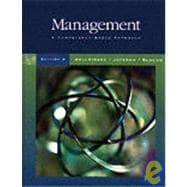
Management With Infotrac: A Competency Based Approach

ISBN: 9780324259940 | 0324259948
Edition: 10th
Format: Paperback
Publisher: South-Western College Pub
Pub. Date: 1/22/2004

Why Rent from Knetbooks?

Because Knetbooks knows college students. Our rental program is designed to save you time and money. Whether you need a textbook for a semester, quarter or even a summer session, we have an option for you. Simply select a rental period, enter your information and your book will be on its way!

Top 5 reasons to order all your textbooks from Knetbooks:

  • We have the lowest prices on thousands of popular textbooks
  • Free shipping both ways on ALL orders
  • Most orders ship within 48 hours
  • Need your book longer than expected? Extending your rental is simple
  • Our customer support team is always here to help
SummaryTable of Contents
MANAGEMENT: A COMPETENCY-BASED APPROACH presents theory, relevant applications, and innovation. The authors continue to place emphasis on six managerial competencies?self-management, strategic action, planning and administration, global awareness, teamwork, and communication?and have carefully woven examples of each into every chapter. The authors chose these six competencies after surveying hundreds of managers in all types and sizes of businesses. The integrated, interactive Self-Assessment helps learners understand and develop their own mana... MORE
Prefacexix
Part 1 An Overview of Management
1(66)
Managing in a Dynamic Environment
2(32)
... MORE
Preview: Allen Questrom at J.C. Penney's
4(1)
Managers and Management
4(4)
What Is an Organization?
5(2)
What Is a Manager?
7(1)
What Is Management?
7(1)
Types of Managers
8(1)
What Managers Do
8(6)
General Managerial Functions
8(3)
Planning & Administration Competency: Cliff Hudson of Sonic Drive-Ins
11(1)
Levels of Management
11(3)
Managerial Competencies
14(12)
What It Takes to Be a Great Manager
14(1)
Communication Competency
15(2)
Communication Competency: The Container Store
17(1)
Planning and Administration Competency
17(1)
Teamwork Competency
18(2)
Teamwork Competency: Teams at Whole Foods
20(1)
Strategic Action Competency
20(2)
Global Awareness Competency
22(1)
Global Awareness Competency: Procter & Gamble
23(1)
Self-Management Competency
24(1)
Exploring Your Managerial Competencies
25(1)
Chapter Summary
26(1)
Key Terms and Concepts
27(1)
Questions for Discussion and Competency Development
27(1)
Exercise for Competency Development: Self-Assessment Inventory
28(6)
The Evolution of Management
34(33)
Preview: United Parcel Service
36(1)
Traditional Viewpoint of Management
36(11)
Bureaucratic Management
39(3)
Planning & Administration Competency: Managing Call Centers
42(2)
Scientific Management
44(2)
Administrative Management
46(1)
Assessing the Traditional Viewpoint
46(1)
Behavioral Viewpoint
47(4)
Follett's Contributions
48(1)
Barnard's Contributions
49(1)
The Hawthorne Contributions
49(1)
Teamwork Competency: TDIndustries
50(1)
Assessing the Behavioral Viewpoint
51(1)
System Viewpoint
51(3)
Systems Concepts
51(1)
System Types
52(1)
Communication Competency: Solectron
53(1)
Quantitative Techniques
53(1)
Assessing the Systems Viewpoint
54(1)
Contingency Viewpoint
54(2)
Contingency Variables
55(1)
Assessing the Contingency Viewpoint
55(1)
Quality Viewpoint
56(6)
The Quality Control Process
56(2)
The Importance of Quality
58(1)
Strategic Action Competency: Bombardier Corporation
59(1)
Integration of Management Viewpoints and Competencies
60(2)
Chapter Summary
62(1)
Key Terms and Concepts
62(1)
Questions for Discussion and Competency Development
63(1)
Case for Competency Development: Starbucks
63(2)
Exercise for Competency Development: Managing an Organization
65(2)
Part 2 Managing the Environment
67(108)
Environmental Forces
68(28)
Preview: The Fast-Food Industry
70(1)
The Environment
70(11)
The General Environment
70(1)
The Economy
71(3)
Demographics
74(1)
Cultural Forces
75(2)
Self-Management Competency: What Are Your Cultural Values?
77(4)
Competitive Forces in an Industry
81(3)
Competitors
81(1)
New Entrants
82(1)
Substitute Goods and Services
82(1)
Customers
82(1)
Suppliers
83(1)
Global Awareness Competency: KFC in China
83(1)
Political-Legal Forces
84(5)
Planning & Administration Competency: AARP
88(1)
Technological Forces
89(3)
Technology's Role in Strategy
89(1)
Technology's Role in Manufacturing
90(1)
Strategic Action Competency: Jeep
90(1)
Technology's Role in Distribution
91(1)
Chapter Summary
92(1)
Key Terms and Concepts
93(1)
Questions for Discussion and Competency Development
93(1)
Case for Competency Development: The Movie Theater Industry
93(3)
Managing Globally
96(28)
Preview: Wal-Mart
98(1)
The Global Economy
98(3)
Cultural Forces
101(5)
Views of Social Change
101(1)
Time Orientation
101(1)
Language
102(1)
Value Systems
102(2)
Cultural Distance
104(1)
Teamwork Competency: Motorola in Malaysia
105(1)
Political-Legal Forces
106(4)
Assessing Political Risk
106(1)
Political Mechanisms
107(2)
Global Awareness Competency: The Paint Industry
109(1)
Global Trade Agreements
110(4)
World Trade Organization
110(1)
North American Free Trade Agreement
111(2)
Planning & Administration Competency: Mabe
113(1)
European Union
113(1)
Strategies for International Business
114(6)
Exporting Strategy
115(1)
Licensing Strategy
116(1)
Franchising Strategy
116(1)
Alliance Strategy
117(1)
Multidomestic Strategy
118(1)
Global Strategy
118(1)
Strategic Action Competency: Imperial Chemical Industries PLC
119(1)
Chapter Summary
120(1)
Key Terms and Concepts
120(1)
Questions for Discussion and Competency Development
121(1)
Case for Competency Development: Estee Lauder
121(1)
Exercise for Competency Development: Cultural Preferences
122(2)
Entrepreneurship
124(24)
Preview: Carolyn Minerich of Carmin Industries
126(1)
Entrepreneurs and External Factors
126(3)
Who Are Entrepreneurs?
126(1)
How Do External Factors Affect Entrepreneurs?
127(1)
Is a Small-Business Owner an Entrepreneur?
128(1)
Are Family Businesses Entrepreneurial Businesses?
129(1)
Attributes of Successful Entrepreneurs
129(3)
Personal Attributes
129(2)
Self-Management Competency: Adrian Lugo of LUGO Construction
131(1)
Technical Proficiency Attribute
132(1)
Managerial Competencies
132(4)
Strategic Action Competency
132(1)
Strategic Action Competency: Daniel Driesenga
133(1)
Planning and Administration Competency
133(1)
Teamwork Competency
134(1)
Communication Competency
134(1)
Self-Management Competency
134(1)
Self-Management Competency: Your Entrepreneurial Quotient
135(1)
Planning Essentials for Entrepreneurs
136(7)
The Business Plan
136(1)
Deciding to Buy, Start, or Franchise a Business
136(3)
Assessing Affordable Loss
139(1)
Finding Funds
139(1)
Going Global
140(1)
Managing a Family Business
141(1)
Planning & Administration Competency: Ready Pac Produce's Board
142(1)
Corporate Intrapreneurship
143(2)
Intrapreneurs
143(1)
Fostering Intrapreneurship
144(1)
Chapter Summary
145(1)
Key Terms and Concepts
146(1)
Questions for Discussion and Competency Development
146(1)
Case for Competency Development: Kink BMX
146(2)
Ethics and Stakeholder Social Responsibility
148(27)
Preview: Nortel Networks' Code of Business Conduct
150(1)
Importance of Ethics
150(1)
Shaping Ethical Conduct
151(7)
Cultural Forces
151(1)
Legal and Regulatory Forces
152(2)
Organizational Forces
154(1)
Global Awareness Competency: Nortel Networks' Worldwide Rules on Bribes and Kickbacks
155(1)
Individual Forces
156(1)
Self-Management Competency: Douglas Durand's Journey
157(1)
Making Ethical Judgments
158(7)
Utilitarian Approach
158(3)
Moral Rights Approach
161(1)
Communication Competency: State Farm Insurance Privacy Policy
162(1)
Justice Approach
163(1)
Combining Ethical Approaches
164(1)
Stakeholder Social Responsibility
165(6)
Stakeholders
165(1)
Strategic Action Competency: Nortel Networks' Commitments to Stakeholders
166(1)
Stakeholder Pressures
167(1)
Protecting the Natural Environment
167(2)
Finding Win-Win Solutions
169(1)
Evaluating Social Performance
169(2)
Chapter Summary
171(1)
Key Terms and Concepts
172(1)
Questions for Discussion and Competency Development
172(1)
Case for Competency Development: Larry Hansen Speaks Out
172(2)
Exercise for Competency Development: What Is Your Call?
174(1)
Part 3 Planning and Control
175(120)
Planning and Strategy
176(30)
Preview: Johnson & Johnson's Credo and Planning
178(1)
The Planning Function
178(1)
Two Types of Planning
179(4)
Strategic Planning
179(1)
Planning & Administration Competency: Bank of New York's Disaster Planning
180(2)
Strategic Action Competency: Dell's Competitive Strategies
182(1)
Tactical Planning
183(1)
Degree of Diversification and Planning
183(4)
Strategic Questions
183(2)
Types of Business Firms
185(2)
Communication Competency: GE's Jeff Immelt on Corporate Governance
187(1)
Strategic Levels and Planning
187(6)
Corporate-Level Strategy
187(3)
Self-Management Competency: Warren Buffett
190(1)
Business-Level Strategy
191(1)
Functional-Level Strategy
192(1)
Tasks of Planning
193(6)
Task 1: Develop Vision, Mission, and Goals
193(1)
Task 2: Diagnose Opportunities and Threats
194(1)
Task 3: Diagnose Strengths and Weaknesses
195(1)
Task 4: Develop Strategies
196(2)
Task 5: Prepare Strategic Plan
198(1)
Task 6: Prepare Tactical Plans
198(1)
Task 7: Control and Diagnose Results
198(1)
Task 8: Continue Planning
199(1)
Generic Competitive Strategies Model
199(2)
Differentiation Strategy
200(1)
Focused Differentiation Strategy
200(1)
Cost Leadership Strategy
200(1)
Focused Cost Leadership Strategy
201(1)
Chapter Summary
201(1)
Key Terms and Concepts
202(1)
Questions for Discussion and Competency Development
202(1)
Case for Competency Development: Grupo Bimbo
203(1)
Case for Competency Development: Harley-Davidson
204(2)
Fundamentals of Decision Making
206(30)
Preview: Craig Barrett of Intel
208(1)
Decision-Making Conditions
209(4)
Certainty
210(1)
Risk
210(1)
Uncertainty
211(1)
Strategic Action Competency: Finbarr O'Neill's Crisis Leadership of Hyundai
212(1)
Basic Types of Decisions
213(6)
Problem Types
213(1)
Solution Types
214(1)
Routine Decisions
215(1)
Adaptive Decisions
216(1)
Planning & Administration Competency: VisaNet's Continuous Adaptations
217(1)
Innovative Decisions
218(1)
Models of Decision Making
219(12)
Rational Model
219(6)
Teamwork Competency: Dofasco's Triple Bottom Line
225(1)
Bounded Rationality Model
226(2)
Political Model
228(3)
Communication Competency: American Airlines' Failed Communications
231(1)
Chapter Summary
231(1)
Key Terms and Concepts
232(1)
Questions for Discussion and Competency Development
232(1)
Case for Competency Development: Henry Manufacturing Company
233(1)
Exercise for Competency Development: Decision-Making Incidents
234(2)
Planning and Decision Aids
236(28)
Preview: SchlumbergerSema's InTouch Service
238(1)
Fostering Knowledge Management
239(3)
Knowledge Management Drivers
239(1)
Knowledge Management Targets
239(2)
Enabling Technology
241(1)
Enabling Culture
242(1)
Fostering Forecasts
242(6)
Delphi Technique
243(1)
Communication Competency: Communicating Trends in Safety Management
243(2)
Simulation
245(1)
Planning & Administration Competency: The Industry Restructuring Simulation
245(1)
Scenarios
246(2)
Fostering Creativity
248(4)
The Creative Process
248(1)
Osborn's Creativity Model
249(2)
Teamwork Competency: IDEO Brainstorms
251(1)
Fostering Quality
252(6)
Benchmarking
253(1)
The Deming Cycle
254(2)
Balanced Scorecard Model
256(1)
Strategic Action Competency: Southwest Airlines' Balanced Scorecard
257(1)
Chapter Summary
258(1)
Key Terms and Concepts
259(1)
Questions for Discussion and Competency Development
259(1)
Case for Competency Development: Mary Tolan's Energy Scenario and Proposal
260(1)
Exercise for Competency Development: Personal Creativity Inventory
261(3)
Controlling in Organizations
264(31)
Preview: Waste Management Restores Control
266(1)
Foundations of Control
266(6)
Preventive and Corrective Controls
267(1)
Sources of Control
268(1)
Planning & Administration Competency: Siebel Systems' Controls
269(1)
Linkage to Strategic Goals
270(1)
How Much Organizational Control?
271(1)
Corrective Control Model
272(4)
Define the System
272(1)
Identify Key Characteristics
273(1)
Set Standards
273(1)
Collect Information
274(1)
Make Comparisons
275(1)
Diagnose and Correct Problems
275(1)
Communication Competency: Barclays Complaint Management Process
276(1)
Primary Methods of Control
276(10)
Mechanistic and Organic Controls
277(1)
Market Control
278(1)
Financial and Accounting Controls
279(5)
Strategic Action Competency: ABC at Hospice of Central Kentucky
284(1)
Automation-Based Control
285(1)
Corporate Governance
286(5)
External Control: Sarbanes-Oxley Act
287(1)
Internal Control: Boards of Directors
288(2)
Planning & Administration Competency: Newell Rubbermaid's Audit Committee
290(1)
Chapter Summary
291(1)
Key Terms and Concepts
291(1)
Questions for Discussion and Competency Development
292(1)
Case for Competency Development: Jeff Immelt of GE on Corporate Governance
292(2)
Exercise for Competency Development: Ethical Behaviors in the Office
294(1)
Part 4 Organizing
295(86)
Organizational Design
296(26)
Preview: Home Depot
298(1)
Fundamentals of Organizing
299(2)
Differentiation
300(1)
Integration
300(1)
Vertical Design
301(4)
Hierarchy
301(1)
Span of Control
301(1)
Authority, Responsibility, and Accountability
302(1)
Delegation
302(2)
Planning & Administration Competency: American Standard
304(1)
Centralization and Decentralization
304(1)
Horizontal Design
305(9)
Functional Design
306(1)
Product Design
307(2)
Geographical Design
309(1)
Strategic Action Competency: Starbucks
309(1)
Network Design
310(3)
Communication Competency: DreamWorks SKG
313(1)
Organizational Integration
314(3)
Integration through Systems
314(1)
Global Awareness Competency: Flextronics International Ltd.
315(1)
Integration through Technology
316(1)
Chapter Summary
317(1)
Key Terms and Concepts
318(1)
Questions for Discussion and Competency Development
318(1)
Case for Competency Development: Kinko's
319(1)
Exercise for Competency Development: What Type of Design Is Your Organization?
320(2)
Organizational Change and Learning
322(30)
Preview: Changing to Survive at Yellow Freight System
324(1)
Types of Organizational Change
324(5)
Degree of Change
325(1)
Timing of Change
326(2)
What Is Your Reaction to Change?
328(1)
Self-Management Competency: Is Change Your Friend or Foe?
328(1)
Planning for Organizational Change
329(6)
Assess the Environment
330(1)
Determine the Performance Gap
330(1)
Diagnose Organizational Problems
330(1)
Articulate and Communicate a Vision for the Future
330(1)
Develop and Implement an Action Plan
331(1)
Teamwork Competency: Involving Employees at Royal Dutch/Shell
332(1)
Anticipate Resistance and Take Action to Reduce It
332(2)
Monitor the Changes
334(1)
Planning & Administration Competency: Alberto-Culver's Makeover
335(1)
Implementing Change
335(6)
Technological Change
335(1)
Organization Redesign
336(1)
Job Redesign
337(1)
Organization Development
338(2)
Combining Methods of Change
340(1)
Communication Competency: Fairchild Semiconductor
340(1)
Role of Innovation in Organizational Change
341(2)
Strategic Importance of Innovation
341(1)
Types of Innovation
341(1)
Architecture for Innovation
342(1)
Learning Organizations
343(5)
Shared Leadership
344(1)
Culture of Innovation
345(1)
Customer-Focused Strategy
346(1)
Organic Organization Design
346(1)
Intensive Use of Information
347(1)
Chapter Summary
348(1)
Key Terms and Concepts
348(1)
Questions for Discussion and Competency Development
349(1)
Case for Competency Development: Change at Hewlett-Packard
349(3)
Managing Human Resources
352(29)
Preview: Cisco Systems
354(1)
Strategic Importance
354(3)
Gaining and Sustaining Competitive Advantage
355(1)
Bottom-Line Consequences
356(1)
Social Value
356(1)
The Legal and Regulatory Environment
357(3)
Equal Employment Opportunity
357(2)
Compensation and Benefits
359(1)
Human Resources Planning
360(2)
Contingent Workers
360(1)
Layoffs
361(1)
Competency Inventories
361(1)
Hiring
362(5)
Communication Competency: Advanced Financial Solutions
363(1)
Recruitment
364(1)
Selection
365(2)
Training and Development
367(4)
Orientation Training
367(1)
Teamwork Competency: Ritz-Carlton Hotel Company
367(1)
Basic Skills Training
368(1)
E-Learning
368(1)
Team Training
368(1)
Career Development
369(1)
One-on-One Mentoring and Coaching
369(2)
Self-Management Competency: General Motors
371(1)
Performance Appraisal
371(4)
Uses of Performance Appraisal Results
371(1)
Performance Appraisal Accuracy
372(1)
Planning & Administration Competency: Managing Performance at TRW
372(2)
Performance Appraisals for Teams
374(1)
Compensation
375(2)
Importance of Pay Fairness
375(1)
Base Pay
375(1)
Incentives
376(1)
Benefits
376(1)
Chapter Summary
377(1)
Key Terms and Concepts
378(1)
Questions for Discussion and Competency Development
378(1)
Case for Competency Development: Interviewing Job Applicants
379(2)
Part 5 Leading
381(1)
Work Motivation
382(34)
Preview: BMW
384(1)
Understanding Motivation and Satisfaction
384(2)
Managerial Approach
385(1)
Job Design Approach
385(1)
Organization Approach
386(1)
Individual Differences Approach
386(1)
Managerial Approach
386(13)
Communication Comes First
386(1)
Setting Goals
387(1)
Planning & Administration Competency: NCCI's Goals Improve Performance
387(3)
Offering Incentives and Rewards
390(4)
Using Performance Expectations to Motivate Employees
394(1)
Strategic Action Competency: Goalsharing at Corning
394(5)
Job Design Approach
399(2)
Critical Psychological States
399(1)
Key Job Characteristics
400(1)
Growth Need Strength
401(1)
Organization Approach
401(6)
Herzberg's Two-Factor Theory
402(1)
Communication Competency: Intuit
403(1)
Treating People Fairly
404(3)
Individual Differences Approach
407(3)
Types of Needs
407(1)
Teamwork Competency: Chef Anthony Bourdain
408(1)
Moving through the Needs Hierarchy
409(1)
Guidelines for Managers
410(1)
Chapter Summary
411(1)
Key Terms and Concepts
412(1)
Questions for Discussion and Competency Development
412(1)
Case for Competency Development: Motivating Geeks and Geezers
413(1)
Exercise for Competency Development: Here's Looking at You
414(2)
Dynamics of Leadership
416(30)
Preview: Carly Fiorina at HP
418(1)
The Meaning of Leadership
418(2)
Influence
418(1)
Shared Purposes
419(1)
Change
419(1)
Personal Characteristics of Effective Leaders
420(3)
Self-Awareness
421(1)
Self-Control
422(1)
Social Awareness
422(1)
Social Skill
422(1)
Leadership Behaviors
423(3)
Theory X and Theory Y
423(1)
Communication Competency: Orpheus Chamber Orchestra
424(1)
Managerial Grid
425(1)
Contingencies for Leadership Behavior
426(8)
Situational Leadership® Model
427(2)
Strategic Action Competency: Andrea Jung at Avon
429(1)
Vroom-Jago Leadership Model
430(4)
Transformational Leadership
434(4)
Visionary
434(1)
Teamwork Competency: Sam Palmisano at IBM
435(1)
Charismatic and Ethical
436(1)
Trustworthy
437(1)
Thoughtful
437(1)
Considerate
437(1)
Confident
437(1)
Leadership Development
438(3)
On-the-Job Learning
438(1)
Planning & Administration Competency: 3M's Leadership Model
439(1)
Assessment and Training
439(1)
Coaching and Mentoring
440(1)
Chapter Summary
441(1)
Key Terms and Concepts
441(1)
Questions for Discussion and Competency Development
442(1)
Case for Competency Development: Ken Chenault at American Express
442(1)
Exercise for Competency Development: Emotional Intelligence
443(3)
Organizational Communication
446(32)
Preview: Washington Mutual
448(1)
The Communication Process
448(15)
Sender (Encoder)
449(2)
Receiver (Decoder)
451(1)
Message
452(3)
Planning & Administration Competency: Northern Ontario Business
455(2)
Channels
457(4)
Feedback
461(1)
Communication Competency: Are You Open to Feedback?
461(1)
Perception
462(1)
Hurdles to Effective Communication
463(5)
Organizational Hurdles
463(2)
Individual Hurdles
465(1)
Global Awareness Competency: Lost in Translation
466(1)
Eliminating Hurdles
467(1)
Fostering Effective Communication
468(1)
Ethical Issues in Communications
469(3)
Computer Ethics
469(1)
Self-Management Competency: Computer Ethics Survey
470(1)
Privacy Issues
471(1)
Chapter Summary
472(1)
Key Terms and Concepts
472(1)
Questions for Discussion and Competency Development
473(1)
Case for Competency Development: Mayo Clinic
473(2)
Exercise for Competency Development: Communication Inventory
475(3)
Managing Work Teams
478(32)
Preview: The Roche Group
480(1)
Work Teams and Other Groups
480(4)
Organizational Groups
480(1)
Work Teams
480(2)
Planning & Administration Competency: CommonHealth
482(1)
Informal Groups
482(1)
Why Organizations Use Work Teams
483(1)
Types of Work Teams
484(4)
Problem-Solving Work Teams
484(1)
Functional Work Teams
485(1)
Multidisciplinary Work Teams
486(1)
Self-Managing Work Teams
486(2)
A Framework for Team Effectiveness
488(1)
Effectiveness Criteria
488(1)
Effectiveness Determinants
489(1)
Internal Team Processes
489(8)
Teamwork Competency: Team Assessment Survey
490(1)
Developmental Stages
491(3)
Feelings
494(1)
Strategic Action Competency: Michael Foods
495(1)
Behavioral Norms
495(2)
Diagnosing the Causes of Poor Team Performance
497(8)
Team Design
497(2)
Global Awareness Competency: Sabre's Virtual Teams
499(1)
Culture
499(2)
Team Member Selection
501(1)
Team Training
501(3)
Reward Systems
504(1)
Chapter Summary
505(1)
Key Terms and Concepts
506(1)
Questions for Discussion and Competency Development
506(1)
Case for Competency Development: Managing GE's Jet Engines
507(1)
Exercise for Competency Development: Norms for Virtual Teams
508(2)
Organizational Culture and Cultural Diversity
510(2)
Preview: GSD&M Advertising
512(1)
The Elements of a Culture
512(5)
Assumptions
512(1)
Values and Norms
513(1)
Socialization
514(1)
Symbols
514(1)
Planning & Administration Competency: Setpoint
515(1)
Language
515(1)
Narratives
516(1)
Practices
517(1)
Basic Types of Organizational Cultures
517(4)
Bureaucratic Culture
518(1)
Clan Culture
518(1)
Entrepreneurial Culture
518(1)
Market Culture
519(1)
Organizational Implications
519(1)
Communication Competency: MBNA
520(1)
Subcultures Within Organizations
521(6)
Subcultures Due to Mergers and Acquisitions
521(1)
Departmental and Divisional Subcultures
521(1)
Global Awareness Competency: Mercedes-Benz
522(1)
Subcultures Due to Workforce Demographics
523(3)
Implications of Organizational Subcultures
526(1)
Managing Cultural Diversity
527(10)
Organizational Goals for Managing Cultural Diversity
528(2)
The Process of Change
530(3)
Teamwork Competency: United Technologies
533(1)
Diversity Training
534(1)
Creating Family-Friendly Workplaces
534(2)
Holding Managers Accountable
536(1)
Challenges
536(1)
Chapter Summary
537(1)
Key Terms and Concepts
538(1)
Questions for Discussion and Competency Development
538(1)
Case for Competency Development: Building a New Culture at the Cunningham Group
538(1)
Exercise for Competency Development: Diversity Knowledge Quiz
539
References1(1)
Organization Index1(1)
Name Index1(1)
Subject Index1

Related Products


  • Business and Company Resource Center User's Guide (with Access Code)
    Business and Company Resource ...
  • Management
    Management
  • MANAGEMENT TEXTBOOK
    MANAGEMENT TEXTBOOK
  • Management: A Competency Based Approach
    Management: A Competency Based...
  • Management: A Competency Based Approach
    Management: A Competency Based...
  • Managing A Competency-Based Approach (Book Only)
    Managing A Competency-Based Ap...
  • Managing A Competency-Based Approach (with InfoTrac Bind-in Card and BizFlix DVD)
    Managing A Competency-Based Ap...
  • Managing: A Competency-Based Approach, 11th Edition
    Managing: A Competency-Based A...
  • Outlines & Highlights for Management: A Competency-Based Approach
    Outlines & Highlights for Mana...
  • Outlines and Highlights for Managing : A Competency-Based Approach by Hellriegel, Jackson, and Jr. , ISBN
    Outlines and Highlights for Ma...


Please wait while this item is added to your cart...