Free Shipping On Every Order



Amazon no longer offers textbook rentals. We do!
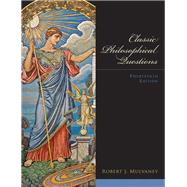
Classic Philosophical Questions Plus MySearchLab with eText -- Access Card Package

Classic Philosophical Questions Plus MySearchLab with eText -- Access Card Package
- ISBN 13:
9780205861101
- ISBN 10:
0205861105
- Edition: 14th
- Format: Package
- Copyright: 11/16/2011
- Publisher: Pearson
Rent
Sorry, this item is currently unavailable.
 Free Shipping On Every Order
Note: Supplemental materials are not guaranteed with Rental or Used book purchases.
Extend or Purchase Your Rental at Any Time
Need to keep your rental past your due date? At any time before your due date you can extend or purchase your rental through your account.
Summary
Classic and Contemporary Primary Source Readings. Classic Philosophical Questions has presented decades of students with the most compelling classic and contemporary primary source readings on the most enduring and abiding questions in philosophy. Classic Philosophical Questions is a longstanding and highly respected anthology of basic readings in philosophy, taken from ancient, modern, and contemporary sources. Issues are treated in a fundamentally open manner with arguments pro and con for the various positions covered. All selections are taken from primary sources, with introductions and study guides to facilitate reading for the beginning student. Teaching and Learning Experience Personalize Learning- MySearchLab delivers proven results in helping students succeed, provides engaging experiences that personalize learning, and comes from a trusted partner with educational expertise and a deep commitment to helping students and instructors achieve their goals. Improve Critical Thinking- Philosophical issues, "To Think About" questions and quotations, biographical sketches, and more, all help to encourage students to examine their assumptions, discern hidden values, evaluate evidence and assess their conclusions. Engage Students- The selections within Classic Philosophical Questions contain explanatory introductions, study questions and a glossary of terms to facilitate easier reading for the beginning student. Support Instructors- Teaching your course just got easier! You can create a Customized Text or use our Instructor's Manual, Electronic "MyTest" Test Bank or PowerPoint Presentation Slides. Plus, Classic Philosophical Questions maintains the independence of each work. It does not make the assumption that a student has previously read the material when it presents issues of knowledge, metaphysics, ethics, etc. - thus allowing you to arrange the order of topics to your course needs. Note: MySearchLab does not come automatically packaged with this text. To purchase MySearchLab, please visitwww.MySearchLab.comor you can purchase a valuepack of the text + MySearchLab (VP ISBN-10: 0205245218, VP ISBN-13: 9780205245215)