Free Shipping On Every Order



Amazon no longer offers textbook rentals. We do!
Mastering Public Speaking
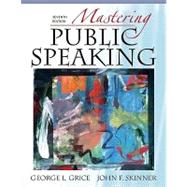
Mastering Public Speaking
- ISBN 13:
9780205593361
- ISBN 10:
0205593364
- Edition: 7th
- Format: Paperback
- Copyright: 01/28/2009
- Publisher: Pearson
- Newer Edition
 Free Shipping On Every Order
Note: Supplemental materials are not guaranteed with Rental or Used book purchases.
Extend or Purchase Your Rental at Any Time
Need to keep your rental past your due date? At any time before your due date you can extend or purchase your rental through your account.
Summary
Mastering Public Speaking equips the reader with a firm grounding in the “hows” and “whys” of public speaking by providing an ideal balance of theory and skills while placing important emphases on critiquing, ethics, and critical thinking.
Written in a casual, lively style and clearly organized, the Seventh Edition of Mastering Public Speaking builds on its previous success. The first public speaking book to devote an entire chapter to ethics, the Seventh Edition continues its popular and distinctive emphasis on the ethical contract between speaker and listener. Numerous examples from speeches by students from both two- and four-year schools illustrate all aspects of the speech-making process. The Seventh Edition also provides a current guide to researching databases and Internet sources, and a strong emphasis on how to evaluate Internet sites.
“Exploring Online” features throughout the book emphasize the wealth of information on the Internet and provide an explanation of fair use guidelines. Two solid chapters on persuasion highlight persuasive theory and application and types of argument, and include a discussion of logical fallacies.
“Speaking with Confidence” features throughout the Seventh Edition have students explain in their own words how various aspects of the speech process help build confidence. Marginal glossary entries, "Key Points" boxes, and bulleted chapter summaries aid both comprehension and retention.