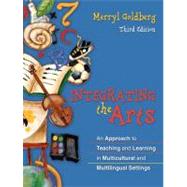
Because Knetbooks knows college students. Our rental program is designed to save you time and money. Whether you need a textbook for a semester, quarter or even a summer session, we have an option for you. Simply select a rental period, enter your information and your book will be on its way!
| Preface | p. xiii |
| Art Integration: A Methodology for Learning | p. 1 |
| Arts and Knowledge | p. 2 |
| Arts and Learning | p. 4 |
| Arts as Language | p. 9 |
| Arts and Culture | p. 12 |
| Arts and Culture and Identity | p. 14 |
| Arts and Inclusive Education: Special Needs, Exceptional, and Gifted Students | p. 15 |
| Arts and Technology | p. 17 |
| Histori... MORE | p. 17 |
| Opening New Venues for Artists and Students | p. 18 |
| Technology and Literacy | p. 19 |
| Multimedia | p. 20 |
| Technology in the Classroom as a Learning Tool | p. 20 |
| Turning Technology Over to Students | p. 21 |
| Equity and Technology | p. 21 |
| Students as Tech-Directors | p. 22 |
| Technology in the Workplace | p. 22 |
| Goals of an Equitable Education and the Arts | p. 22 |
| Methodology for Learning | p. 25 |
| Learning with the Arts | p. 26 |
| Learning through the Arts | p. 27 |
| Learning about the Arts | p. 29 |
| Summary | p. 29 |
| Questions to Ponder | p. 30 |
| Explorations to Try | p. 30 |
| References | p. 31 |
| What Does It Mean to Be a Learner? Intellectual Development Revisited | p. 33 |
| Theories of Intellectual Development | p. 33 |
| The Role of "Translation through Representation" in Learning | p. 36 |
| Standards and Arts Education | p. 39 |
| What Does It Mean to Be a Learner? | p. 40 |
| Summary | p. 47 |
| Questions to Ponder | p. 47 |
| Explorations to Try | p. 48 |
| References | p. 48 |
| Piaget, Imitation, and the Blues: Reflections on Imagination and Creativity | p. 51 |
| Creativity | p. 52 |
| Piaget, Imitation, and the Blues | p. 55 |
| Imagination | p. 57 |
| Howard Gardner, Creativity, and the Classroom | p. 59 |
| Creativity and Technique | p. 62 |
| Creator and Participant | p. 63 |
| Summary | p. 64 |
| Questions to Ponder | p. 64 |
| Explorations to Try | p. 64 |
| References | p. 65 |
| Communication, Expression, and Experience: Literacy and the Arts | p. 67 |
| Literacy with the Arts | p. 68 |
| Cursive Writing through the Arts | p. 69 |
| Picto-Spelling Learning through the Arts | p. 70 |
| Story Comprehension Learning through the Arts | p. 71 |
| Drama (Visual and Auditory) | p. 73 |
| Movement (Kinesthetic) | p. 74 |
| Music (Auditory) | p. 74 |
| Poetry and Language Acquisition through the Arts | p. 74 |
| Playing with Words | p. 77 |
| Journals: Working with Ideas over a Period of Time | p. 84 |
| Copied Poems | p. 86 |
| Key Elements toward Writing Poetry | p. 90 |
| Summary | p. 91 |
| Tech Connect | p. 91 |
| Technology, Arts, and Language Arts | p. 91 |
| Questions to Ponder | p. 92 |
| Explorations to Try | p. 92 |
| References | p. 92 |
| Sample Lesson Plans | p. 94 |
| The Voices of Humanity: History, Social Studies, Geography, and the Arts | p. 99 |
| Learning with the Arts | p. 101 |
| Poetry | p. 102 |
| Visual Arts | p. 104 |
| Photography | p. 104 |
| Music | p. 104 |
| Drama | p. 105 |
| Pablo Tac | p. 105 |
| Learning through the Arts | p. 106 |
| Presidential Puppetry | p. 107 |
| Mural Making and History | p. 110 |
| Quilts and History | p. 110 |
| Geography and Papier Mache | p. 111 |
| Summary | p. 112 |
| Tech Connect | p. 112 |
| Technology, Arts, and Social Studies | p. 112 |
| Questions to Ponder | p. 113 |
| Explorations to Try | p. 113 |
| References | p. 114 |
| Sample Lesson Plans | p. 115 |
| The Wonder of Discovery: Science and the Arts | p. 121 |
| Learning with the Arts | p. 123 |
| Painting | p. 123 |
| Music | p. 124 |
| Poetry | p. 124 |
| Learning through the Arts | p. 126 |
| Dance | p. 126 |
| Learning about Animals and Their Environments through Origami and Story Telling | p. 126 |
| Ecology: Drawing from Nature | p. 127 |
| The Nature of Poetry: Working with Ideas | p. 130 |
| Summary | p. 145 |
| Tech Connect | p. 145 |
| Technology, Arts, and Science | p. 145 |
| Questions to Ponder | p. 145 |
| Explorations to Try | p. 146 |
| References | p. 146 |
| Sample Lesson Plans | p. 147 |
| Puzzles of the Mind and Soul: Mathematics and the Arts | p. 153 |
| Learning with the Arts | p. 156 |
| Visual Arts | p. 156 |
| Dance | p. 158 |
| Literature | p. 159 |
| Music | p. 160 |
| Learning through the Arts | p. 160 |
| Distance Estimation | p. 160 |
| Permutations | p. 161 |
| Fractions | p. 161 |
| Shapes, Symmetry, Angles, and Geometry | p. 162 |
| Single-Digit Addition and Subtraction | p. 163 |
| Points and Coordinates, Parallel Lines | p. 166 |
| Drama, Story Problems | p. 166 |
| Summary | p. 166 |
| Tech Connect | p. 167 |
| Technology, Arts, and Mathematics | p. 167 |
| Questions to Ponder | p. 168 |
| Explorations to Try | p. 168 |
| References | p. 169 |
| Sample Lesson Plans | p. 170 |
| Setting the Stage for a Turn of Events: Subject Matter Informs the Arts | p. 175 |
| Arts Setting the Stage for Learning | p. 180 |
| Subject Matter Informing Art | p. 181 |
| Art as Subject Matter | p. 183 |
| Learning about Arts with Arts | p. 185 |
| Learning about Arts through Arts | p. 188 |
| Summary | p. 189 |
| Tech Connect | p. 190 |
| Technology and Arts | p. 190 |
| Questions to Ponder | p. 190 |
| Explorations to Try | p. 190 |
| References | p. 191 |
| Sample Lesson Plans | p. 193 |
| Seeing a Different Picture: Assessment and the Arts | p. 199 |
| The Need for Assessment | p. 200 |
| Evidence of Learning | p. 201 |
| Valuing the Arts as a Teaching and Assessment Tool | p. 202 |
| Content and Concept Assessment | p. 203 |
| Incidental Assessment | p. 204 |
| Setting Assessment Parameters | p. 204 |
| Strategies to Collect Evidence | p. 207 |
| Portfolio Assessment | p. 208 |
| Performance-Based Assessment | p. 208 |
| Listening to and Observing Children | p. 210 |
| Summary | p. 213 |
| Questions to Ponder | p. 213 |
| Explorations to Try | p. 213 |
| References | p. 213 |
| A Lithograph in the Closet and an Accordion in the Garage: Connecting with the Arts and Artists in Your Community | p. 215 |
| Utilizing Community Resources | p. 216 |
| The World Wide Web and Arts Education | p. 218 |
| SUAVE: A Cultural Partnership for Teachers | p. 219 |
| What Is SUAVE? | p. 219 |
| The Coaching Relationship | p. 222 |
| What Does a SUAVE Classroom Look Like? | p. 223 |
| Movement Poetry | p. 224 |
| Art and Identity | p. 224 |
| Cell Lab and Art | p. 225 |
| Crossing Boundaries-Lessons from Artists Applied to Learning | p. 226 |
| The Arts Ain't Fluff | p. 226 |
| Reflections on the Program | p. 227 |
| Summary | p. 229 |
| Questions to Ponder | p. 229 |
| Explorations to Try | p. 230 |
| References | p. 230 |
| Sample Lesson Plans | p. 231 |
| Beyond Walls: Mural Making and Critical Voices: Collaborative Art Projects | p. 239 |
| The Mural Project | p. 241 |
| Chronology of Class Work | p. 241 |
| Performance Guides | p. 250 |
| Epilogue | p. 254 |
| A Final Word | p. 254 |
| Questions to Ponder | p. 255 |
| Explorations to Try | p. 255 |
| References | p. 255 |
| Table of Contents provided by Ingram. All Rights Reserved. |