FREE SHIPPING BOTH WAYS
ON EVERY ORDER!
LIST PRICE:
$89.80

Sorry, this item is currently unavailable.

Learners with Mild Disabilities : A Characteristics Approach
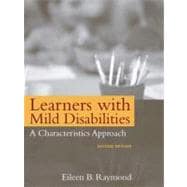
ISBN: 9780205386062 | 0205386067
Edition: 2nd
Format: Paperback
Publisher: Allyn & Bacon
Pub. Date: 1/1/2004

Why Rent from Knetbooks?

Because Knetbooks knows college students. Our rental program is designed to save you time and money. Whether you need a textbook for a semester, quarter or even a summer session, we have an option for you. Simply select a rental period, enter your information and your book will be on its way!

Top 5 reasons to order all your textbooks from Knetbooks:

  • We have the lowest prices on thousands of popular textbooks
  • Free shipping both ways on ALL orders
  • Most orders ship within 48 hours
  • Need your book longer than expected? Extending your rental is simple
  • Our customer support team is always here to help
SummaryTable of Contents
Learners with Mild Disabilities discusses students with disabilities with respect to their individual strengths and needs, considering their cognitive, perceptual, language, academic learning, and social/emotional characteristics. This text focuses on four high-prevalence disabilities: mild mental retardation, learning disabilities, ADHD, and behavioral disorders. It begins with a discussion of the traditional categorical perspective, and then moves to the perspective of alternative, non-categorical frameworks. The reader is encouraged to apply... MORE

All chapters include “Summary.”

Preface.

I. SETTING THE STAGE.

1. Perspectives on Disability.
Meet Clarence.
Studying High-Prevalence Disabilities.
Mild Does NOT Mean “Not Serious.”
The Power of Language.
Labeling and Classifying.
To Classify or Not to Classify.
Current Thinking on Labeling.
Prevention of Disabilities.
Overview of the Principles of the IDEA.
Amendments to P.L. 94-142.
Foc... MORE

2. Historical Perspectives and Contexts.
Meet Victor.
The Historical Context of Disability.
Early History.
The Middle Ages and the Renaissance.
The Enlightenment.
Disabilities in the United States: 1800-1900.
Disabilities in the United States: The Early Twentieth Century.
Disabilities in the United States from 1950 to the Present.
Trends in History.
Focus on Culture and Diversity.
Resources on the Web.
Patty: A Case Study.

3. Issues in Assessment and Identification
Meet Jeffrey.
IDEA 1997: Assessment and Evaluation Requirements.
Purposes of Assessment of Students with Special Educational Needs.
Types of Assessment Instruments and Techniques.
Reporting on Student Progress: Grading.
State and District Assessment and IDEA 1997.
Best Practices in Assessment with Children and Youth with Disabilities.
Issues in Identification.
Focus on Culture and Diversity.
Resources on the Web.
Sharon: A Case Study.

4. Issues in Curriculum and Instruction.
Meet Enrico.
IDEA 1997: Curriculum and Instruction Requirements.
Curriculum and Students with Disabilities.
Alternatives to the General Education Curriculum.
Instruction and Individualized Education Planning.
Instructional Strategies to Enhance Curriculum Access.
Programming Models: Enhancements to General Education Pedagogies.
Instructional Accommodations and Curricular Access.
Focus on Culture and Diversity.
Resources on the Web.
Angie: A Case Study.

5. Issues in Placement
Meet Tamika.
IDEA 1997: Location of Services.
Concept of the Least Restrictive Environment (LRE).
Models of Service Commonly Used for Students with Mild Disabilities.
Inclusion: A Continuing Issue in Special Education.
Focus on Culture and Diversity.
Resources on the Web.
Benny: A Case Study.

II. WHO ARE LEARNERS WITH MILD DISABILITIES?

6. Learners with Mental Retardation.
Meet Caroline.
Historical Foundations of Mental Retardation.
Development of the Definition of Mental Retardation in the United States.
IDEA Definition of Mental Retardation.
Alternatives to the IDEA Definition.
Levels of Severity.
Prevalence of Mental Retardation.
Typical Characteristics of Persons with Mental Retardation.
Conditions Associated with Mental Retardation.
Focus on Culture and Diversity.
Resources on the Web.
Jennie: A Case Study.

7. Learners with Learning Disabilities.
Meet Peter.
Historical Development of the Concept of Learning Disabilities.
Current IDEA Definition.
Assessment and Identification Issues.
Alternative Definitions of Learning Disabilities.
Issues Raised by the Alternative Definitions.
Conditions Associated with Learning Disabilities.
Prevalence of Learning Disabilities.
Types of Learning Disabilities.
Characteristics of Students with Learning Disabilities.
Focus on Culture and Diversity.
Resources on the Web.
Bobby: A Case Study.

8. Learners with Emotional or Behavioral Disorders
Meet Nicki.
Terms to Refer to This Group of Learners.
Historical Foundations.
Current IDEA Definition.
An Alternative Definition of Emotional or Behavioral Disorders.
Assessment and Identification Issues.
Prevalence of Emotional or Behavioral Disorders.
Levels of Severity.
Conditions Associated with Emotional or Behavioral Disorders.
Types of Emotional or Behavioral Disorders.
Focus on Culture and Diversity.
Resources on the Web.
Carter: A Case Study.

9. Learners with Other Disorders and Conditions.
Meet Nancy.
Children and Youth with Attention-Deficit/Hyperactivity Disorder.
Autism Spectrum Disorders.
Traumatic Brain Injury.
Communication Disorders.
Physical and Health Disabilities.
Sensory Disabilities.
Focus on Culture and Diversity.
Resources on the Web.
Frank: A Case Study.
Sara: A Case Study.

III. WHAT ARE LEARNERS WITH MILD DISABILITIES LIKE?

Introduction to Unit III.

10. Cognitive and Perceptual Characteristics.
Meet Robert.
Cognitive Theory and Approaches to Mild Disabilities.
Constructivist Perspectives.
Cognitive Styles Research.
Information -Processing Approaches.
Focus on Culture and Diversity.
Resources on the Web.
Charlene: A Case Study.
Jeanne: A Case Study.

11. Language Characteristics.
Meet Tom.
Definition of Language.
Language Components and Skills.
Language Channels: Comprehension and Production.
Language Functions.
Common Language Characteristics of Learners with Mild Disabilities.
Language Difference or Language Disability?
Implications of Language Characteristics for Thinking and Learning.
Focus on Culture and Diversity.
Resources on the Web.
Clark: A Case Study.

12. Academic Learning Characteristics.
Meet Barbara.
What is Learning?
Stages of Learning.
Cognitive Processing Deficits and Academic Performance.
The Role of Motivation.
Locus of Control and Attribution of Success or Failure.
Adolescents with Disabilities in Behavior and Learning.
Learning Styles and Multiple Intelligences.
Instructional Needs of Learners with Disabilities.
Focus on Culture and Diversity.
Resources on the Web.
Allison: A Case Study.

13. Social Emotional Characteristics.
Meet Eddie.
Perspectives on Social-Emotional Characteristics.
Developmental Perspectives.
Social Competence and Cognitive Development.
Behavior from an Ecological Perspective.
The Relationship Between Problems in Behavior and Problems in Learning.
Maladaptive Behavior.
IDEA 1997 and Serious Discipline Problems.
Focus on Culture and Diversity.
Resources on the Web.
Sammy: A Case Study.

Appendix A Policy Statements.
Council for Exceptional Children:
Labeling and Categorizing of Children.
Inclusive Schools and Community Settings.
National Association of School Psychologists:
Rights Without Labels.
Council for Learning Disabilities:
Measurement and Training of Perceptual and Perceptual-Motor Functions.

Appendix B Legislation and Litigation.

Glossary.

References.

Index.

Related Products


  • Learners with Mild Disabilities : A Characteristics Approach
    Learners with Mild Disabilitie...
  • Learners with Mild Disabilities : A Characteristics Approach
    Learners with Mild Disabilitie...
  • Learners With Mild Disabilities: A Characteristics Approach
    Learners With Mild Disabilitie...
  • Outlines and Highlights for Learners with Mild Disabilities by Eileen B Raymond, Isbn : 9780205519149 0205519148
    Outlines and Highlights for Le...


Please wait while this item is added to your cart...