Free Shipping On Every Order



Amazon no longer offers textbook rentals. We do!
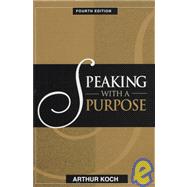
Speaking with a Purpose
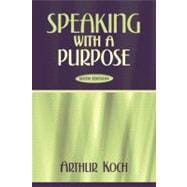
Speaking with a Purpose
- ISBN 13:
9780205380312
- ISBN 10:
020538031X
- Format: Paperback
- Copyright: 01/01/2004
- Publisher: Allyn & Bacon
- Newer Edition
New From $40.79
Sorry, this item is currently unavailable.
 Free Shipping On Every Order
List Price $41.20 Save $0.41
New
$40.79
Usually Ships in 2-3 Business Days
 We Buy This Book Back!
Included with your book
.svg "Free Shipping On Every Order") Free Shipping On Every Order
Free Shipping On Every Order
Note: Supplemental materials are not guaranteed with Rental or Used book purchases.
Extend or Purchase Your Rental at Any Time
Need to keep your rental past your due date? At any time before your due date you can extend or purchase your rental through your account.
Summary
Speaking with a Purpose provides students with the nuts and bolts needed to become effective public speakers. Intentionally brief, this text allows students to concentrate on the preparation, practice, and presentation of their speeches without getting bogged down by theoretical discussions. The focus on purpose and audience response, which incorporates consideration of cultural diversity, helps students identify ways to make their speeches more effective. Highly popular and practical, this text is the best of the brief books available on the subject.