FREE SHIPPING BOTH WAYS
ON EVERY ORDER!
LIST PRICE:
$76.00

Sorry, this item is currently unavailable.

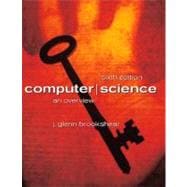
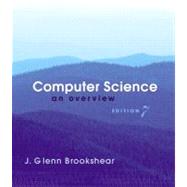
Computer Science : An Overview

ISBN: 9780201357479 | 020135747X
Edition: 6th
Format: Paperback
Publisher: Addison-Wesley Pub Co
Pub. Date: 10/1/1999

Why Rent from Knetbooks?

Because Knetbooks knows college students. Our rental program is designed to save you time and money. Whether you need a textbook for a semester, quarter or even a summer session, we have an option for you. Simply select a rental period, enter your information and your book will be on its way!

Top 5 reasons to order all your textbooks from Knetbooks:

  • We have the lowest prices on thousands of popular textbooks
  • Free shipping both ways on ALL orders
  • Most orders ship within 48 hours
  • Need your book longer than expected? Extending your rental is simple
  • Our customer support team is always here to help
SummaryTable of ContentsAuthor Biography
Computer Science: An Overview lives up to its title, providing the broad coverage and clear explanations of the entire computer science discipline that have made it the leading textbook for the breadth-first/CS0 course. This language-independent book introduces students to the discipline of computer science by providing accurate and balanced coverage of a variety of computer science topics, including programming languages, operating systems, algorithms, software engineering, and machine architecture. The sixth edition has been thoroughly updated to discuss increasingly important trends such as networking, object-oriented programming, and software engineering. It features new sections on public key encryption, evolutionary programming, and genetic algorithms, as well as thoroughly revised sections on data manipulation, operating systems, and networking. It features material on the move towards object-oriented software engineering with new sections covering Design Patterns and UML. Thought-provoking discussions of ethical and legal issues revolving around computing are integrated into each chapter so they are presented in the context of the material being covered at that time. J. Glenn Brookshear is a master of making even the most complex topics accessible to students through the use of real-life analogies and concrete examples.
Chapter 0 Introduction
1(14)
0.1 The Study of Algorithms
2(4)
0.2 The Origins of Computing Machines
... MORE
6(4)
0.3 The Evolution of Computer Science
10(1)
0.4 The Role of Abstraction
11(1)
0.5 Ethical/Social/Legal Repercussions
12(1)
Social Issues
13(1)
Additional Reading
14(1)
PART ONE: MACHINE ARCHITECTURE15(102)
Chapter 1 Data Storage
17(62)
1.1 Storage of Bits
18(8)
1.2 Main Memory
26(3)
1.3 Mass Storage
29(6)
1.4 Representing Information as Bit Patterns
35(9)
1.5 The Binary System
44(3)
1.6 Storing Integers
47(8)
1.7 Storing Fractions
55(5)
1.8 Data Compression
60(5)
1.9 Communication Errors
65(5)
Chapter Review Problems
70(6)
Social Issues
76(1)
Additional Reading
77(2)
Chapter 2 Data Manipulation
79(38)
2.1 The Central Processing Unit
80(5)
2.2 The Stored-Program Concept
85(4)
2.3 Program Execution
89(6)
2.4 Arithmetic/Logic Instructions
95(4)
2.5 Communicating with Other Devices
99(5)
2.6 Other Architectures
104(4)
Chapter Review Problems
108(6)
Social Issues
114(1)
Additional Reading
115(2)
PART TWO: SOFTWARE117(202)
Chapter 3 Operating Systems and Networks
119(48)
3.1 The Evolution of Operating Systems
120(4)
3.2 Operating System Architecture
124(6)
3.3 Coordinating the Machine's Activities
130(6)
3.4 Handling Competition Among Processes
136(5)
3.5 Networks
141(8)
3.6 Network Protocols
149(9)
3.7 Security
158(4)
Chapter Review Problems
162(3)
Social Issues
165(1)
Additional Reading
166(1)
Chapter 4 Algorithms
167(58)
4.1 The Concept of an Algorithm
168(2)
4.2 Algorithm Representation
170(8)
4.3 Algorithm Discovery
178(6)
4.4 Iterative Structures
184(12)
4.5 Recursive Structures
196(10)
4.6 Efficiency and Correctness
206(12)
Chapter Review Problems
218(5)
Social Issues
223(1)
Additional Reading
224(1)
Chapter 5 Programming Languages
225(60)
5.1 Historical Perspective
226(10)
5.2 Traditional Programming Concepts
236(12)
5.3 Procedural Units
248(7)
5.4 Language Implementation
255(10)
5.5 Object-Oriented Programming
265(3)
5.6 Programming Concurrent Activities
268(3)
5.7 Dedarative Programming
271(7)
Chapter Review Problems
278(3)
Social Issues
281(2)
Additional Reading
283(2)
Chapter 6 Software Engineering
285(34)
6.1 The Software Engineering Discipline
286(2)
6.2 The Software Life Cycle
288(6)
6.3 Modularity
294(6)
6.4 Design Methodologies
300(8)
6.5 Testing
308(2)
6.6 Documentation
310(2)
6.7 Software Ownership and Liability
312(2)
Chapter Review Problems
314(2)
Social Issues
316(1)
Additional Reading
317(2)
PART THREE: DATA ORGANIZATION319(116)
Chapter 7 Data Structures
321(48)
7.1 Arrays
322(3)
7.2 Lists
325(7)
7.3 Stacks
332(5)
7.4 Queues
337(4)
7.5 Trees
341(12)
7.6 Customized Data Types
353(7)
7.7 Pointers in Machine Language
360(1)
Chapter Review Problems
361(5)
Social Issues
366(1)
Additional Reading
367(2)
Chapter 8 File Structures
369(28)
8.1 The Role of the Operating System
370(1)
8.2 Sequential Files
371(6)
8.3 Text Files
377(4)
8.4 Indexing
381(4)
8.5 Hashing
385(6)
Chapter Review Problems
391(3)
Social Issues
394(1)
Additional Reading
395(2)
Chapter 9 Database Structures
397(38)
9.1 General Issues
398(3)
9.2 The Layered Approach to Database Implementation
401(3)
9.3 The Relational Model
404(14)
9.4 Object-Oriented Databases
418(3)
9 5 Maintaining Database Integrity
421(4)
9.6 Social Impact of Database Technology
425(3)
Chapter Review Problems
428(4)
Social Issues
432(1)
Additional Reading
433(2)
PART FOUR: THE POTENTIAL OF ALGORITHMIC MACHINES435(102)
Chapter 10 Artificial Intelligence
437(54)
10.1 Intelligence and Machines
438(4)
10.2 Understanding Images
442(3)
10.3 Reasoning
445(14)
10.4 Artificial Neural Networks
459(9)
10.5 Genetic Algorithms
468(5)
10.6 Applications of Artificial Intelligence
473(8)
10.7 Considering the Consequences
481(3)
Chapter Review Problems
484(4)
Social Issues
488(1)
Additional Reading
489(2)
Chapter 11 Theory of Computation
491(46)
11.1 A Bare Bones Programming Language
492(5)
11.2 Turing Machines
497(6)
11.3 Computable Functions
503(4)
11.4 A Noncomputable Function
507(6)
11.5 Complexity of Problems
513(10)
11.6 Public Key Cryptography
523(9)
Chapter Review Problems
532(3)
Social Issues
535(1)
Additional Reading
536(1)
Appendixes537(62)
A ASCII539(2)
B Circuits to Manipulate Two's Complement Representations541(4)
C A Typical Machine Language545(2)
D Program Examples547(10)
E The Equivalence of Iterative and Recursive Structures557(2)
F Answers to Questions/Exercises559(40)
Index599
J. Glenn Brookshear is an Associate Professor at Marquette University, where he has taught since 1975. In addition to this highly successful book, he is the author of Theory of Computation: Formal Languages, Automata, and Complexity, also published by Addison-Wesley. Professor Brookshear is an amateur magician and is also a vintage sportscar enthusiast, who can often be found in his garage maintaining his collection of British sportscars.

Related Products


  • Computer Science : An Overview
    Computer Science : An Overview
  • Computer Science : An Overview
    Computer Science : An Overview
  • Computer Science : An Overview
    Computer Science : An Overview
  • Computer Science : An Overview
    Computer Science : An Overview
  • Computer Science : An Overview
    Computer Science : An Overview
  • Computer Science : An Overview
    Computer Science : An Overview
  • Outlines and Highlights for Computer Science : Overview by J. Glenn Brookshear, ISBN
    Outlines and Highlights for Co...
  • Outlines and Highlights for Computer Science an Overview by Brookshear, Isbn : 142886654x
    Outlines and Highlights for Co...


Please wait while this item is added to your cart...