FREE SHIPPING BOTH WAYS
ON EVERY ORDER!
LIST PRICE:
$38.20

Sorry, this item is currently unavailable.

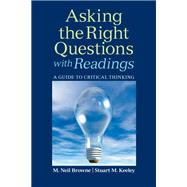
Asking the Right Questions : A Guide to Critical Thinking
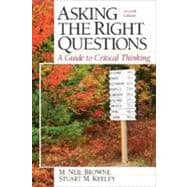
ISBN: 9780131829930 | 0131829939
Format: Paperback
Publisher: Prentice Hall
Pub. Date: 1/1/2004

Why Rent from Knetbooks?

Because Knetbooks knows college students. Our rental program is designed to save you time and money. Whether you need a textbook for a semester, quarter or even a summer session, we have an option for you. Simply select a rental period, enter your information and your book will be on its way!

Top 5 reasons to order all your textbooks from Knetbooks:

  • We have the lowest prices on thousands of popular textbooks
  • Free shipping both ways on ALL orders
  • Most orders ship within 48 hours
  • Need your book longer than expected? Extending your rental is simple
  • Our customer support team is always here to help
SummaryTable of Contents
For all level Critical Thinking, Argumentative Writing, and Informal Logic courses. This highly popular text helps students bridge the gap between simply memorizing or blindly accepting information, and the greater challenge of critical analysis and synthesis. It teaches them to respond to alternative points of view and develop a solid foundation for making personal choices about what to accept and what to reject.

Guide to critical thinking for students. Includes revised text and Companion Website, new practice pas... MORE
Prefacexi
The Benefit of Asking the Right Questions
1(14)
Introduction
1(1)
... MORE
Critical Thinking to the Rescue
2(1)
The Sponge and Panning for Gold: Alternative Thinking Styles
3(2)
An Example of the Panning-for-Gold Approach
5(2)
Panning for Gold: Asking Critical Questions
7(1)
The Myth of the ``Right Answer''
7(1)
Thinking and Feeling
8(1)
The Efficiency of Asking the Question, ``Who Cares?''
9(1)
Weak-Sense and Strong-Sense Critical Thinking
10(1)
The Satisfaction of Using the Panning-for-Gold Approach
11(1)
Trying Out New Answers
11(1)
Effective Communication and Critical Thinking
12(1)
The Importance of Practice
12(1)
The Right Questions
13(2)
What Are the Issue and the Conclusion?
15(10)
Kinds of Issues
16(1)
Searching for the Issue
17(1)
Searching for the Author's or Speaker's Conclusion
18(1)
Clues to Discovery: How to Find the Conclusion
19(2)
Critical Thinking and Your Own Writing and Speaking
21(1)
Practice Exercises
22(3)
What Are the Reasons?
25(12)
Reasons + Conclusion = Argument
26(1)
Initiating the Questioning Process
27(2)
Words That Identify Reasons
29(1)
Kinds of Reasons
29(2)
Keeping the Reasons and Conclusions Straight
31(2)
Reasons First, Then Conclusions
33(1)
``Fresh'' Reasons and Your Growth
33(1)
Critical Thinking and Your Own Writing and Speaking
34(1)
Practice Exercises
34(3)
What Words or Phrases Are Ambiguous?
37(16)
The Confusing Flexibility of Words
38(1)
Locating Key Terms and Phrases
39(1)
Checking for Ambiguity
40(1)
Determining Ambiguity
41(2)
Context and Ambiguity
43(2)
Ambiguity, Definitions, and the Dictionary
45(2)
Ambiguity and Loaded Language
47(1)
Limits of Your Responsibility to Clarify Ambiguity
48(1)
Ambiguity and Your Own Writing and Speaking
48(1)
Summary
49(1)
Practice Exercises
50(3)
What Are the Value Conflicts and Assumptions?
53(18)
General Guide for Identifying Assumptions
55(1)
Value Conflicts and Assumptions
55(1)
Discovering Values
56(2)
From Values to Value Assumptions
58(1)
Typical Value Conflicts
59(2)
The Communicator's Background as a Clue to Value Assumptions
61(1)
Consequences as Clues to Value Assumptions
61(1)
More Hints for Finding Value Assumptions
62(1)
Avoiding a Typical Difficulty When Identifying Value Assumptions
63(1)
Finding Value Assumptions on Your Own
64(3)
Values and Relativism
67(1)
Summary
67(1)
Practice Exercises
67(4)
What Are the Descriptive Assumptions?
71(12)
Illustrating Descriptive Assumptions
72(2)
Clues for Locating Assumptions
74(3)
Applying the Clues
77(1)
Avoiding Analysis of Trivial Assumptions
78(1)
Assumptions and Your Own Writing and Speaking
79(1)
Summary
79(1)
Practice Exercises
80(3)
Are There Any Fallacies in the Reasoning?
83(20)
A Questioning Approach to Finding Reasoning Fallacies
85(1)
Evaluating Assumptions as a Starting Point
85(3)
Discovering Other Common Reasoning Fallacies
88(6)
Looking for Diversions
94(2)
Sleight of Hand: Begging the Question
96(1)
Summary of Reasoning Errors
97(1)
Expanding Your Knowledge of Fallacies
98(1)
Fallacies and Your Own Writing and Speaking
99(1)
Practice Exercises
99(4)
How Good Is the Evidence: Intuition, Personal Experience, Testimonials, and Appeals to Authority?
103(14)
The Need for Evidence
104(1)
Locating Factual Claims
105(1)
Sources of Evidence
106(1)
Intuition as Evidence
107(1)
Dangers of Appealing to Personal Experience as Evidence
108(1)
Personal Testimonials as Evidence
109(1)
Appeals to Authority as Evidence
110(3)
Summary
113(1)
Practice Exercises
114(3)
How Good Is the Evidence: Personal Observation, Research Studies, Case Examples, and Analogies?
117(20)
Personal Observation
117(1)
Research Studies as Evidence
118(5)
Generalizing from the Research Sample
123(1)
Biased Surveys and Questionnaires
124(3)
Critical Evaluation of a Research-Based Argument
127(1)
Case Examples as Evidence
128(1)
Analogies as Evidence
129(4)
Summary
133(1)
Practice Exercises
133(4)
Are There Rival Causes?
137(18)
When to Look for Rival Causes
138(1)
The Pervasiveness of Rival Causes
139(3)
Detecting Rival Causes
142(1)
The Cause or A Cause
142(1)
Rival Causes and Scientific Research
143(2)
Rival Causes for Differences Between Groups
145(1)
Confusing Causation with Association
146(2)
Strong Support for a Cause
148(1)
Confusing ``After this'' with ``Because of this''
148(2)
Explaining Individual Events or Acts
150(1)
Evaluating Rival Causes
151(1)
Evidence and Your Own Writing and Speaking
152(1)
Summary
152(1)
Practice Exercises
152(3)
Are the Statistics Deceptive?
155(10)
Unknowable and Biased Statistics
156(1)
Confusing Averages
156(2)
Concluding One Thing, Proving Another
158(1)
Deceiving by Omitting Information
159(1)
Risk Statistics and Omitted Information
160(1)
Summary
161(1)
Practice Exercises
162(3)
What Significant Information Is Omitted?
165(14)
The Benefits of Detecting Omitted Information
166(1)
The Certainty of Incomplete Reasoning
166(1)
Questions That Identify Omitted Information
167(5)
The Importance of the Negative View
172(1)
Omitted Information That Remains Missing
173(1)
Missing Information and Your Own Writing and Speaking
174(1)
Practice Exercises
174(5)
What Reasonable Conclusions Are Possible?
179(12)
Assumptions and Multiple Conclusions
180(1)
Dichotomous Thinking: Impediment to Considering Multiple Conclusions
180(1)
Two Sides or Many?
181(2)
Searching for Multiple Conclusions
183(1)
Productivity of If-Clauses
184(1)
Alternative Solutions as Conclusions
185(1)
The Liberating Effect of Recognizing Alternative Conclusions
186(1)
Summary
186(1)
Practice Exercises
187(4)
Practice and Review
191(12)
Question Checklist for Critical Thinking
191(1)
Asking the Right Questions: A Comprehensive Example
192(2)
What Are the Issue and Conclusion?
194(1)
What Are the Reasons?
194(1)
What Words or Phrases Are Ambiguous?
195(1)
What Are the Value Conflicts and Assumptions?
196(1)
What Are the Descriptive Assumptions?
196(1)
Are There Any Fallacies in the Reasoning?
197(1)
How Good Is the Evidence?
198(1)
Are There Rival Causes?
199(1)
Are the Statistics Deceptive?
199(1)
What Significant Information Is Omitted?
200(1)
What Reasonable Conclusions Are Possible?
201(2)
Final Word
203(2)
The Tone of Your Critical Thinking
203(1)
Strategies for Effective Critical Thinking
204(1)
Index205

Related Products


  • Asking the Right Questions
    Asking the Right Questions
  • Asking the Right Questions
    Asking the Right Questions
  • Asking the Right Questions : A Guide to Critical Thinking
    Asking the Right Questions : A...
  • Asking the Right Questions : A Guide to Critical Thinking
    Asking the Right Questions : A...
  • Asking the Right Questions : A Guide to Critical Thinking
    Asking the Right Questions : A...
  • Asking the Right Questions A Guide to Critical Thinking
    Asking the Right Questions A G...
  • Asking the Right Questions A Guide to Critical Thinking with NEW MyCompLab -- Access Card Package
    Asking the Right Questions A G...
  • Guide Managerial Comm & Askg Right Ques Package
    Guide Managerial Comm & Askg R...


Please wait while this item is added to your cart...