FREE SHIPPING BOTH WAYS
ON EVERY ORDER!
LIST PRICE:
$65.60

Sorry, this item is currently unavailable.

Visions for Change : Crime and Justice in the Twenty-First Century
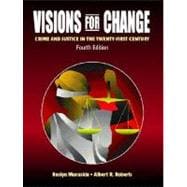
ISBN: 9780131776890 | 0131776894
Edition: 4th
Format: Paperback
Publisher: Prentice Hall
Pub. Date: 1/1/2005

Why Rent from Knetbooks?

Because Knetbooks knows college students. Our rental program is designed to save you time and money. Whether you need a textbook for a semester, quarter or even a summer session, we have an option for you. Simply select a rental period, enter your information and your book will be on its way!

Top 5 reasons to order all your textbooks from Knetbooks:

  • We have the lowest prices on thousands of popular textbooks
  • Free shipping both ways on ALL orders
  • Most orders ship within 48 hours
  • Need your book longer than expected? Extending your rental is simple
  • Our customer support team is always here to help
SummaryTable of Contents
For courses in Introduction to Criminal Justice, Critical Issues in Criminal Justice, Ethics and Crime, Policy and Victimology, Corrections, Probation and Parole, Law Enforcement, and Sociology. Exceptionally current and complete, this collection of readings examinesin detailcritical criminal justice policies and practices as evident in all criminal justice agencies throughout the United States. Linking the past, present, and future of criminal justice, the authors discuss important issues currently impacting the system, address the challenges ... MORE
Foreword by James Finckenauerxxi
Prefacexxv
About the Authors and Contributorsxxix
About the Authors/Editorsxxix
Contributorsxxxi
PART I OVERVIEW... MORE1(14)
CHAPTER 1 Looking to the Future of Criminal Justice
3(12)
Roslyn Muraskin and Albert R. Roberts
Crime Challenges in the Twenty-First Century
5(2)
Terrorism
7(1)
The Police
8(1)
Law
9(1)
Corrections
10(1)
Technology
11(1)
Gender, Diversity, and the Law
12(3)
PART II CRIME CHALLENGES IN THE TWENTY-FIRST CENTURY15(168)
CHAPTER 2 Reaffirming Juvenile Justice: Strategies for the Future
17(26)
Peter J. Benekos and Alida V. Merlo
Abstract
17(1)
Introduction
17(2)
History of Juvenile Justice
19(3)
Transformation
19(1)
Racial Disparity
20(1)
Lessons from the First One Hundred Years
21(1)
Emergent Themes and Trends in Juvenile Justice
22(4)
Good News: Continued Decline of Juvenile Crime
22(1)
Politics, Public Opinion, and National Issues
23(1)
Prevention and Early Intervention
23(1)
Public Support for Prevention
24(1)
Future Models for Juvenile Justice
25(1)
Promising Strategies for Youth Intervention
26(5)
Specialty Courts
26(2)
Other Programs
28(1)
Project CRAFT
29(2)
Prenatal Programs to Avoid Low-Birth Weight Babies
31(1)
Issues for the Future Juvenile Justice System
31(12)
Gangs
31(2)
Disproportionate Minority Representation
33(1)
Comparative Juvenile Justice
33(1)
Capital Punishment
34(1)
Adultification
35(1)
Models of Juvenile Justice
36(7)
CHAPTER 3 Gangs: Origin, Status, Community Responses, and Policy Implications
43(17)
Kenneth J. Peak and Timothy Griffin
Abstract
43(1)
Introduction
43(1)
Gang Origins, Composition, and Characteristics
44(5)
Early Formation and Research
44(1)
Contemporary Status and Types of Gangs
45(2)
Graffiti and Hand Signals
47(1)
Girl Gangs
48(1)
Gangs and Terrorism
48(1)
Police Response
49(3)
Outreach and Enforcement
49(2)
Use of Community Policing and Problem Solving
51(1)
Strategies for the Future
52(3)
Methods of Addressing the Problem
52(1)
A Program Approach
52(1)
Programs or Crackdowns: Which Method Is Best?
53(2)
Summary and Policy Implications
55(5)
CHAPTER 4 The Situation of Crime Victims in the Early Decades of the Twenty-First Century
60(15)
Andrew Karmen
Abstract
60(1)
Forecasting Future Developments
60(1)
The Situation Victims Faced in the Late Twentieth Century
61(2)
Anticipating the Situation of Victims in the Early Twenty-First Century by Projecting Existing Trends
63(9)
How the Trend Toward Granting Victims Greater Formal Rights within the Criminal Justice Process Might Lead to the Emergence of Victim Advocates
63(1)
How the Trend Toward Commercialization Will Lead to More Victimization Prevention Devices and Services
64(1)
How the Trend Toward Privatizing Criminal Justice Functions Might Lead to Private Prosecution
65(3)
How the Trend Toward Developing More Alternatives to Both Adjudication and Incarceration Might Bring About a Greater Reliance on Victim-Offender Reconciliation Programs
68(2)
How the Trend Toward Differential Justice Might Increase the Gap in the Way Victims Are Handled
70(2)
The Perils of Crystal Ball Gazing
72(3)
CHAPTER 5 Murder and Mayhem in the Media: Media Misrepresentation of Crime and Criminality
75(13)
Robert A. Jerin and Charles B. Fields
Abstract
75(1)
Introduction
75(2)
Crime Reporting and Public Perceptions
77(4)
Crime Reporting and Official Crime Statistics
81(3)
Conclusions
84(4)
CHAPTER 6 The War on Drugs: Treatment, Research, and Substance Abuse Intervention in the Twenty-First Century
88(33)
C. Aaron McNeece, Bruce Bullington, Elizabeth Mayfield Arnold, and David W. Springer
Abstract
88(1)
Introduction
88(1)
Justice System Interventions with Drug Users
89(2)
Current Practices in Drug Offender Intervention
91(8)
Self-Help Programs
92(1)
Individual, Family, and Group Counseling
93(2)
Psychoeducational Approaches
95(1)
Case Management
96(1)
Treatment Alternatives to Street Crime
96(1)
Acupuncture
96(1)
Urine Drug Testing
97(2)
Milieu Approaches
99(4)
Inpatient and Residential Programs
99(1)
Intensive Outpatient Programs
100(1)
Therapeutic Communities
100(1)
Boot Camps
101(1)
Drug Court
102(1)
Probation
103(1)
Paradigm Shift in Drug Policy
103(5)
Prohibitionist Reduction Approaches
103(2)
Enter Harm Reduction
105(3)
Medical Marijuana
108(6)
Conclusions
114(7)
CHAPTER 7 Identity Theft: An Overview of the Problem
121(19)
Katherine Slosarik
Abstract
121(1)
Introduction
121(1)
An Overview of Identity Theft
122(4)
Laws, Agencies, and Court Cases
122(4)
Commission of a Crime
126(6)
Identity Theft in Action
126(6)
Safeguarding Identity
132(4)
Current Practices and Policies
132(4)
Conclusion
136(4)
Future Bound
136(4)
CHAPTER 8 Looking for a New Approach to an Old Problem: The Future of Obscenity and Pornography
140(17)
Jay S. Albanese
Abstract
140(1)
New Concern for an Old Problem
140(2)
Methods and Sources
142(1)
What Is Pornography?
142(1)
The Pornography Industry
143(1)
The Pornography-Harm Link
144(2)
Sex Education and Citizen Action
146(1)
Law and Law Enforcement
147(2)
Explaining the Differences Between the 1970 and 1986 Commissions
149(1)
The Rise of the Internet
150(2)
Issues for the Future
152(5)
Protecting Children
152(1)
Obscenity: From Sex to Violence
153(1)
Why Is Pornography So Popular?
154(3)
CHAPTER 9 Criminal Justice in the New Millennium: The Crises of System and Science
157(26)
David V. Baker and Richard P. Davin
Abstract
157(1)
Introduction
158(1)
The Crisis in Justice Administration
158(14)
Police Lawlessness
159(2)
Courts and Partiality
161(2)
Sentencing Disparity
163(3)
Eugenics
166(1)
Gender and Criminal Justice
167(3)
The Death Penalty
170(2)
The Crisis in the Discipline of Criminal Justice
172(11)
PART III TERRORISM183(108)
CHAPTER 10 Terrorism in America
185(18)
Gary R. Perlstein
Terrorism in History
186(4)
The Early Years
186(1)
The Civil War: Before and After
187(1)
Labor Unrest
187(2)
Racial, Religious, and Vigilante Terrorism
189(1)
Contemporary Terrorism
190(9)
Terrorism from the Left
190(3)
Terrorism from the Right
193(2)
Single-Issue Terrorism
195(3)
Attacks of Foreigners on American Soil
198(1)
Conclusion: Terrorism and Local Law Enforcement
199(4)
CHAPTER 11 Profiling and Detention in the War on Terror: Human Rights Predicaments for the Criminal Justice Apparatus
203(16)
Michael Welch
Introduction
203(1)
Profiling in the War on Terror
204(1)
Special Registration Program
205(3)
Misuse of Detention
208(3)
Denial of Access to Counsel
208(1)
Abusive Interrogations
209(1)
Arbitrary Detention
210(1)
Harsh Conditions of Detention
210(1)
Government Secrecy
211(2)
The 2003 Inspector General's Report
213(1)
Conclusion
214(5)
CHAPTER 12 International and National Terrorism in the United States: New Challenges in the Twenty-First Century
219(35)
Edith E. Flynn
Introduction
219(3)
The Nature of Terrorism
222(1)
Typology of Terrorism
223(2)
Historical Roots of Terrorism
225(1)
The Changing Face of Terrorism
226(1)
Vulnerabilities to Modern Terrorism
227(1)
Major Changes in the Characteristics of Recent Terrorism
228(4)
Key Definitions of Terrorism
232(2)
Assessing the Current Terrorist Threat
234(7)
Domestic Terrorism
234(5)
International Terrorism
239(2)
Charting the Future of Terrorism
241(5)
Future Modes and Targets of Terrorism
241(2)
Focus on the New Threat of Weapons of Mass Destruction
243(3)
National Responses to the Terrorist Threat
246(2)
Conclusions
248(6)
CHAPTER 13 Terrorism-Nothing New: The Violent and the Violence
254(8)
Toni DuPont-Morales
Introduction
254(1)
Initiation
255(1)
Intention
255(1)
Conversion
256(2)
Boundaries
258(1)
Reparation
259(1)
Lessons Learned
260(1)
Conclusion
260(2)
CHAPTER 14 Public Safety and Private Sector Responses to Terrorism and Weapons of Mass Destruction
262(29)
Vincent E. Henry and Douglas H. King
Introduction
265(1)
Weapons of Mass Destruction: An Overview
266(5)
Biological and Chemical Agents in Warfare and Terrorism
267(3)
Nerve Agents
270(1)
Blister or Vesicant Agents
270(1)
Choking Agents
271(1)
Biological Agents
271(1)
Terrorism and the Use of Nuclear Material
272(1)
First Responder Safety-Time, Distance, and Shielding
273(3)
The Private Sector's Role
276(2)
Policies and Procedures, Protocols and Plans
278(7)
Conclusion
285(6)
PART IV THE POLICE291(114)
CHAPTER 15 Advanced Technology, Enhanced Funding and Specialized Police Domestic Violence Programs in the Twenty-First Century
293(20)
Albert R Roberts, Karel Kurst-Swanger, and Colleen O'Brien
Introduction
293(4)
Law Enforcement Model Domestic Violence Training and Intervention Programs: A Prelude to Change
295(2)
Future Training
297(1)
Specialized Domestic Violence Units
297(3)
Ann Arbor Police Department: Domestic Violence Enforcement Team
298(1)
Austin Police Department: Austin/Travis County Family Violence Protection Team
298(1)
Longview Police Department: Domestic Violence Impact Unit
299(1)
The Role of Technology in a Coordinated Community Response
300(2)
Cellular Phones
300(1)
Electronic Monitoring
301(1)
Online Police Information
302(1)
Community Wide Intervention Programs
302(1)
Model Police Departments
303(4)
Duluth Police Department
304(1)
Appleton Police Department
305(1)
Seattle Police Department
305(1)
Nashville Metropolitan Police Department
306(1)
Colorado Springs Police Department
306(1)
The Response of the Courts to Domestic Violence
307(3)
Confidentiality of Identifying Information
308(1)
Prosecuting Attorney's Office, City of Dover Police Department
309(1)
Policies to Protect Women's Rights
309(1)
Conclusion
310(3)
CHAPTER 16 Research and Policies on Domestic Violence Complaints: The Present to the Future
313(28)
Albert R. Roberts, Vincent E. Henry, and Stephen L. Ruland
Abstract
313(1)
Introduction
313(1)
Domestic Violence Statistics
314(3)
Police Response to Domestic Violence in the Mid-1990's
317(8)
Historical Overview
318(1)
The Impact of Feminism
319(1)
The Impact of Research
319(3)
Research on Deterrent Effects of Arrest
322(2)
Pro-arrest Policies
324(1)
A Model Domestic Violence Intervention Program
325(12)
Education
332(1)
Collaboration
332(1)
Enforcement
333(1)
Prevention
334(3)
Summary and Conclusions
337(4)
CHAPTER 17 The Influence of Community in Community Policing in the Twenty-First Century
341(13)
Michael J. Palmiotto
Abstract
341(1)
Introduction
341(2)
The Crime Problem
343(3)
Community Defined
344(1)
Community-Oriented Policing Philosophy
345(1)
Policing in the Early Twenty-first Century
346(3)
Community Influence
347(1)
Citizen Police Academies
348(1)
Community Advisory Councils
348(1)
Civilian Oversight
349(3)
Privatizing the Police
350(1)
Terrorism and Community Policing
351(1)
Conclusions
352(2)
CHAPTER 18 A Police View: Domestic Violence
354(13)
Martin L. O'Connor
Introduction
354(1)
Historic Forces
354(3)
The Social Landscape of the 1960's and 1970's
357(3)
Legal Forces
360(4)
Conclusion
364(3)
CHAPTER 19 Current and Future Practices and Strategies for Managing Police Corruption and Integrity
367(23)
Vincent E. Henry and Charles V. Campisi
Competing Views of Police Corruption
372(1)
The History of Corruption in the NYPD
372(9)
The Lexow Commission-1894
372(1)
The Curran Committee-1913
373(1)
The Seabury Investigation-1932
374(1)
The Brooklyn Grand Jury Investigation-1954
374(1)
The Knapp Commission-1970
375(6)
The Mollen Commission-July 7, 1994
Compstat and Corruption Control
381(5)
Conclusion
386(4)
CHAPTER 20 Police Organizational Change: Strategies for Effective Police Management in the Twenty-First Century
390(15)
Donna Hale and Todd Bricker
Abstract
390(1)
Introduction
390(2)
Incidents of Malfeasance
392(2)
The Learning Organization: Concepts and Applications
394(2)
The "Ripple Effect"
396(1)
Recommendations
397(3)
Conclusions
400(5)
PART V LAW405(76)
CHAPTER 21 The United States Supreme Court and the Death Penalty: The Path to Abolition
407(40)
Ken C. Haas
Abstract
407(1)
Introduction
408(1)
The Post-Gregg Years: 1976-1983
409(4)
The Post-Gregg Years: 1983-2002
413(13)
The Post-Gregg Years: 2002-2003
426(3)
The Supreme Court and the Prospects for Abolishing Capital Punishment
429(10)
Conclusions
439(8)
CHAPTER 22 The Bill of Rights in the Twenty-First Century
447(22)
Alexander B. Smith, Harriet Pollack, and Matthew Muraskin
Abstract
447(1)
Introduction
448(1)
The State of the Law as of the End of the Twentieth Century
449(6)
First Amendment
449(1)
Fourth Amendment
450(1)
Fifth Amendment
451(1)
Sixth Amendment
452(1)
Eighth Amendment
453(2)
New Issues for the Twenty-First Century
455(11)
First Amendment
455(3)
Fourth Amendment
458(1)
Fifth Amendment
459(2)
Sixth Amendment
461(1)
Eighth Amendment
462(4)
Criminal Justice Issues Not Related to the Bill of Rights
466(1)
Conclusions
466(3)
CHAPTER 23 A Critical Review of Civil Liberties and Their Impact on Citizens' Constitutional Rights: The U.S. Patriot Act vs. the Red Scare
469(12)
Ramona Brockett and Jessica Duty
Abstract
469(1)
History of the Birth of Civil Liberties and the Constitutional Right to Freedom
470(2)
America's Fear of Communism Permits Its Citizens' Loss of Liberty
472(1)
The Red Scare and the Loss of Citizens' Civil Liberties
473(1)
The Right to Free Speech Vs. National Security
474(1)
The U.S. Patriot Acts I and II
475(3)
The Purpose of the U.S. Patriot Acts, Section 802 and Its Effect on the First and Fourth Amendments
475(3)
Conclusion
478(3)
PART VI CORRECTIONS481(72)
CHAPTER 24 HIV/AIDS and Correctional Populations in the Twenty-First Century: The Corrections Demonstration Project
483(27)
Mark Lanier and Roberto Hugh Potter
Abstract
483(1)
Introduction
483(2)
Living with HIV and AIDS
485(1)
Living in Prison and Jail
486(1)
AIDS in Correctional Facilities
487(3)
The "Known" Caveat
488(1)
Returning to the Community
489(1)
Unique Problems
490(3)
Medical
490(1)
Compounding Medical Problems
491(1)
Psychological Stress
492(1)
HIV/AIDS Medical Treatment
493(4)
HIV/AIDS Treatment in Prison
495(2)
Theoretical Models
497(2)
Policy Recommendations
499(3)
Case Management
499(1)
Counseling
500(1)
Health Services
500(1)
Postrelease Services
500(1)
Alternative Sanctions (Community Corrections)
501(1)
Research Initiatives
502(2)
Summary and Conclusion
504(6)
CHAPTER 25 Sentencing in the Twenty-First Century: Sentence Enhancement and Life Without Parole
510(18)
Etta F. Morgan and Robert Sigler
Abstract
510(1)
Cycles in Orientation Toward the Sentencing of Criminal Offenders
511(2)
Mediating Influences
513(1)
Contemporary Practices
514(2)
Habitual Offender Statutes
516(2)
Sentence Enhancement
518(1)
Restricted Housing
519(1)
Determinate Sentences and Parole
520(1)
Unintended Consequences
520(1)
The Twenty-First Century
521(7)
CHAPTER 26 An Introduction to Prison Privatization: Issues for the Twenty-First Century
528(25)
Michael Hallett
Abstract
528(1)
Commerce with Criminals: For-Profit Incarceration in American History
528(1)
The Panopticon and Private Profit
529(1)
Labor and Confinement: The Racial History of For-Profit Imprisonment in America
530(2)
Contemporary Prison Privatization in America
532(1)
Supply and Demand: Prison Overcrowding as Good Business
533(1)
Current Scope of Prison Privatization
534(2)
Themes in Today's Debate About Prison Privatization
536(2)
The Cost Conundrum
536(2)
Caveat Emptor: "Hidden Costs"
538(2)
"Creaming," "Skimming," and "Cherry Picking"
540(1)
"Free Market Competition" (Benefits) Vs. Service-Provider Captivity (Risks)
540(2)
Contract and Monitoring Business
542(1)
High Turnover
543(1)
Legal Issues
544(1)
Construction Costs of Prison Facilities
544(1)
"Mass Imprisonment" and Prison Privatization
545(2)
Conclusion: Moral, Racial, and Ethical Issues
547(6)
PART VII TECHNOLOGY553(64)
CHAPTER 27 Criminal Justice and Forensic Science: Partners in Solving Crime
555(12)
Etta F. Morgan
History of Forensic Science
557(1)
Specialty Areas of Forensic Science
558(3)
Admissability and Use of Forensic Evidence in Court
561(2)
Some Additional Forensic Organizations
563(1)
Conclusion
564(3)
CHAPTER 28 Technoprison: Technology and Prisons
567(20)
Janice Joseph
Introduction
567(1)
Biometric Scanning
567(3)
Finger Scanning
568(1)
Eye Scanning
569(1)
Hand Scanning/Hand Geometry
569(1)
Facial Recognition
570(1)
Illegal Activities Detection Technology
570(3)
Illegal Drugs
571(1)
Concealed Weapons
572(1)
Heartbeat Detectors
572(1)
Pulsed Radar
572(1)
Smart Card
573(1)
Electro-Shock Devices
574(1)
Stun Belt
574(1)
Electric-Stun/Lethal Fences
574(1)
Verichip
575(1)
Monitoring and Surveillance Technology
575(2)
Perimeter Security Control
575(1)
Control of Inmate Movement Inside Prison
576(1)
Video Teleconferencing
577(1)
Court Hearings
577(1)
Prison Visits/Video Visiting
577(1)
Telemedicine
578(1)
Issues Regarding the Use of Technology
578(1)
Usefulness
578(1)
Constitutional Issues
579(3)
Reliability and Accuracy
581(1)
High Cost
582(1)
Recommendations
582(1)
Summary
583(4)
CHAPTER 29 School Safety and the Use of Security Technology
587(21)
Lawrence F Travis, III and Julie Kiernan Coon
Abstract
587(1)
Introduction
587(3)
Efforts to Create Safer Schools
590(11)
What Are Security Technologies?
590(1)
Benefits of Security Technologies
591(1)
Detriments of Security Technologies
592(1)
Potential Barriers to Adopting Security Technologies
593(1)
Survey of Schools
594(1)
Limitations of the Current Study
595(2)
Findings
597(2)
School Characteristics that may be Associated with Technology Adoption
599(2)
Bivariate Relationships
601(3)
Multivariate Equation
603(1)
Conclusion
604(4)
CHAPTER 30 The Technoeconomic Revolution: Reengineering Criminal Justice Organizations and Workplaces
608(9)
Rosemary Gido
Abstract
608(1)
Introduction
608(1)
Workforce Issues for the Decade
609(2)
Information Technology and Workplace Organization
611(1)
Twenty-First Century Workforce Trends: Personnel Dilemmas for Criminal Justice Organizations and Workplaces
611(1)
Barriers to Criminal Justice Organizational Change
612(1)
Reactivity and Inertia
612(1)
Gender and Racial Barriers
612(1)
Emerging Models of Criminal Justice Organizational Change
613(1)
Community Policing
613(1)
Conclusions
614(3)
PART VIII GENDER, DIVERSITY AND THE LAW617(68)
CHAPTER 31 Women and the Law: An Agenda for Change
619(13)
Roslyn Muraskin and Martin L. O'Connor
Abstract
619(1)
Introduction
620(2)
History
622(1)
Sexual Harassment
623(3)
The Need for a National Commitment to End Violence Against Women
626(2)
Summary
628(1)
Agenda for Change
629(3)
CHAPTER 32 The New Millennium: Women in Policing in the Twenty-First Century
632(20)
Donna C. Hale and Mark Lanier
Abstract
632(1)
Introduction
632(2)
Methodology: Students' Perceptions of Women in U.S. Policing
634(1)
Findings
635(6)
Graduate Students Examination of Women in American Policing
638(3)
Discussion
641(2)
Implications
643(2)
In the Classroom
643(1)
Use of the Media in the Classroom
644(1)
Conclusions
645(3)
Acknowledgements
648(4)
CHAPTER 33 The Administration of Justice Based on Gender and Race
652(18)
Etta F. Morgan
A Theoretical Beginning
652(2)
The Pathway to Civil Rights and Affirmative Action
654(3)
The Administration of Law
657(3)
Female Criminality
660(1)
Extralegal Factors
660(6)
Gender
660(2)
Race
662(2)
The Future
664(2)
Conclusion
666(4)
CHAPTER 34 Criminal Justice Personnel in the Twenty-First Century: The Importance of Diversity
670(15)
Becky Tatum
Abstract
670(1)
Introduction
670(1)
What is Diversity
671(1)
Diversity in Law Enforcement
672(2)
Diversity in the Court System
674(3)
Extant Research
676(1)
Diversity in Corrections
677(1)
Diversity in Criminal Justice Education and Research
678(1)
Recommendations for Achieving and Maintaining Diversity
679(6)
PART IX CONCLUSIONS/SUMMING UP!685(5)
CHAPTER 35 The Future is Now: Summing Up
687(3)
Roslyn Muraskin
Index690

Related Products


  • Outlines and Highlights for Visions for Change by Roslyn Muraskin, Albert R Roberts, Isbn : 9780136139393
    Outlines and Highlights for Vi...
  • Visions for Change : Crime and Justice in the 21st Century
    Visions for Change : Crime and...
  • Visions for Change : Crime and Justice in the Twenty-First Century
    Visions for Change : Crime and...
  • Visions for Change : Crime and Justice in the Twenty-First Century
    Visions for Change : Crime and...
  • Visions for Change: Crime and Justice in the Twenty-First Century
    Visions for Change: Crime and ...


Please wait while this item is added to your cart...