FREE SHIPPING BOTH WAYS
ON EVERY ORDER!
LIST PRICE:
$105.60

Sorry, this item is currently unavailable.

Supervising Police Personnel: The Fifteen Responsibilities
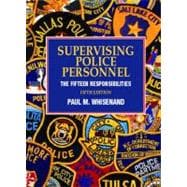
ISBN: 9780131123168 | 0131123165
Edition: 6th
Format: Hardcover
Publisher: PRENTICE-HALL
Pub. Date: 1/1/2007

Why Rent from Knetbooks?

Because Knetbooks knows college students. Our rental program is designed to save you time and money. Whether you need a textbook for a semester, quarter or even a summer session, we have an option for you. Simply select a rental period, enter your information and your book will be on its way!

Top 5 reasons to order all your textbooks from Knetbooks:

  • We have the lowest prices on thousands of popular textbooks
  • Free shipping both ways on ALL orders
  • Most orders ship within 48 hours
  • Need your book longer than expected? Extending your rental is simple
  • Our customer support team is always here to help
SummaryTable of Contents
For courses in Police Supervision, Human or Organizational Behavior, and Ethics. Using an exploratory and interactive structure, this introduction to police supervision covers all the latest supervisory concepts and practices with an emphasis on character, teamwork, and conflict resolution. Boasting a 15-responsibility organization, the Fifth Edition implements a practical, ethics-based approach to establishing leadership in a complex organization, and provides a host of creative exercises and study resources that stimulates student thought and... MORE
Dedicationix
Prefacexi
An Overviewxiii
Part One---Team Fundamentals
1(110)
... MORE
3(19)
An Overview of What Follows
4(1)
Why Values?
4(2)
Values: What Are They?
6(1)
Values-Led Police Supervision
7(1)
Sources of Our Values
8(1)
Changing Our Values
9(1)
Values: What Do They Do for Us?
10(4)
Value Clarification
14(5)
Basically . . .
19(1)
From Values to Ethics
20(1)
Key Points
20(1)
Discussion
21(1)
Ethics
22(24)
Ethics and Ethos
23(1)
There Is No Such Thing as Police Ethics
24(1)
Risky Behavior
25(1)
Courageous Choices
26(8)
What Kind of a Person Do You Want to Be?
34(2)
Ethical Decision-Making
36(2)
Ethics Training
38(5)
The Paradigm of Integrity
43(1)
Key Points
44(1)
Discussion
45(1)
Vision
46(23)
Paradigms
47(6)
Two Approaches for Building a Vision Statement
53(2)
Building a Shared Vision
55(2)
Goal-Setting: The Constancy of Progress
57(6)
Strategy: The Constancy of Change
63(4)
Think Slowly, Act Quickly!
67(1)
Key Points
67(1)
Discussion
68(1)
Communications
69(23)
Why Do We Communicate?
70(1)
What Is It?
71(1)
What We Know about Communications
72(2)
Where We Communicate
74(6)
How We Communicate
80(1)
Volume of Words
80(6)
Infotech
86(2)
Why Don't We Communicate Better?
88(3)
Key Points
91(1)
Discussion
91(1)
Time Management
92(19)
A Couple of Questions for You
93(1)
Our Mission
93(1)
People, People, People
94(1)
Time Dimension
94(1)
Self-Mastery of Time
95(1)
Time and Productivity
96(1)
Overloads
97(3)
If It's Worth Doing, It's Worth Doing Poorly
100(1)
Four Generations of Time Management
100(3)
On Becoming a Category II Police Supervisor
103(6)
Key Points
109(1)
Discussion
109(2)
Part Two---Team Building
111(110)
Team Leadership
113(21)
Team Leadership at the Top
114(1)
The Police Supervisor as a Leader
115(1)
The Police Supervisor as ``Team Leader''
115(1)
Team Leadership and Empowerment
116(1)
Authority and Power
116(2)
Police Department: Voluntary Organization
118(1)
Formal and Informal Team Leaders
118(1)
Courageous Followership
119(1)
Managing Your Boss
120(1)
Loyalty of a Team Follower
121(8)
Two Big Mistakes a Team Leader Can Make
129(1)
A Third Big Mistake: GroupThink
130(2)
Key Points
132(1)
Discussion
133(1)
Motivation
134(21)
Why Have Motivated Workers?
135(1)
How Does Motivation Start?
135(1)
What Is Worker Motivation?
136(1)
The Distinction between Motivation and Performance
136(2)
Intrinsic and Extrinsic Motivation
138(2)
Theories of Worker Motivation: Why Employees Do What They Do
140(6)
Questions and Answers
146(1)
Job Satisfaction
147(2)
The Increasing Importance of Recognition and Rewards
149(3)
Retention
152(1)
Don't Be a Damn Fool
153(1)
Key Points
153(1)
Discussion
154(1)
Empowerment
155(17)
We Don't Act on What We Know
156(2)
Em-power-ment
158(2)
Delegation
160(6)
Participation
166(3)
Entitlement Is Empowerment in Excess
169(1)
Key Points
170(1)
Discussion
171(1)
Team Training
172(21)
Why Teams?
173(1)
Team-Training
174(3)
Advantages
177(2)
Trust
179(2)
Training
181(4)
Team-Based Decision-Making
185(1)
Training a Diverse Workforce
185(3)
Emotional Intelligence
188(3)
Key Points
191(1)
Discussion
191(2)
Vitality
193(28)
Stress and Vitality
194(1)
Fight or Flight Response
194(2)
Stress and Integrity
196(1)
Responsibility of the Police Supervisor-As-Leader
197(3)
Sources and Forms of Stress: The Stressors
200(2)
Detecting One's Stress Level
202(10)
Converting Stress into Vitality
212(1)
Vitality Management
212(1)
Taking Four Steps
212(2)
Strategy A---Supportive Relationships
214(1)
Strategy B---Mental Discipline
215(1)
Strategy C---Helping Others
216(1)
Strategy D---The Three Rs
217(1)
Strategy E---Altruistic Egoism
217(1)
Key Points
218(1)
Discussion
219(2)
Part Three---Teamwork
221(114)
Organizing
223(20)
Governance
224(4)
Organizations
228(12)
A Case for Agile Organizations
240(1)
Key Points
241(1)
Discussion
242(1)
Performance
243(31)
A Spirit of Performance
244(1)
Planning for Performance
245(2)
Supervising by Objectives
247(1)
Setting Objectives
248(3)
Performance Evaluation
251(3)
The Performance Domain Rating Scale
254(18)
Key Points
272(1)
Discussion
273(1)
Conflict
274(30)
Conflict
275(4)
Conflict Management
279(1)
Six Steps You Can Take for Getting to Yes
279(4)
Problem Employees
283(8)
Citizen Complaints
291(7)
Media Relations
298(3)
Key Points
301(2)
Discussion
303(1)
Community-Oriented and Problem-Oriented Policing
304(26)
Community-Oriented Policing
305(2)
Crime Control
307(1)
A Decision for Quality
308(1)
Who's Really Responsible?
309(3)
Implementation
312(1)
Who Benefits?
312(1)
Problem-Oriented Policing
313(1)
Incident- or Problem-Driven
314(2)
POP: Reasons, Methods, Principles, and SARA
316(7)
Implementation
323(5)
Key Points
328(1)
Discussion
329(1)
Anticipation
330(5)
Why Anticipation?
330(1)
Ways to Anticipate
331(1)
Trend One---Career Path Civilians
331(1)
Trend Two---Technology and Touch
332(1)
Trend Three---Work-Force Diversity
332(1)
Trend Four---Ethical Dilemmas
332(1)
Trend Five---Fewer Qualified Job-Seekers Means More Old Geezers
333(1)
Trend Six---Terrorism
333(1)
Trend Seven---Community-Oriented Policing: Generation Two
334(1)
Trend Eight---Service Evaluation
334(1)
Trend Nine---Early Retirement, Shorter Careers
335(1)
Trend 10---Your Turn
335

Related Products


  • Outlines & Highlights for Supervising Police Personnel: The Fifteen Responsibilities by Paul M. Whisenand
    Outlines & Highlights for Supe...
  • Supervising Police Personnel : The Fifteen Responsibilities
    Supervising Police Personnel :...
  • Supervising Police Personnel : The Fifteen Responsibilities
    Supervising Police Personnel :...
  • Supervising Police Personnel : The Fifteen Responsibilities
    Supervising Police Personnel :...
  • Supervising Police Personnel : The Fifteen Responsibilities
    Supervising Police Personnel :...


Please wait while this item is added to your cart...