FREE SHIPPING BOTH WAYS
ON EVERY ORDER!
LIST PRICE:
$90.20

Sorry, this item is currently unavailable.

International Relations and World Politics : Security, Economy, Identity
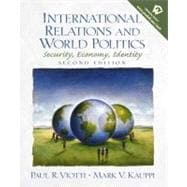
ISBN: 9780130172778 | 0130172774
Edition: 2nd
Format: Paperback
Publisher: Longman
Pub. Date: 1/1/2001

Why Rent from Knetbooks?

Because Knetbooks knows college students. Our rental program is designed to save you time and money. Whether you need a textbook for a semester, quarter or even a summer session, we have an option for you. Simply select a rental period, enter your information and your book will be on its way!

Top 5 reasons to order all your textbooks from Knetbooks:

  • We have the lowest prices on thousands of popular textbooks
  • Free shipping both ways on ALL orders
  • Most orders ship within 48 hours
  • Need your book longer than expected? Extending your rental is simple
  • Our customer support team is always here to help
SummaryTable of Contents
For undergraduate-level courses in international relations or world politics.This comprehensive introduction to international relations focuses on what has changed and what has remained the same since the end of the cold war. Providing a strong conceptual, historical, and theoretical foundation, it identifies key perspectives and the actors in world politics, explains the concepts, tracks the trends (global interdependence and crises of authority), and examines current and future global concerns.

International Rela... MORE
Prefacexv
Part I OVERVIEW
Introduction: Trends, Concepts, Actors, and Perspectives
2(28)
Trends
6... MORE
Global Interdependence
6(3)
Crises of authority
9(1)
Connections and cautions
9(2)
Concepts
11(5)
Security, economy, identity
14(2)
Actors
16(4)
Individuals and world politics
20(1)
Perspectives on International Relations and World Politics
20(6)
International Relations and World Politics
26(2)
Overview
28(1)
Key Terms
29(1)
Other Concepts
29(1)
Additional Readings
29(1)
International Relations and World Politics in Historical Perspective
30(42)
International Systems: Definition and Scope
33(2)
Four Types of International Systems: An Overview
35(16)
The Persian empire
39(1)
Classical Greece: Independent state and hegemonic systems
40(2)
India: Independent state and imperial systems
42(3)
The Roman empire
45(3)
Medieval Europe and the feudal system
48(3)
The Rise of the European Independent State System
51(13)
The emergence of collective hegemony
58(2)
The globalization of the European system
60(4)
Twentieth-Century Hegemonic Systems in a Global Context
64(1)
Dual Hegemony During the Cold War: A Closer Look
65(4)
Conclusion
69(1)
Key Terms
70(1)
Other Concepts
70(1)
Additional Readings
70(2)
Part II STATE SECURITY AND STATECRAFT
Interests, Objectives, and Power of States
72(30)
Framework: Interests, Objectives, Threats, and Opportunities
74(11)
Constructing the framework
74(6)
Policy-making Conflicts over interests and objectives
80(2)
Prioritization of objectives
82(1)
Competing domestic and foreign policy objectives
83(1)
States versus other actors
84(1)
Capabilities and Power: Translating Objectives into Realities
85(14)
Political capabilities
86(6)
Social and cultural capabilities
92(1)
Geographic, economic, and technological capabilities
93(3)
Military capabilities
96(2)
Measuring power
98(1)
Conclusion
99(1)
Key Terms
100(1)
Other Concepts
100(1)
Additional Readings
100(2)
Diplomacy: Managing Relations Among States
102(38)
Definition and Scope
107(2)
The Historical Development of Diplomacy
109(6)
Diplomatic Machinery and Processes
115(22)
Recognition of states and governments
115(3)
Diplomatic immunities and protections
118(1)
The organization of diploamatic missions
119(5)
Diplomatic incentives and disincentives
124(5)
The ways and means of diplomatic communications
129(8)
Conclusion
137(1)
Key Terms
138(1)
Other Concepts
139(1)
Additional Readings
139(1)
Military Force: War, Just Wars, and Armed Intervention
140(32)
The Rationalities and Irrationalities of Interstate War
142(2)
The Causes of War
144(5)
International system level of analysis
144(2)
Individual and group levels of analysis
146(1)
State and societal levels of analysis
147(2)
National Strategy and the Use of Force
149(5)
Restraining War: Moral and Legal Principles and the Use of Force
154(8)
Pacificism and bellicism
154(2)
Just-war theory
156(2)
Conduct during war
158(1)
Noncombatants
159(3)
Law, Armed Intervention, and World Politics
162(4)
Intervention and civil wars
163(1)
Humanitarin intervention
164(2)
Law, Force, and National Security
166(2)
Conclusion
168(1)
Key Terms
169(1)
Other Concepts
169(1)
Additional Readings
170(2)
International Cooperation and Security: International Organizations, Alliances, and Coalitions
172(38)
Anarchy, Cooperation, Harmony, and Discord
175(21)
World government
183(1)
Alliances, coalitions, and international organizations
183(5)
Collective security
188(8)
Peacekeeping: Managing and Controlling Conflicts
196(1)
Functional Collaboration in Specialized Agencies, Other International Organizations, and Regimes
197(5)
Conclusion
202(4)
Key Terms
206(1)
Other Concepts
206(1)
Additional Readings
206(1)
Appendix: The North Atlantic Treaty
207(3)
Controlling Global Armaments
210(38)
Disarmament and Arms Control
212(10)
Functional approaches to conflict and arms ontrol
216(6)
Arms Control, Verification, and Compliance
222(2)
Alternative Deterrence Doctrines
224(10)
Deterrence, defense, and warfighting
227(1)
Minimum or finite deterrence
227(1)
Minimum deterrence as strategic doctrine for India, Pakistan, and other new nuclear weapons states
228(2)
Deterrence through assured (and mutually assured) destruction and defensive efforts to limit damage
230(1)
Defense
231(1)
Warfighting
232(1)
The end of the cold war and implication for arms control, deterrence, defense, and warfighting doctrines
233(1)
Deterrence theory: Some concerns
234(1)
Weapons Proliferation
234(12)
Nuclear weapons and materiel
235(3)
Cbemical and biological weapons
238(2)
Ballistic missiles
240(1)
Conventional weapons
240(6)
Conclusion
246(1)
Key Terms
246(1)
Other Concepts
247(1)
Additional Readings
247(1)
Part III INTERNATIONAL SECURITY
International Terrorism and Transnational Crime
248(30)
Terrorism
250(19)
Causes of terrorism
254(2)
Extent of terrorism
256(4)
Changing nature of terrorism
260(5)
Responses
265(4)
Transnational Crime
269(8)
Case study: The United States, Latin America, and drugs
274(3)
Conclusion
277(1)
Key Terms
277(1)
Other Concepts
277(1)
Additional Readings
277(1)
Part IV CIVIL SOCIETY AND THE GLOBAL ECONOMY
An Emerging Global Civil Society: International Law, International Organization, and Globalization
278(18)
The Globalization of International Relations and World Politics
280(2)
The Emergence of a State-Centric Global Society
282(4)
International Law and Multilateral Institutions
286(1)
Constructing Global Civil Society: A Multicentury Project
287(7)
Diplamacy and security: Matters of war and peace
288(2)
Economic and commercial matters
290(1)
``Growth areas'' in international law: Human rights and the environment
291(3)
Conclusion
294(1)
Key Terms
294(1)
Other Concepts
294(1)
Additional Readings
295(1)
Global Economy: Politics and Capitalism
296(28)
Global Political Economy
298(2)
The Emergence and Development of Capitalism as a Worldwide Form of Political Economy
300(11)
Identifying the attributes of capitalist political economy
300(3)
The passing of feudalism and the new politics of capitalism, mercantilism, and liberalism
303(4)
The progressive globalization of capitalism
307(4)
The Twentieth-Century Debate on Global Commerce
311(4)
The North-South Divide
315(4)
A Look Ahead
319(2)
Conclusion
321(1)
Key Terms
322(1)
Other Concepts
322(1)
Additional Readings
322(2)
The Political Economy of International Trade, Money, and Regional Integration
324(42)
Classical Trade Theory and Comparative Advantage
327(11)
Neoclassical and Subsequent Economic Thought on How the Global Political Economy Works
338(10)
Trade and ``increasing returns'' from specialized, large-scale production
339(4)
Impacts on trade of the volatility of money
343(2)
Why should we care?
345(3)
An International Monetary Regime for Financing International Commerce
348(10)
International organizations and international monetary regime maintenance
351(5)
Political choices: How much capital should the IMF have and for what purposes?
356(1)
An international and global trade regime
357(1)
Regional Economic Integration and Global Commerce
358(6)
Conclusion
364(1)
Key Terms
365(1)
Other Concepts
365(1)
Additional Readings
365(1)
The Political Economy of Investment and Sustainable Development
366(40)
Third World Poverty and Capital Formation
369(9)
Sources of capital
372(6)
Trade and Development
378(8)
Population growth as a constraint on Third World economic development
384(2)
A Global Perspective
386(17)
The global environment
386(2)
The environment and security
388(4)
International organizations and the environment
392(6)
Transnational organizations and the environment
398(2)
Global population
400(3)
Conclusion
403(1)
Key Terms
404(1)
Other Concepts
404(1)
Additional Readings
404(2)
Part V IDENTITY AND CIVIL SOCIETY
Nationalism and Conflicting Identities
406(32)
Religion
409(2)
Nations, Ethnic Groups, and States
411(15)
Nations and nationalism
413(3)
Binational states
416(1)
Multinational, multitribal, and other multiethnic states
417(7)
Nation-states and nations without states
424(2)
Approaches to Dealing with Nationalism and Ethnicity
426(7)
National self-determination
426(2)
Alternative approaches to maintaining unity in binational, multinational, and multiethnic states
428(5)
Social and Economic Approaches to Intercommunal Peace
433(2)
Conclusion
435(1)
Key Terms
436(1)
Other Concepts
436(1)
Additional Readings
437(1)
Humanitarianism: Human Rights and Refugees
438(44)
Human Rights and the Human Condition
441(3)
Justice: The Universality of Human Rights versus State Sovereignty
444(7)
Human rights and the liberal tradition
445(2)
Human rights across cultures
447(2)
Culturally specific rights and values
449(2)
Toward Global Society and Values That Transcend Diverse Cultures
451(21)
From theory to fact
454(10)
Machinery for buman rights issues and cases
464(4)
Regional human rights efforts in Europe
468(1)
Other regional human rights efforts
469(1)
NGOs and human rights
470(2)
Refugees
472(7)
An international regime for refugees
476(3)
Conclusion
479(1)
Key Terms
480(1)
Other Concepts
481(1)
Additional Readings
481(1)
Conclusion: Twenty-First Century Views of Global Politics
482(10)
Economic and Technological Optimists
484(1)
Social and Environmental Pessimists
485(2)
Realists and Pluralists
487(4)
Final Words
491(1)
Concepts
491(1)
Additional Readings
491(1)
Glossary492(22)
Photo Credits514(1)
Index515

Related Products


  • International Relations and World Politics
    International Relations and Wo...
  • International Relations and World Politics : Security, Economy, Identity
    International Relations and Wo...
  • International Relations and World Politics : Security, Economy, Identity
    International Relations and Wo...
  • International Relations and World Politics : Security, Economy, Identity
    International Relations and Wo...
  • International Relations and World Politics Plus MyPoliSciLab -- Access Card Package with eText -- Access Card Package
    International Relations and Wo...
  • International Relations and World Politics, Value Edition
    International Relations and Wo...
  • International Relations Theory
    International Relations Theory
  • International Relations Theory
    International Relations Theory
  • Outlines and Highlights for Child Health Nursing : Partnering with Children and Families by Jane W. Ball, ISBN
    Outlines and Highlights for Ch...
  • Outlines and Highlights for Memmlers Structure and Function of Human Body by Barbara Janson Cohen, Isbn : 9780781742337
    Outlines and Highlights for Me...


Please wait while this item is added to your cart...