FREE SHIPPING BOTH WAYS
ON EVERY ORDER!
LIST PRICE:
$77.33

Sorry, this item is currently unavailable.

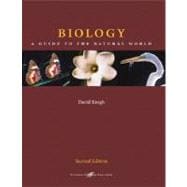
Biology: A Guide to the Natural World, The Custom Core Edition
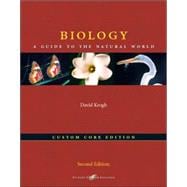
ISBN: 9780131426337 | 0131426338
Edition: 2nd
Format: Paperback
Publisher: Prentice Hall
Pub. Date: 1/1/2004

Why Rent from Knetbooks?

Because Knetbooks knows college students. Our rental program is designed to save you time and money. Whether you need a textbook for a semester, quarter or even a summer session, we have an option for you. Simply select a rental period, enter your information and your book will be on its way!

Top 5 reasons to order all your textbooks from Knetbooks:

  • We have the lowest prices on thousands of popular textbooks
  • Free shipping both ways on ALL orders
  • Most orders ship within 48 hours
  • Need your book longer than expected? Extending your rental is simple
  • Our customer support team is always here to help
SummaryTable of Contents
For courses in Introductory Biology for non-majors. Biology: A Guide to the Natural World, The Custom Core, 2/e, written and illustrated from the ground up for non-majors, now has a price as flexible as its content. The Custom Core Edition allows you to design a text that meets the content needs of your course, while saving your students money.
l. Science as a Way of Learning: A Guide to the Natural World.
How Does Science Impact the Everyday World? What Does the Public Think, and Know, about Science? What Is Science? Biology. Special Qualities of Biology.

I. ESSENTIAL PARTS: ATOMS, MOLECULES, AND CELLS.


2. The Fundamental Building Blocks: Chemistry and Life.
The Nature of Matter: The Atom. Matter Is Trans... MORE

3. Water, pH, and Biological Molecules.
The Importance of Water to Life. Acids and Bases Are Important to Life. Carbon Is a Central Element in Life. The Molecules of Life: Carbohydrates, Lipids, Proteins, and Nucleic Acids.

4. Life's Home: The Cell.
Cells Are the Working Units of Life. All Cells Are Either Prokaryotic or Eukaryotic. The Eukaryotic Cell. A Tour of the Animal Cell: Along the Protein Production Path. Outside the Protein Production Path: Other Cell Structures. The Cytoskeleton: Internal Scaffolding. The Plant Cell. Cell Communication: Why Cells Need Not Be Islands.

5. Life's Border: The Plasma Membrane.
The Importance of Activity at the Cell's Periphery. Why Do We Need the Plasma Membrane? Four Components of the Plasma Membrane. Moving Materials In and Out: Diffusions and Gradients. How Do Materials Get In and Out of the Cell? Getting the Big Stuff In and Out.

II. ENERGY AND ITS TRANSFORMATIONS.


6. Life's Mainspring: An Introduction to Energy.
Energy Is Central to Life. What Is Energy? How Is Energy Used by Living Things? The Energy Currency Molecule: ATP. Efficient Energy Use in Living Things: Enzymes. Lowering the Activation Barrier through Enzymes. Regulating Enzymatic Activity.

7. Vital Harvest: Deriving Energy from Food.
Energizing ATP: Adding a Phosphate Group to ADP. Electrons Fall Down the Energy Hill to Drive the Uphill Production of ATP. The Three Stages of Cellular Respiration: Glycolysis, the Krebs Cycle, and the Electron Transport Chain. First Stage of Respiration: Glycolysis. Second Stage of Respiration: The Krebs Cycle. Third Stage of Respiration: The Electron Transport Chain. Other Foods, Other Respiratory Pathways.

8. The Green World's Gift: Photosynthesis.
Photosynthesis and Energy. The Components of Photosynthesis. Stage 1:The Steps of the Light-Dependent Reactions. What Makes the Light-Dependent Reactions So Important? Stage 2 of Photosynthesis: The Light-Independent Reactions. Photorespiration: Undercutting Photosynthesis. A Different Kind of Photosynthesis: The C4 Pathway. Another Photosynthetic Variation: CAM Plants.

III. HOW LIFE GOES ON: GENETICS.


9. Introduction to Genetics; Mitosis and Cytokinesis.
An Introduction to Genetics. An Introduction to Cell Division. DNA Is Packaged in Chromosomes. Mitosis and Cytokinesis. Variations in Cell Division.

10. Preparing for Sexual Reproduction: Meiosis.
An Overview of Meiosis. The Steps in Meiosis. What Is the Significance of Meiosis? Gamete Formation in Humans. Life Cycles: Humans and Other Organisms.

11. The First Geneticist: Mendel and His Discoveries.
Mendel and the Black Box. The Experimental Subjects: Pisum sativum. Starting the Experiments: Yellow and Green Peas. Another Generation for Mendel. Crosses Involving Two Characters. Reception of Mendel's Ideas. Incomplete Dominance. Lessons from Blood Types: Codominance. Multiple Alleles and Polygenic Inheritance. Genes and Environment. One Gene, Several Effects: Pleiotropy.

12. Chromosomes and Inheritance.
Sex-Linked Inheritance in Humans. Autosomal Genetic Disorders. Aberrations in Chromosomal Sets: Polyploidy. Incorrect Chromosome Number: Aneuploidy. Structural Aberrations in Chromosomes.

13. DNA Structure and Replication.
What Do Genes Do, and What Are They Made of? Watson and Crick: The Double Helix. The Components of DNA and Their Arrangement. Mutations: Another Name for a Permanent Change in DNA Structure.

14. How Proteins Are Made: Genetic Transcription, Translation, and Regulation.
The Structure of Proteins. Protein Synthesis in Overview: Transcription and Translation. The Importance of the Genetic Code. A Closer Look at Protein Synthesis. Genetic Regulation. The Magnitude of the Metabolic Operation. What Is a Gene?

15. The Future Isn't What It Used to Be: Biotechnology.
What Is Biotechnology? Some Tools of Biotechnology. Cloning and the Wider World of Biotechnology. Other Biotechnology Processes: PCR. Visualizing DNA Sequences. Decoding the Human Genome. The Next Phase in Genetics: Genomics and Proteomics. Genetically Modified Foods. Ethical Questions in Biotechnology.

IV. LIFE'S ORGANIZING PRINCIPLE: EVOLUTION AND THE DIVERSITY OF LIFE.


16. An Introduction to Evolution: Charles Darwin, Evolutionary Thought, and the Evidence for Evolution.
Evolution and Its Core Principles. Charles Darwin and the Theory of Evolution. Evolutionary Thinking before Darwin. Darwin's Insights Following the Beagle's Voyage. Alfred Russet Wallace. Descent with Modification Is Accepted. Darwin Doubted: The Controversy over Natural Selection. Opposition to the Theory of Evolution. The Evidence for Evolution.

17. The Means of Evolution: Microevolution.
What Is It That Evolves? Evolution as a Change in the Frequency of Alleles. Five Agents of Microevolution. What Is Evolutionary Fitness? Three Modes of Natural Selection.

18. The Outcomes of Evolution: Macroevolution.
What Is a Species? How Do New Species Arise? When Is Speciation Likely to Occur? The Categorization of Earth's Living Things. Constructing Evolutionary Histories: Classical Taxonomy and Cladistics.

19. A Slow Unfolding: The History of Life on Earth.
The Geologic Timescale: Life Marks Earth's Ages. Tracing the History of Life on Earth: How Did Life Begin? The Tree of Life. A Long First Period: The Precambrian. The Cambrian Explosion: A Real Milestone or the Appearance of One? The Movement onto the Land: Plants First. Animals Follow Plants onto the Land. The Evolution of Human Beings.

20. Pond Dwellers, Log Eaters, and Self-Feeders: The Diversity of Life.
Viruses: Making a Living by Hijacking Cells. Domain Bacteria: Masters of Every Environment. Domain Archaea: From Marginal Player to Center. Domain Eukarya: Protists, Plants, Fungi, and Animals. Kingdom Protista: An Undefinable Collection. Kingdom Fungi: Life as a Web of Slender Threads. Kingdom Plantae: The Foundation for Much of Life.

21. Movers and Shakers: The Animal Kingdom.
What Is An Animal? Animal Types: The Family Tree. Phylum Porifera: The Sponges. Phylum Cnidaria: Jellyfish and Others. Phylum Platyhelminthes: Flatworms. Phylum Nematoda: Roundworms. Phylum Mollusca: Snails, Oysters, Squid, and More. Phylum Annelida: Segmented Worms. Phylum Arthropoda: So Many, but Why? Phylum Echinodermata: Sea Stars, Sea Urchins, and More. Phylum Chordata: Mostly Animals with Backbones.

V. A BOUNTY THAT FEEDS US ALL: PLANTS.


22. An Introduction to Flowering Plants.
The Importance of Plants. The Structure of Flowering Plants. How Flowering Plants Function. Responding to External Signals.

23. Form and Function in Flowering Plants.
Two Ways of Categorizing Flowering Plants. There Are Three Fundamental Types of Plant Cells. The Plant Body and Its Tissue Types. How a Plant Grows: Apical Meristems Give Rise to the Entire Plant. Secondary Growth Comes from a Thickening of Two Types of Tissues. How the Plant's Vascular System Functions. Sexual Reproduction in Flowering Plants. Embryo, Seed, and Fruit: The Developing Plant.

VI. WHAT MAKES THE ORGANISM TICK? ANIMAL ANATOMY AND PHYSIOLOGY.


24. Introduction to Animal Anatomy and Physiology: The Integumentary, Skeletal, and Muscular Systems.
The Sciences of Anatomy and Physiology. What Are the General Characteristics of Humans? Animal Architecture and Organization. The Animal Body Has Four Basic Tissue Types. A Summary of the Organ Systems of the Human Body. The Integumentary System: Skin and More. Body Support and the Skeleton. Muscles and Movement.

25. Control and Defense: The Nervous, Endocrine, and Immune Systems.
Overview of the Nervous System. How Does Nervous-System Communication Work? The Spinal Cord. The Autonomic Nervous System. The Human Brain. The Nervous System in Action: Our Sense of Vision. The Endocrine System: Hormones and How They Work. How Is Hormone Secretion Controlled? The Immune System: Defending the Body from Invaders. Nonspecific Defenses of the Immune System. Specific Defenses of the Immune System. Antibody-Mediated and Cell-Mediated Immunity. Antibody-Mediated Immunity in Detail. Cell-Mediated Immunity in Detail. Allergies and Autoimmune Disorders. AIDS: Attacking the Defenders.

26. Transport, Nutrition, and Exchange: Blood, Breath, Digestion, and Elimination.
The Cardiovascular System and Body Transport. The Heart and the Circulation of Blood. The Heart's Own Blood Supply: What Is a Heart Attack? Getting the Goods to and from the Cells: The Capillary Beds. The Respiratory System and the Exchange of Gases. The Digestive System. Components of the Digestive System. Different Digestive Processes for Different Foods and Nutrients. The Urinary System in Overview. How the Kidneys Function. Urine Transport, Storage, and Excretion.

27. An Amazingly Detailed Script: Animal Development.
General Processes in Development. What Factors Underlie Development? Developmental Tools: Sculpting the Body. The Promise of Stem Cells.

28. How the Baby Came to Be: Human Reproduction.
Overview of Human Reproduction and Development. The Female Reproductive System. The Male Reproductive System. The Union of Sperm and Egg. Human Development Prior to Birth. The Birth of the Baby.

VII. THE LIVING WORLD AS A WHOLE: ECOLOGY AND BEHAVIOR.


29. An Interactive Living World: Populations and Communities in Ecology.
The Study of Ecology. Populations: Size and Dynamics. r-Selected and K-Selected Species. Thinking about Human Populations. Communities: Looking at the Interactions of Many Populations. Types of Interaction among Community Members. Succession in Communities.

30. An Interactive Living World: Ecosystems and the Biosphere.
The Ecosystem Is the Fundamental Unit of Ecology. Abiotic Factors Area Major Component of Any Ecosystem. How Energy Flows through Ecosystems. Earth's Physical Environment. Earth's Biomes. Life in the Water: Aquatic Ecosystems.

31. Animal Behavior.
The Field of Behavioral Biology. The Web of Behavioral Influences. Internal Influences on Behavior. Learning and Behavior. Behavior in Action: How Birds Acquire Their Songs. Social Behavior. Altruism in the Animal Kingdom.

Related Products


  • Biology : A Guide to the Natural World
    Biology : A Guide to the Natur...
  • Biology : A Guide to the Natural World, Custom Core Media Update
    Biology : A Guide to the Natur...
  • Biology : A Guide to the Natural World, Media Update
    Biology : A Guide to the Natur...
  • Biology A Guide to the Natural World Plus MasteringBiology -- Access Card Package
    Biology A Guide to the Natural...
  • Biology Guide To The Natl World W/ Mstrgbiol
    Biology Guide To The Natl Worl...
  • Biology: A Guide to the Natural World
    Biology: A Guide to the Natura...
  • Biology: A Guide to the Natural World
    Biology: A Guide to the Natura...
  • Biology: A Guide to the Natural World with MasteringBiology®
    Biology: A Guide to the Natura...
  • Biology: A Guide to the Natural World with MasteringBiology®
    Biology: A Guide to the Natura...
  • Biology: A Guide to the Natural World with mybiology
    Biology: A Guide to the Natura...


Please wait while this item is added to your cart...