FREE SHIPPING BOTH WAYS
ON EVERY ORDER!
LIST PRICE:
$24.95

OUR PRICE:
$19.76

You may extend rentals at any time.


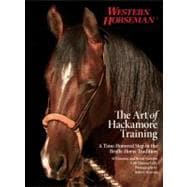
The Art of Hackamore Training; A Time-Honored Step in the Bridle-Horse Tradition

ISBN: 9780762780563 | 0762780568
Format: Trade Paper
Publisher: Western Horseman
Pub. Date: 10/2/2012

Why Rent from Knetbooks?

Because Knetbooks knows college students. Our rental program is designed to save you time and money. Whether you need a textbook for a semester, quarter or even a summer session, we have an option for you. Simply select a rental period, enter your information and your book will be on its way!

Top 5 reasons to order all your textbooks from Knetbooks:

  • We have the lowest prices on thousands of popular textbooks
  • Free shipping both ways on ALL orders
  • Most orders ship within 48 hours
  • Need your book longer than expected? Extending your rental is simple
  • Our customer support team is always here to help
SummaryTable of ContentsAuthor Biography
To understand the hackamore and its use is to understand its history, origin and development, as well as the equipment itself, including the bosal, mecate, fiador and such. From groundwork to key points under saddle, the authors provide drills to improve such skills as “connecting the horse’s face to his feet,” turnarounds, stops and fencing, as well as how to use these skills in handling cattle. A final chapter addresses the quarto riendas, or four-rein, which uses both snaffle and hackamore, and dos riendas, or two-rein, the finishing touch f... MORE
Chapter 1: History of the Hackamore  [braiding origins, early Californios and dons, preparing hides, cutting and beveling strands, braiding considerations]                 Chapter 2: Hackamores and Mecates   [hackamore construction, hackamore artistry, the hackamore blueprint, training considerations, the mecate] Chapter 3: Tying the Mecate[tying method one, Benny’s tying method, Al’s tying method, considering the horse when tying mecate] Chapter 4: Training in the Hackamore[practical application, training psychology, why us... MORE
Benny GuitronBorn in Glendale, Calif., on February 12, 1948, Benny Guitron is the fifth of Felix Guitron Sr.’s six children. Young Guitron, inspired as a youth by the great horsemen of his day—Jimmy Williams, Harold Farren, Red Neal, Don Dodge and perhaps most significantly, vaquero trainer, Tony Amaral Sr.—became fired by a dream. Determined to achieve his dream, Guitron set out to be like those horsemen and to train horses in ways honorable to tradition. His eagerness to soak up whatever knowledge was available molded the aspiring young man into the all-around, renowned horsemen he is today.Guitron Sr. played a crucial role in fanning the flames of his young son’s aspirations. Having immigrated to California from Mexico, the elder Guitron worked hard to save money and eventually purchased his own spread in the Coachella Valley. Though Guitron Sr. farmed for a living, a passion for horses also was a part of his life. Under their father’s guidance, Benny Guitron and his late brother, Felix Guitron Jr., competed on the open horse-show circuit, gaining exposure to the world of professional horsemen and the top trainers of the day. The Guitrons’ hometown of Indio, a quiet community in those days, also was the location of a popular show that drew elite horsemen from throughout California. This is where Benny Guitron first met the legendary California vaquero Tony Amaral and set his sights on becoming a horseman of similar ability.After his father’s death in 1968, Guitron took the leap toward his goal of being a cowboy and called Amaral, asking for a job. Not too long before, a juvenile Guitron had admired Amaral from afar, and now, as a 20-year-old man, Guitron was taking the first steps to fill the boots he so idolized. In the year that followed, he learned some of the vaquero trade secrets and found he had a natural hand for starting and training horses in the old Spanish methods. The times then were different, and knowledge didn’t come by way of books, videos, or clinics. “That was probably the most secretive era there ever was. If you wanted to learn something you got up real early in the morning and hoped you caught them doing something,” Guitron remarks of horsemen he admired. “Tony helped me a lot, but not the way a trainer does today. He’d be telling you a story as you rode through the hills, and if you were smart enough, you’d figure out he just got done telling you what to do to the horse you were riding. If you didn’t get it, he figured you obviously didn’t want it bad enough.”Just eight years later, in 1976, Guitron won his first National Reined Cow Horse Association World Championships Snaffle Bit Futurity title on Kit’s Smoke. Guitron went on to win the 1979 NRCHA Bridle Horse Championship and 1979 All-Around Stock-Horse World Championship on the mare in 1979. He is the only rider to make the finals of the stock-horse contest every year entered—a total of six times. Guitron also has been a finalist at every major cow-horse snaffle-bit futurity and is a two-time winner of the NRCHA Snaffle Bit Maturity, as well as being the 1983 NRCHA Hackamore Maturity winner. He holds multiple American Quarter Horse Association world championship titles, including 2002 Senior Working Cow Horse World Champion, and youth and amateurs under his tutelage have won several world championships. In 2008, Guitron received the highest honor for his contributions to the reined cow-horse industry—induction into the National Reined Cow Horse Association Hall of Fame. Guitron resides in Merced, Calif., with longtime partner, Paula Diuri, a horse enthusiast in her own right. The horseman openly professes his gratitude for her support, saying, “I owe a lot of my success to that girl.” Throughout his prosperous career, Guitron has surrounded himself with good horsemen, who became not only his mentors, but also his friends. Included among them are Bobby Ingersoll, Matlock Rose, Wayne Havens, and Greg Ward. As for their contributions to his life, Guitron simply says, “I have been so blessed.” Al DunningAl Dunning currently trains out of his Almosta Ranch in Scottsdale, Arizona. The father of two, he was born in Chicago, Ill., in 1950 and moved to Arizona at the age of 8. There, the combination of inspiration, good mentors, and hard work paved the way to Dunning’s success in the horse industry.Growing up while watching the television Westerns Laramie, My Friend Flicka, and Fury fueled a love of horses in the young would-be trainer. Although Dunning didn't take a shine to showing horses until later, he tagged along to shows just to be around the horses while his youngest sister, Denise, competed. Events in Scottsdale offered different venues, where aside from experiencing the usual horse-show culture, Dunning also worked the roping chutes while team ropers rode and spun their loops. Top cowboys, such as Dale Smith, Dean Oliver, and Chuck Shepherd, made remarkable impressions on a young Dunning. He recalls thinking at the time, “Man, that cowboying is really a big deal.”At the tender age of 12, Dunning met Jim Paul, who not only mentored the eager young trainer, but also actually became a father figure. This connection was the first of several such crucial connections, which became turning points that changed the course of Dunning's path. Lessons learned under Paul were tough, and nothing came easy. Broncy colts, wild rides, and creative training techniques put young Dunning in precarious situations that most riders today—youth and adult alike—would balk at experiencing. Back in those days, however, a young man did his job as he was told, trying hard to show no fear. Dunning laughs while reminiscing, then adds, “That’s just the way it was back then.”Under Paul’s guidance, Dunning became a youth champion in every event, from halter to reining and roping, and he often showed as many as six stock horses per class. “I was like a trainer-youth,” Dunning says, summarizing his show experience.Those many good years with Paul opened doors of opportunity for Dunning, and in 1965 he attended his first big show, the Sacramento State Fair. The great hall-of-fame horses and riders he mingled with there further inspired Dunning as a trainer. “I just followed Jim [Paul] around with my mouth open,” Dunning says, and fondly remembers watching Tony Amaral, Don Dodge, Harry Rose, and Jimmy Williams. “I wanted to be like them.”Back then no one specialized in a single event as only a reiner, a pleasure rider, or a hunter-jumper competitor. Great trainers of the day showed the same horses in reining that they used in pleasure and western-riding classes in original, all-around fashion. The broad spectrum of such an environment allowed a young Dunning not only the opportunity to compete in a full array of events, but also to surround himself with fantastic trainers of all disciplines. Big names, such as Red Neal and Harold Farren, played significant roles in Dunning’s early development as a horseman. He studied them, along with Ronnie Richards and Mack Linn at the California shows—everything from their clothing to their training techniques. Their images formed in his mind what he wanted to be—a hackamore man. “I didn’t talk much, but I listened,” Dunning recalls. “I got to see those guys work, got to see them be tough, kind, all the gamut of stuff, and then I could choose my way.”At 20 years old, while attending Arizona State University, Dunning worked for John Hoyt, whose influence tipped the scales irrevocably. Hoyt's focus on training with a savvy feel for the horse struck a chord with Dunning, cinching his desire to train horses for a living. He recalls that pivotal moment: “I got it; I feel it.” The final turning point in his professional life came one day in class. Sitting before a stack of books, he looked around the room at all the other kids. “They don’t know where they’re going,” Dunning thought to himself, “but I think I know where I’m going. The only thing I’m really good at is training horses.” And that was it. Dunning left school and hung out his shingle as a horse trainer, never looking back. He opened his Almosta Ranch in 1970 and married his wife, Becky, in 1971. Wins at some of the really big hackamore events, including Del Mar, the Santa Barbara Flower Show and the Phoenix A to Z Show, where the trainers he idolized were competing, kicked off great success for Dunning. That success continued with AQHA world titles in reining, cutting, working cow horse, and western riding. Dunning also has also been a finalist or semi-finalist at every major National Cutting Horse Association event, as well as at the NRCHA’s World’s Greatest Horseman Contest. Together with his students, Dunning is credited with 32 world-championship and reserve-championship titles.Additional honors awarded the trainer include being named AQHA’s 1996 Professional Horseman of the Year and receiving NCHA’s 2003 Zane Schulte Trainer of the Year award, as well as the Monte Roberts Equitarian award in 2004 and numerous other honors. Among the noteworthy horses Dunning has trained and shown was Expensive Hobby, who was inducted into the AQHA Hall of Fame in 2007.As author of the world-renowned book, Reining, Dunning has had an impact on thousands of horse enthusiasts. The knowledge and passion he shares in his clinics, videos, and lessons have molded not only average students, but also some of today's most successful professional horse trainers. Dunning’s ability to reach people comes from his love of horses and out of respect to the mentors in his own life. Anyone who asks about his greatest influences always hears the names Jim Paul, Don Dodge, and John Hoyt, even though Dunning’s list of admirable men runs long. The horsemen who influenced him and helped him along the way never have been taken for granted but, rather, have been taken to heart. In honor of them all, Dunning says, “They’re part of me.” 


Please wait while this item is added to your cart...