FREE SHIPPING BOTH WAYS
ON EVERY ORDER!
LIST PRICE:
$79.00

OUR PRICE:
$54.75

You may extend rentals at any time.


Advanced Neuromuscular Exercise Physiology
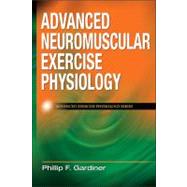
ISBN: 9780736074674 | 0736074678
Edition: 1st
Format: Hardcover
Publisher: HUMAN KINETICS PUBLISHERS
Pub. Date: 3/1/2011

Why Rent from Knetbooks?

Because Knetbooks knows college students. Our rental program is designed to save you time and money. Whether you need a textbook for a semester, quarter or even a summer session, we have an option for you. Simply select a rental period, enter your information and your book will be on its way!

Top 5 reasons to order all your textbooks from Knetbooks:

  • We have the lowest prices on thousands of popular textbooks
  • Free shipping both ways on ALL orders
  • Most orders ship within 48 hours
  • Need your book longer than expected? Extending your rental is simple
  • Our customer support team is always here to help
SummaryTable of Contents
Advanced Neuromuscular Exercise Physiologyuses a mix of biochemistry, molecular biology, neurophysiology, and muscle physiology to provide a synthesis of current knowledge and research directions in the field. The first text devoted solely to the topic, Advanced Neuromuscular Exercise Physiologyassists readers in identifying current directions in research and new avenues for exploration.Recognizing the rapid changes occurring in the field of neuromuscular exercise physiology, the text provides readers with a foundation of knowledge while detail... MORE
Series Prefacep. ix
Prefacep. xi
Acknowledgmentsp. xiv
Creditsp. xv
Muscle Fibers, Motor Units, and Motoneuronsp. 1
Muscle Heterogeneityp. 2
Orderly Motor Unit Recruitmentp. 7
Smaller Motoneurons Are More Excitablep. 9
Membrane Resistivity and Motoneuron Sizep. 9
Other Factors Determining Action Pote... MOREp. 11
Minimal Firing Rates and Afterhyperpolarization Durationsp. 12
Motoneuron Current-Frequency Relationship and Excitabilityp. 15
Late Adaptationp. 17
Motoneuron PICsp. 20
Summaryp. 23
Motor Unit Recruitment During Different Types of Movementsp. 25
Measuring Human Motor Unit Recruitmentp. 25
Influence of Taskp. 27
Slow-Ramp Isometric Contractionsp. 28
Maintained Isometric Contractionsp. 32
Isometric Contractions in Various Directionsp. 34
Isometric Contractions Versus Movementsp. 35
Lengthening Contractionsp. 38
Cocontraction of Agonists and Antagonistsp. 40
Unilateral Versus Bilateral Contractionsp. 40
Rhythmic Complex Contractionsp. 41
Maximal Voluntary Contractionsp. 42
Summaryp. 44
Muscle Blood Flow and Metabolismp. 46
Muscle Blood Flowp. 46
Muscle Metabolismp. 53
Summaryp. 60
Peripheral Factors in Neuromuscular Fatiguep. 63
Intramuscular Factors and Muscle Forcep. 64
Involvement of Structures Other Than Musclep. 67
Research From Animal Experimentsp. 77
Summaryp. 80
Central Factors in Neuromuscular Fatiguep. 83
Motoneuron Activity During Sustained Contractionsp. 83
Isometric Versus Anisometric Tasksp. 98
Rotation of Motor Units?p. 99
Summaryp. 99
Muscular Mechanisms in Aerobic Endurance Trainingp. 101
Chronic Muscle Stimulationp. 102
Coordination of Muscle Protein Systemsp. 104
Pretranslational Controlp. 106
Translational Controlp. 109
Posttransiational Modificationsp. 110
Simultaneous Expression of Isoformsp. 112
Adaptations Can Occur Ex Vivop. 112
Adaptations Appear in a Specific Sequencep. 112
Thresholds of Activity for Adaptationp. 114
Chronic Stimulation and Atrophyp. 115
Metabolic Signals and the Adaptive Responsep. 117
Degenerative and Regenerative Processesp. 122
Summaryp. 122
Neural Mechanisms in Aerobic Endurance Trainingp. 125
Adaptation of the Neuromuscular Junctionp. 125
Responses of Motoneuronsp. 130
Adaptations of Spinal Cord Circuitsp. 134
Summaryp. 139
Muscle Molecular Mechanisms in Strength Trainingp. 141
Acute Responses in Protein Synthesis and Degradationp. 142
Connective Tissue Responsesp. 155
Role of Muscle Damagep. 156
Role of Dietary Supplementsp. 157
Summaryp. 158
Muscle Property Changes in Strength Trainingp. 161
Increased Muscle Fiber Cross-Sectional Areap. 161
Fiber Type Compositionp. 162
Muscle Fiber Numberp. 163
Muscle Compositionp. 165
Muscle Architecturep. 166
Muscle Fiber Ultrastructurep. 166
Evoked Isometric Contractile Propertiesp. 167
Changes in Muscle Force, Velocity, and Powerp. 169
Fatigue Resistancep. 171
Role of Eccentric Contractionsp. 171
Summaryp. 173
Neural Mechanisms in Strength Trainingp. 175
Gains in Strength Versus Muscle Girthp. 175
Strength Gains Show Task Specificityp. 176
Surface EMG Response During MVCp. 178
Imaginary Strength Trainingp. 179
Reflex Adaptationsp. 179
Cross Educationp. 181
Decreased Activation of Antagonistsp. 183
Changes in Motor Unit Recruitmentp. 183
Changes in Motor Cortexp. 186
Summaryp. 186
Referencesp. 189
Indexp. 225
About the Authorp. 229
Table of Contents provided by Ingram. All Rights Reserved.


Please wait while this item is added to your cart...