Free Shipping On Every Order



Amazon no longer offers textbook rentals. We do!
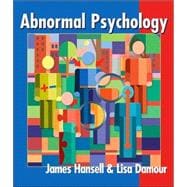
Abnormal Psychology : Enduring Issues
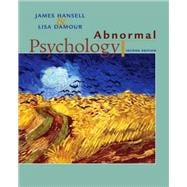
Abnormal Psychology : Enduring Issues
- ISBN 13:
9780470073872
- ISBN 10:
047007387X
- Edition: 2nd
- Format: Hardcover
- Copyright: 01/01/2008
- Publisher: Wiley
Rent
Sorry, this item is currently unavailable.
 Free Shipping On Every Order
Note: Supplemental materials are not guaranteed with Rental or Used book purchases.
Extend or Purchase Your Rental at Any Time
Need to keep your rental past your due date? At any time before your due date you can extend or purchase your rental through your account.
Summary
Hansell & Damour's Abnormal Psychology, 2e will empower your students with the critical thinking skills to better detail, classify, explain and ultimately better understand abnormal behavior. Written by practicing clinicians and featuring a streamlined table of contents, Abnormal Psychology, 2e offers a new, innovative approach that encourages the critical thinking skills which will help students see the "forest for the trees." By placing the DSM-IV in a larger context using a wide variety of examples, situations and applications, students better understand and contextualize the numerous mental illnesses discussed in the course. This includes a new series of critical thinking questions tied to the "core concepts" framework of the text. Additionally there are 15 new "visual essays" that highlight the most important biological principals, each is designed to help students make the connection between biology and mental illness. Abnormal Psychology, 2nd Edition is available in 3 versions: * ISBN 978-0-470-27434-7: Abnormal Psychology, 2nd Edition, WileyPLUS Stand-alone version of Hansell 2e. * ISBN 978-0-470-28081-2: Abnormal Psychology, 2nd Edition, Hansell 2e with WileyPLUS. * ISBN 978-0-470-27979-3: Abnormal Psychology, 2nd Edition, Binder Ready Version of Hansell 2e.